National Review Strengthens Swachh Bharat Mission Urban Push
ECONOMY & POLICY

National Review Strengthens Swachh Bharat Mission Urban Push

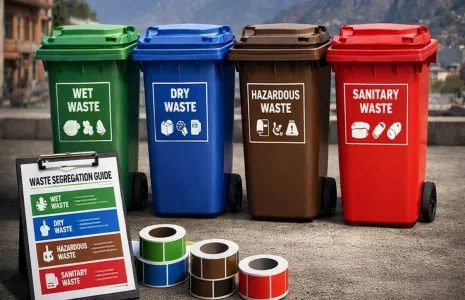
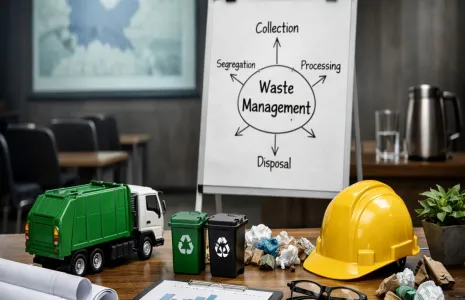
The Ministry of Housing and Urban Affairs convened a two-day national review of Swachh Bharat Mission?Urban two point zero at Vigyan Bhawan, New Delhi on 19–20 May 2026 under the chairpersonship of Manohar Lal, Union Minister. The review noted that 97 per cent of wards are now covered under door-to-door waste collection and that communities are increasingly adopting source segregation through multi-bin systems. Waste processing has risen from 16 per cent in 2014 to 81 per cent.

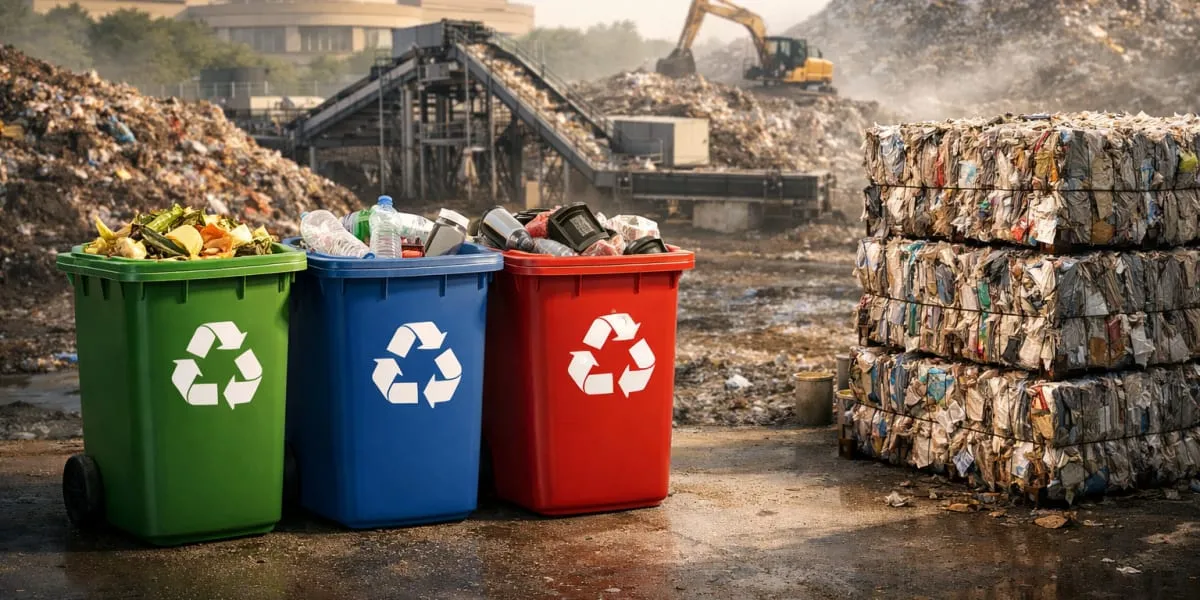
Legacy waste remediation received attention, with officials reporting that 65 per cent of the 260 million tonnes (260 million tonnes) of waste across 2,482 dumpsites has been remediated, reclaiming 9,000 acres of land. The Union Minister urged attention to financial constraints, matching State and Union territory shares, and resolving implementation bottlenecks such as tendering delays and land allocation. He set a 10-month timeframe for preparation of focused plans to meet allotted targets and stressed that high-level ownership is essential.

The Minister directed State-wise mapping of key issues and daily updates on the Swachhatam Portal to enable regular reviews and tracking by the Ministry. He called for integration of behavioural change messaging into school curricula and stressed that political representatives must provide leadership to accelerate implementation and legacy dumpsite remediation. Conference deliberations emphasised convergence across Central and State agencies.

The two-day conference assembled dignitaries, Urban Development Ministers from 12 States, principal secretaries and representatives of 14 Central Ministries. It featured 11 focused sessions on institutional strengthening, visible cleanliness, scientific waste processing, source segregation, waste-to-energy, sanitation and used water management. Participants identified priorities such as fast-tracking on-ground processes, smart monitoring through integrated command and control centres and regional cluster planning.

The review formed part of a cascaded mechanism prior to the PRAGATI governance review and was supported by intergovernmental consultations and identified action points. With the Solid Waste Management Rules in force from first April 2026, the Ministry signalled the need for strategic interventions, including mandatory four-stream segregation, accountability of bulk waste generators and centralised digital monitoring to realise the vision of Viksit Bharat 2047.

The Ministry of Housing and Urban Affairs convened a two-day national review of Swachh Bharat Mission?Urban two point zero at Vigyan Bhawan, New Delhi on 19–20 May 2026 under the chairpersonship of Manohar Lal, Union Minister. The review noted that 97 per cent of wards are now covered under door-to-door waste collection and that communities are increasingly adopting source segregation through multi-bin systems. Waste processing has risen from 16 per cent in 2014 to 81 per cent. Legacy waste remediation received attention, with officials reporting that 65 per cent of the 260 million tonnes (260 million tonnes) of waste across 2,482 dumpsites has been remediated, reclaiming 9,000 acres of land. The Union Minister urged attention to financial constraints, matching State and Union territory shares, and resolving implementation bottlenecks such as tendering delays and land allocation. He set a 10-month timeframe for preparation of focused plans to meet allotted targets and stressed that high-level ownership is essential. The Minister directed State-wise mapping of key issues and daily updates on the Swachhatam Portal to enable regular reviews and tracking by the Ministry. He called for integration of behavioural change messaging into school curricula and stressed that political representatives must provide leadership to accelerate implementation and legacy dumpsite remediation. Conference deliberations emphasised convergence across Central and State agencies. The two-day conference assembled dignitaries, Urban Development Ministers from 12 States, principal secretaries and representatives of 14 Central Ministries. It featured 11 focused sessions on institutional strengthening, visible cleanliness, scientific waste processing, source segregation, waste-to-energy, sanitation and used water management. Participants identified priorities such as fast-tracking on-ground processes, smart monitoring through integrated command and control centres and regional cluster planning. The review formed part of a cascaded mechanism prior to the PRAGATI governance review and was supported by intergovernmental consultations and identified action points. With the Solid Waste Management Rules in force from first April 2026, the Ministry signalled the need for strategic interventions, including mandatory four-stream segregation, accountability of bulk waste generators and centralised digital monitoring to realise the vision of Viksit Bharat 2047.

Next Story
Technology

AI-Enabled Workflows Lift Profitability and Productivity

Organisations modernising frontline workflows with artificial intelligence, automation and real-time data are reporting stronger financial performance, higher productivity and improved employee engagement, according to a global study by Zebra Technologies and Oxford Economics.The research covered 1,000 senior leaders across retail, manufacturing, transportation and logistics in the US, Mexico, the UK, Germany, India, Japan, Australia and New Zealand.In transportation and logistics, 54 per cent of companies that improved picking and packing operations reported faster operational performance, wh..

Next Story
Real Estate

India Leads Global AI Readiness but Implementation Lags

Indian companies lead global averages across all eight artificial intelligence readiness indicators tracked by JLL, but only 19 per cent have started making changes to their workplaces, according to the JLL 2026 Future of Work Survey.The study found that 77 per cent of Indian business leaders expect AI to change their office requirements, creating a 58-percentage-point gap between awareness and implementation. The survey covered more than 2,200 CEOs, CFOs and real estate leaders across 21 countries during the first quarter of 2026.Despite concerns over automation, 58 per cent of Indian leaders..

Next Story
Equipment

Three WOLFF Cranes Build Riyadh Cable-Stayed Bridges

Three WOLFF 180 B luffing jib cranes are supporting the construction of two cable-stayed bridges alongside the existing Wadi Laban Bridge in Riyadh, Saudi Arabia. The project is being developed for the Royal Commission for Riyadh City and executed by the ICRC joint venture comprising IC Ictas and Al Rashid Trading & Contracting Company.The cranes are handling lifting operations including formwork, reinforcement, concrete placement, work platforms, surveying equipment and other construction materials. Each crane is fitted with a 40 m jib, reaches a hook height of 157 m and offers a maximum ..

Advertisement

Subscribe to Our Newsletter

Get daily newsletters around different themes from Construction world.

STAY CONNECTED

Advertisement

Advertisement

Advertisement