Pune Division to Remove All Diamond Crossings by Year-End
RAILWAYS & METRO RAIL

Pune Division to Remove All Diamond Crossings by Year-End

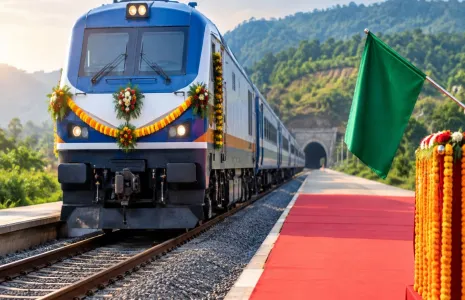
The Pune railway division has announced plans to remove all 16 diamond crossings by the end of 2026 as part of a major yard remodelling project following the derailment of a Vande Bharat Express at Pune Junction on April 27. Railway authorities said the replacements aim to improve safety and streamline train operations across the busy station. The decision followed a Central Railway finding that the accident involved a non-standard diamond crossing and highlighted the need for replacement. Regular maintenance of existing crossings will continue until the replacement work is completed.

Officials indicated the work will be carried out in a single phase to reduce repeated traffic interruptions and that several major traffic and maintenance blocks will be required in the coming months. The blocks are expected to affect train movement temporarily while crews undertake track alterations and install standardised crossings. Passengers may therefore face temporary changes to schedules and operations during the project. Detailed timetables and affected services are to be announced by railway authorities in due course.

A diamond crossing is a track intersection where two lines cross to form a diamond shape, and non-standard crossings refer to those built without adherence to approved design standards and guidelines issued by the Railway Board. Railway engineers said replacing outdated and non-standard components would reduce operational risks and promote smoother movements across junctions. The remodelling is being positioned as a step towards strengthening the division's safety infrastructure and reducing the likelihood of similar incidents. Officials declined to specify which of the 16 crossings had been categorised as non-standard.

Work planning will include risk assessments, resource mobilisation and coordination with adjacent divisions to manage traffic during blocks, railway sources added. Completion of the single-phase replacement by the year-end remains the stated objective, subject to the execution of scheduled blocks and availability of materials and labour. The division reiterated that routine upkeep will continue alongside the remodelling until all new crossings are in place. Further announcements on schedules and service impacts are expected soon.

The Pune railway division has announced plans to remove all 16 diamond crossings by the end of 2026 as part of a major yard remodelling project following the derailment of a Vande Bharat Express at Pune Junction on April 27. Railway authorities said the replacements aim to improve safety and streamline train operations across the busy station. The decision followed a Central Railway finding that the accident involved a non-standard diamond crossing and highlighted the need for replacement. Regular maintenance of existing crossings will continue until the replacement work is completed. Officials indicated the work will be carried out in a single phase to reduce repeated traffic interruptions and that several major traffic and maintenance blocks will be required in the coming months. The blocks are expected to affect train movement temporarily while crews undertake track alterations and install standardised crossings. Passengers may therefore face temporary changes to schedules and operations during the project. Detailed timetables and affected services are to be announced by railway authorities in due course. A diamond crossing is a track intersection where two lines cross to form a diamond shape, and non-standard crossings refer to those built without adherence to approved design standards and guidelines issued by the Railway Board. Railway engineers said replacing outdated and non-standard components would reduce operational risks and promote smoother movements across junctions. The remodelling is being positioned as a step towards strengthening the division's safety infrastructure and reducing the likelihood of similar incidents. Officials declined to specify which of the 16 crossings had been categorised as non-standard. Work planning will include risk assessments, resource mobilisation and coordination with adjacent divisions to manage traffic during blocks, railway sources added. Completion of the single-phase replacement by the year-end remains the stated objective, subject to the execution of scheduled blocks and availability of materials and labour. The division reiterated that routine upkeep will continue alongside the remodelling until all new crossings are in place. Further announcements on schedules and service impacts are expected soon.

Next Story
Infrastructure Urban

Goa Declares 80 Million Square Metres No Development Zone

The Goa state government has declared 80 million square metres (mn) of land a no development zone, designating the area as protected from new construction. The notification reclassifies tracts across the state under a no development category for planning and regulatory purposes. The declaration signals a formal halt to new building permits within the defined zone. Authorities indicated that maps will be issued to show broad boundaries while detailed surveys will refine precise limits. The move transfers responsibility for enforcement to local planning authorities and relevant departments, whic..

Next Story
Infrastructure Urban

Micro Mitti To Invest Rs Three Billion In Indore Project

Micro Mitti has announced an investment of Rs three billion (Rs 3 bn) to develop a commercial project in Indore. The company said the allocation marks a significant commitment to the city's real estate sector and will target commercial space demand. The announcement follows the firm's stated strategy to expand its asset base outside its existing markets. Company executives outlined the plan in a corporate release and provided limited additional details. The commercial project is intended to serve office, retail and related uses in response to demand from businesses and consumers in the region...

Next Story
Infrastructure Energy

India Ranks Third in Installed Renewable Energy Capacity

India ranks third globally in installed renewable energy capacity, according to a report by Morgan Stanley and data from the Ministry of New and Renewable Energy. The report said the transition would reduce external dependence but that success would depend on how quickly the country localises critical segments such as solar cells, wafers and polysilicon. Officials noted that solar and wind additions have driven most recent growth. The Morgan Stanley analysis also emphasised the need to address manufacturing bottlenecks to sustain momentum. Ministry data showed domestic solar module capacity ne..

Advertisement

Subscribe to Our Newsletter

Get daily newsletters around different themes from Construction world.

STAY CONNECTED

Advertisement

Advertisement

Advertisement