Quadruple Rail Line Planned between Karjat and Panvel to Ease Traffic
RAILWAYS & METRO RAIL

Quadruple Rail Line Planned between Karjat and Panvel to Ease Traffic

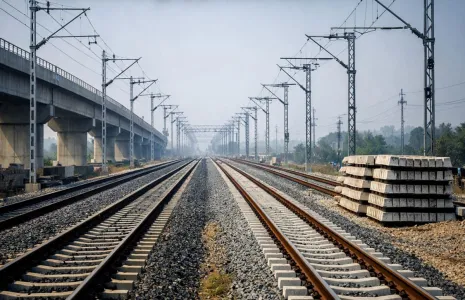
In a major infrastructure move aimed at easing the burden on Mumbai’s overcrowded suburban railway system, the Mumbai Railway Vikas Corporation (MRVC) has proposed the construction of a quadruple railway line between Karjat and Panvel. The Rs 4.92 billion project is designed to significantly improve commuting experiences for thousands of daily passengers in Navi Mumbai and Raigad, two regions witnessing rapid urbanisation.

At present, the Karjat-Panvel corridor operates with only a single pair of tracks—one up and one down line—resulting in regular delays and severe overcrowding, particularly during peak hours. The new plan proposes the addition of two more tracks, bringing the total to four. This expansion is expected to enable the simultaneous operation of suburban and long-distance trains, thereby enhancing punctuality and reducing passenger congestion.

Officials noted that the project is not merely a response to the current commuter challenges but is also a forward-looking initiative. With the upcoming Navi Mumbai International Airport poised to accelerate regional development, the new rail lines are anticipated to provide faster and more seamless connectivity between Panvel and Karjat. This, in turn, is expected to benefit neighbouring areas such as Uran, Navi Mumbai, and the adjacent industrial zones.

Although the proposed alignment covers just 39 kilometres, it traverses several ecologically sensitive green zones. Authorities involved in the planning process have stressed the importance of conducting careful environmental assessments to ensure that ecological disruption is kept to a minimum.

Sources indicated that the project blueprint has already been submitted for approval. They added that discussions with both central and state government agencies are in advanced stages. Efforts are underway to fast-track budget allocation, secure statutory clearances, and initiate the tendering process to ensure timely execution.

The quadruple line is seen as a crucial component of Mumbai’s broader vision to enhance its suburban railway infrastructure and reduce reliance on road transport. As the Mumbai Metropolitan Region (MMR) continues to grow—particularly towards the Karjat and Panvel corridors—the need for efficient public transport has become increasingly critical.

Once operational, the upgraded route is expected to reduce travel time, enhance passenger safety, and improve the overall commuting experience for lakhs of daily travellers. With dedicated tracks for both freight and passenger services, the corridor is set to offer a more streamlined and efficient rail system—bridging the gap between rapid urban expansion and sustainable transport infrastructure. The completion of this initiative is expected to mark a significant advancement in the modernisation of Mumbai’s suburban railways, aligning with the evolving needs of a growing metropolitan region.

News source: CNBC TV18

"Join industry leaders at RAHSTA Expo, India's premier platform for roads, highways and traffic infrastructure. Register now to explore innovations, network with experts and shape the future of mobility."

In a major infrastructure move aimed at easing the burden on Mumbai’s overcrowded suburban railway system, the Mumbai Railway Vikas Corporation (MRVC) has proposed the construction of a quadruple railway line between Karjat and Panvel. The Rs 4.92 billion project is designed to significantly improve commuting experiences for thousands of daily passengers in Navi Mumbai and Raigad, two regions witnessing rapid urbanisation.At present, the Karjat-Panvel corridor operates with only a single pair of tracks—one up and one down line—resulting in regular delays and severe overcrowding, particularly during peak hours. The new plan proposes the addition of two more tracks, bringing the total to four. This expansion is expected to enable the simultaneous operation of suburban and long-distance trains, thereby enhancing punctuality and reducing passenger congestion.Officials noted that the project is not merely a response to the current commuter challenges but is also a forward-looking initiative. With the upcoming Navi Mumbai International Airport poised to accelerate regional development, the new rail lines are anticipated to provide faster and more seamless connectivity between Panvel and Karjat. This, in turn, is expected to benefit neighbouring areas such as Uran, Navi Mumbai, and the adjacent industrial zones.Although the proposed alignment covers just 39 kilometres, it traverses several ecologically sensitive green zones. Authorities involved in the planning process have stressed the importance of conducting careful environmental assessments to ensure that ecological disruption is kept to a minimum.Sources indicated that the project blueprint has already been submitted for approval. They added that discussions with both central and state government agencies are in advanced stages. Efforts are underway to fast-track budget allocation, secure statutory clearances, and initiate the tendering process to ensure timely execution.The quadruple line is seen as a crucial component of Mumbai’s broader vision to enhance its suburban railway infrastructure and reduce reliance on road transport. As the Mumbai Metropolitan Region (MMR) continues to grow—particularly towards the Karjat and Panvel corridors—the need for efficient public transport has become increasingly critical.Once operational, the upgraded route is expected to reduce travel time, enhance passenger safety, and improve the overall commuting experience for lakhs of daily travellers. With dedicated tracks for both freight and passenger services, the corridor is set to offer a more streamlined and efficient rail system—bridging the gap between rapid urban expansion and sustainable transport infrastructure. The completion of this initiative is expected to mark a significant advancement in the modernisation of Mumbai’s suburban railways, aligning with the evolving needs of a growing metropolitan region.News source: CNBC TV18

Next Story
Real Estate

Pecan Realty Completes Rs 1.5 Billion Transactions

Pecan Realty has recently completed four institutional transactions worth over Rs 1.5 billion over the past two years, strengthening its position as an execution-led real estate platform. The deals include resolution-led acquisitions, structured finance transactions and capital partnerships across its development portfolio.The transactions covered acquisitions through the National Company Law Tribunal process and helped provide repayment or exits to both private and public sector lenders. The company said the deals demonstrate its ability to resolve complex project situations, work with instit..

Next Story
Real Estate

SNN Estates Expands North Bengaluru Housing Project

SNN Estates has announced an expansion of its SNN Estates Felicity residential project in North Bengaluru following strong buyer demand, with 75 per cent of the first-phase inventory sold within three days of launch.The developer will add 76 apartments in the new phase, taking the project's estimated revenue potential to around Rs 1,000 crore upon completion of Phase 2.Spread across 6.5 acres in Rachenahalli, near Manyata Tech Park, the project comprises 604 apartments in 1.5, 2, 2.5, 3 and 4 BHK configurations. The development includes a 50,000-sq-ft clubhouse with amenities such as sports co..

Next Story
Infrastructure Urban

SCG Drives ASEAN Industrial Transformation Strategy

SCG is strengthening its focus on ASEAN as a key growth region by advancing industrial transformation, enhancing competitiveness and building resilient regional value chains. Thammasak Sethaudom, President and Chief Executive Officer, SCG, highlighted the need for industries to continuously develop capabilities, strengthen resilience and deepen regional cooperation to achieve sustainable long-term growth.SCG views ASEAN as an important growth engine alongside China, supported by favourable demographics, trade connectivity and investment flows. With ASEAN’s GDP projected to grow by around 4.7..

Advertisement

Subscribe to Our Newsletter

Get daily newsletters around different themes from Construction world.

STAY CONNECTED

Advertisement

Advertisement

Advertisement