Railway Line Doubling Cleared for Tirupati–Katpadi Stretch
RAILWAYS & METRO RAIL

Railway Line Doubling Cleared for Tirupati–Katpadi Stretch

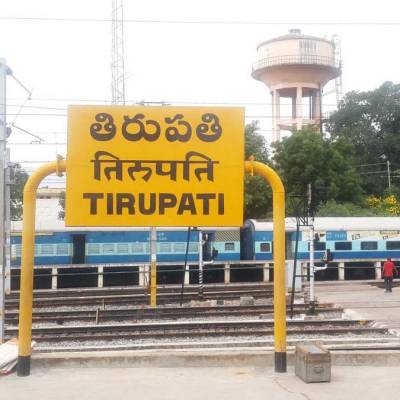
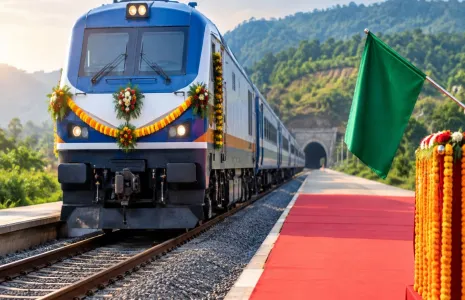
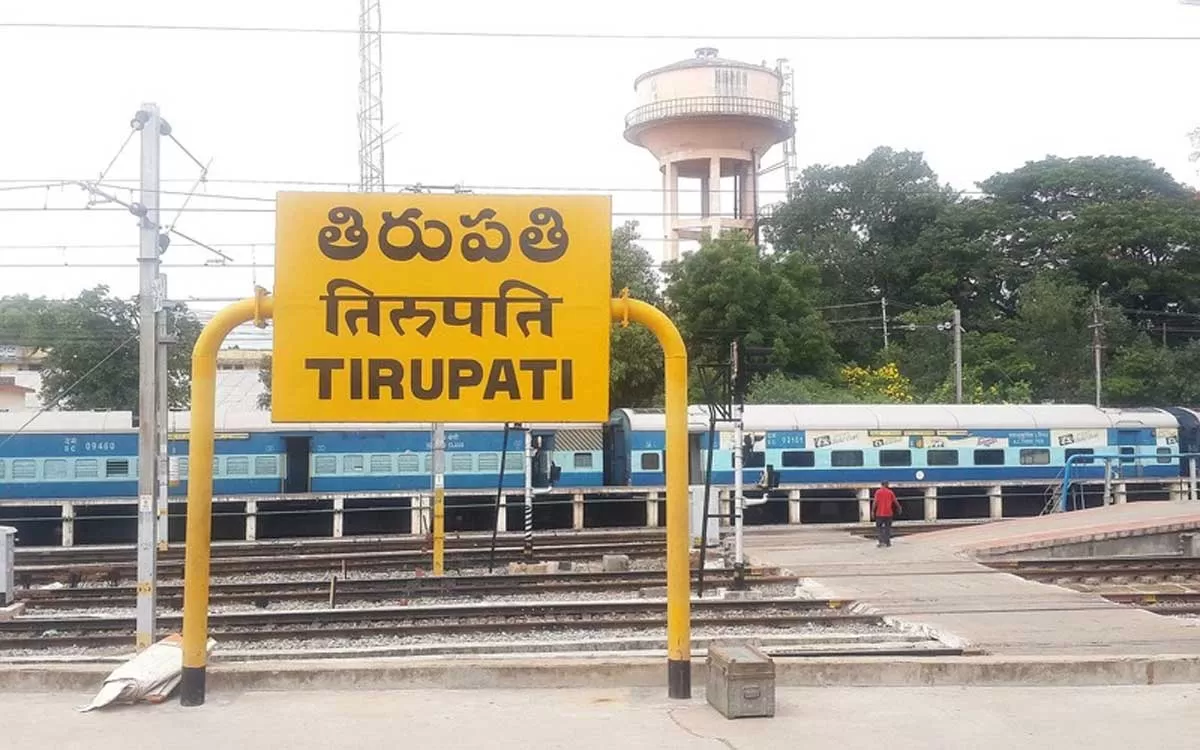
The Cabinet Committee on Economic Affairs, chaired by Prime Minister Narendra Modi, has approved the doubling of the 104-km single railway line between Tirupati, Pakala, and Katpadi in Andhra Pradesh and Tamil Nadu. The project, sanctioned at an estimated cost of Rs.13.32 billion, aims to bolster regional connectivity, improve freight and passenger movement, and contribute to sustainable rail operations.

The upgraded line will benefit approximately 400 villages and around 1.4 million people. It will also significantly improve access to Tirupati, home to the revered Tirumala Venkateswara Temple, which draws nearly 75,000 pilgrims daily—rising to 150,000 on auspicious occasions.

The multi-tracking initiative aligns with the PM Gati Shakti National Master Plan, enabling integrated, multi-modal connectivity and enhancing Indian Railways’ efficiency. The project spans three districts across the two states and will add about 113 km to the national railway network.

Besides Tirupati, the route also connects religious and tourist destinations like the Sri Kalahasti Shiva Temple, Kanipakam Vinayaka Temple, and Chandragiri Fort.

From an economic perspective, the new double line will ease congestion on one of the busiest railway corridors and support the transport of key goods like coal, cement, agricultural produce, and minerals. It is expected to handle an additional 4 million tonnes of freight annually.

In terms of environmental impact, the project will reduce India’s oil imports by 40 million litres and cut carbon emissions by 200 million kg—equivalent to planting 10 million trees. It will also generate around 3.5 million human-days of direct employment during construction.

Overall, the railway doubling marks a step forward in building an Atmanirbhar Bharat through improved logistics, local job creation, and greener mobility solutions.

The Cabinet Committee on Economic Affairs, chaired by Prime Minister Narendra Modi, has approved the doubling of the 104-km single railway line between Tirupati, Pakala, and Katpadi in Andhra Pradesh and Tamil Nadu. The project, sanctioned at an estimated cost of Rs.13.32 billion, aims to bolster regional connectivity, improve freight and passenger movement, and contribute to sustainable rail operations. The upgraded line will benefit approximately 400 villages and around 1.4 million people. It will also significantly improve access to Tirupati, home to the revered Tirumala Venkateswara Temple, which draws nearly 75,000 pilgrims daily—rising to 150,000 on auspicious occasions. The multi-tracking initiative aligns with the PM Gati Shakti National Master Plan, enabling integrated, multi-modal connectivity and enhancing Indian Railways’ efficiency. The project spans three districts across the two states and will add about 113 km to the national railway network. Besides Tirupati, the route also connects religious and tourist destinations like the Sri Kalahasti Shiva Temple, Kanipakam Vinayaka Temple, and Chandragiri Fort. From an economic perspective, the new double line will ease congestion on one of the busiest railway corridors and support the transport of key goods like coal, cement, agricultural produce, and minerals. It is expected to handle an additional 4 million tonnes of freight annually. In terms of environmental impact, the project will reduce India’s oil imports by 40 million litres and cut carbon emissions by 200 million kg—equivalent to planting 10 million trees. It will also generate around 3.5 million human-days of direct employment during construction. Overall, the railway doubling marks a step forward in building an Atmanirbhar Bharat through improved logistics, local job creation, and greener mobility solutions.

Next Story
Infrastructure Energy

Moro Hub and PwC Middle East Partner to Accelerate Smart City Solutions

Moro Hub, a subsidiary of Digital DEWA, the digital arm of Dubai Electricity and Water Authority (DEWA), has announced a strategic collaboration with PwC Middle East to advance Smart City, Integrated Command Centre (ICC), Critical Infrastructure Monitoring and Internet of Things (IoT) initiatives across the region. The partnership brings together Moro Hub’s digital infrastructure and IoT capabilities with PwC’s global expertise in digital trust, smart city strategy and cybersecurity to support the UAE’s vision for intelligent and sustainable cities.“Our collaboration with PwC Middle Ea..

Next Story
Equipment

ABB India Unveils ACS380-E Drive for High-Performance Automation

ABB India has launched the ACS380-E drive, a next-generation machinery drive designed for automation-centric machine building, adding to its all-compatible drive portfolio. The solution simplifies machine integration and is future-proofed for industrial automation with advanced connectivity, faster commissioning and built-in cybersecurity capabilities.The ACS380-E features integrated dual Ethernet ports for plug-and-play communication with all major industrial automation networks, eliminating the need for separate modules and reducing installation complexity. The drive also supports fast USB-C..

Next Story
Building Material

Cement Makers Positive on H2 Demand Outlook

The leading cement producers have posted high single-digit volume growth and better sales realisation in the July–September quarter, setting a positive tone for the second half of FY26. Companies are upbeat on demand prospects, supported by a strong housing sector and continued government spending on major infrastructure projects. UltraTech, Ambuja Cement, Shree Cement, Dalmia Bharat and Nuvoco Vistas recorded revenue growth of up to 18 per cent in the September quarter. The rise was driven by firm realisations, softer input costs and an increased share of premium products. With coal price..

Advertisement

Subscribe to Our Newsletter

Get daily newsletters around different themes from Construction world.

STAY CONNECTED

Advertisement

Advertisement

Advertisement

Advertisement

Open In App