+
Railways Seeks Rs 358 Billion Private Investment With 50-Year PPP Concessions
RAILWAYS & METRO RAIL

Railways Seeks Rs 358 Billion Private Investment With 50-Year PPP Concessions

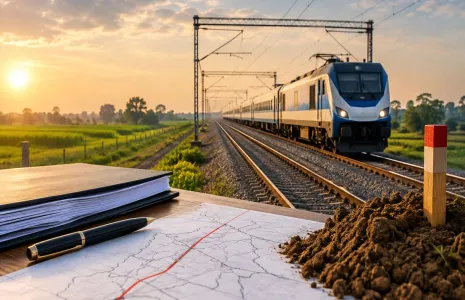
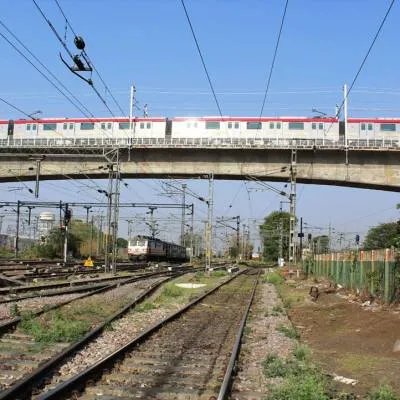
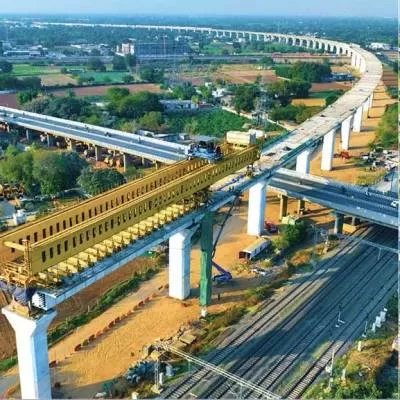
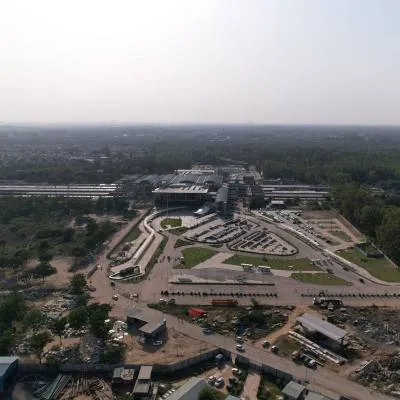
Indian Railways plans to offer 50-year public–private partnership concessions and provide full land acquisition support to attract private investment totalling Rs 358 billion (Rs 358 bn), according to a government report. The proposal is intended to draw long-term capital into development of freight terminals and associated infrastructure. Officials framed the move as part of a broader effort to accelerate commercialisation and mobilise private resources for large-scale projects. The concession period is designed to give investors extended revenue visibility and encourage complex multimodal investments.\n\nThe scheme will cover Gati Shakti cargo terminals and other rail-linked logistics hubs, with authorities proposing streamlined approvals and coordinated land consolidation with states. It aims to reduce project gestation by addressing acquisition risks and offering compensation and rehabilitation frameworks that facilitate smoother transfers. Stakeholders are expected to include developers, freight operators and logistics funds seeking infrastructure assets with stable yield profiles. Policy changes are being considered to align contract terms with international concession practices and unlock ancillary commercial opportunities.\n\nLonger concession tenor is expected to shift certain construction and demand risks to the private party while retaining strategic oversight with the public authority. Revenue-sharing mechanisms and performance-linked milestones are likely to be incorporated to balance returns and service standards. The plan may also allow for redevelopment of railway land around terminals to generate non-fare income and improve project bankability. Financial models will need to account for phased investments, tariff structures and possible viability gap funding where necessary.\n\nImplementation will require close coordination with state governments and clear timelines for land transfer, permitting and environmental clearances to avoid delays. The approach is expected to complement broader logistics sector reforms and support initiatives to shift more freight to rail, reducing congestion on roads. Analysts suggested interest will come from domestic infrastructure investors and global funds looking for long-duration assets, provided contractual risks are adequately mitigated. Officials indicated that detailed concession documents and bidding timelines will be issued to solicit firm commitments.

Indian Railways plans to offer 50-year public–private partnership concessions and provide full land acquisition support to attract private investment totalling Rs 358 billion (Rs 358 bn), according to a government report. The proposal is intended to draw long-term capital into development of freight terminals and associated infrastructure. Officials framed the move as part of a broader effort to accelerate commercialisation and mobilise private resources for large-scale projects. The concession period is designed to give investors extended revenue visibility and encourage complex multimodal investments.\n\nThe scheme will cover Gati Shakti cargo terminals and other rail-linked logistics hubs, with authorities proposing streamlined approvals and coordinated land consolidation with states. It aims to reduce project gestation by addressing acquisition risks and offering compensation and rehabilitation frameworks that facilitate smoother transfers. Stakeholders are expected to include developers, freight operators and logistics funds seeking infrastructure assets with stable yield profiles. Policy changes are being considered to align contract terms with international concession practices and unlock ancillary commercial opportunities.\n\nLonger concession tenor is expected to shift certain construction and demand risks to the private party while retaining strategic oversight with the public authority. Revenue-sharing mechanisms and performance-linked milestones are likely to be incorporated to balance returns and service standards. The plan may also allow for redevelopment of railway land around terminals to generate non-fare income and improve project bankability. Financial models will need to account for phased investments, tariff structures and possible viability gap funding where necessary.\n\nImplementation will require close coordination with state governments and clear timelines for land transfer, permitting and environmental clearances to avoid delays. The approach is expected to complement broader logistics sector reforms and support initiatives to shift more freight to rail, reducing congestion on roads. Analysts suggested interest will come from domestic infrastructure investors and global funds looking for long-duration assets, provided contractual risks are adequately mitigated. Officials indicated that detailed concession documents and bidding timelines will be issued to solicit firm commitments.

Next Story
Infrastructure Urban

Implementation Status of Jal Jeevan Mission

Since August 2019 the Government has implemented Jal Jeevan Mission to provide assured potable water through household tap connections in rural India. At the start of the mission only 32.3 million (mn) rural households, representing 16.7 per cent, were reported to have tap water connections. States and union territories have reported that 125.8 mn additional rural households have since been provided with tap connections. As a result, of about 193.6 mn rural households roughly 158.2 mn, or 81.71 per cent, are reported to have tap water supply at home.\n\nThe State, district and village level st..

Next Story
Infrastructure Urban

Jal Jeevan Mission Reaches Eighty One Per Cent Rural Coverage

The Government reported substantial progress under the Jal Jeevan Mission, launched in August 2019 to provide tap water to every rural household. At launch only 32.3 million (mn) rural households had tap connections and states and Union territories reported provision of 125.8 mn additional households by March 2026. Consequently, out of about 193.6 mn rural households around 158.2 mn, or 81.71 per cent, are reported to have tap water at home. The Finance Minister announced extension of the mission until 2028 in the 2025-26 budget speech. The Swachh Bharat Mission Grameen, launched in October 20..

Next Story
Infrastructure Urban

Empowering Local Governance for Sustainable Rural Water Supply

The Ministry of Jal Shakti has aligned the Jal Jeevan Mission (JJM) with the 73rd Amendment to strengthen village level planning and community ownership of water supply. Gram Panchayats, village water and sanitation committees and Pani Samitis are to plan, implement, manage and maintain piped water systems, with gram sabha processes formalising handover and oversight. Implementation support agencies including non government organisations, community based organisations and self help groups have been empanelled to train local committees and promote women participation. Under JJM, the department ..

Advertisement

Subscribe to Our Newsletter

Get daily newsletters around different themes from Construction world.

STAY CONNECTED

Advertisement

Advertisement

Advertisement