+
Srinagar-Baramulla railway link to connect Kashmir with rest of the country
RAILWAYS & METRO RAIL

Srinagar-Baramulla railway link to connect Kashmir with rest of the country

The stations and tracks for the Sirnagar-Baramulla rail link massive project will be erected at a height greater than that of Qutab Minar, making train travel at such a height nothing less than a miracle.

Ashutosh Gangal, general manager of Northern Railway, told the media that construction on the remaining 111 km of the complete 272 km route is progressing quickly.

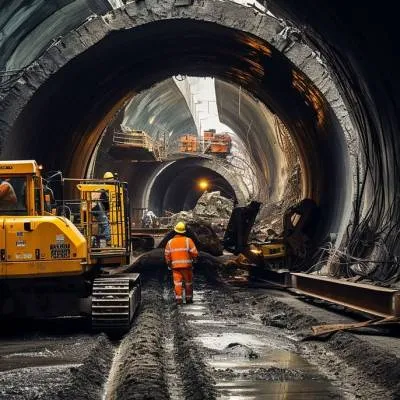
A tunnel will run for 58 kilometres of the 111 km span.

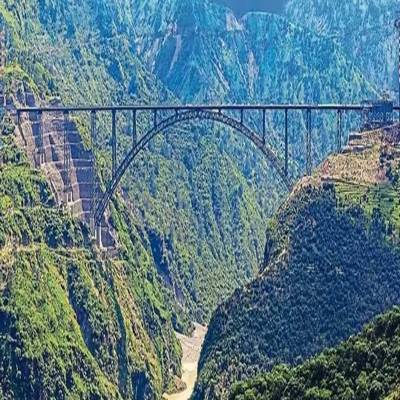
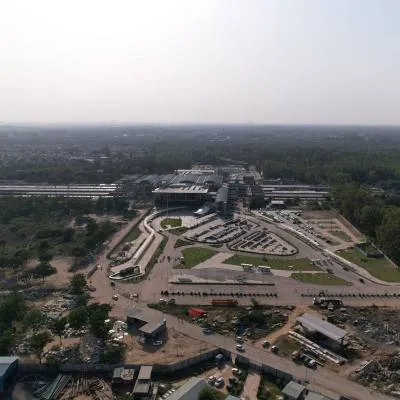
The work on the Reasi railway station in Jammu and Kashmir's Reasi district, which is part of the Jammu-Baramulla line, is nearing completion, with concrete slabs being poured at bridge number 39, which spans a 105-foot valley.

The bridge will be supported by 96 cables ranging in length from 82 m to 295 m, ensuring that the train can move at high speeds in the Himalayan area.

The Northern Railway succeeded in constructing the longest rail tunnel in the Katra-Banihal part in February.

With the line and level breakthrough in the 12.758 km long T 49 tunnel, work on linking Kashmir Valley to the rest of the nation by railroads would pick up speed.

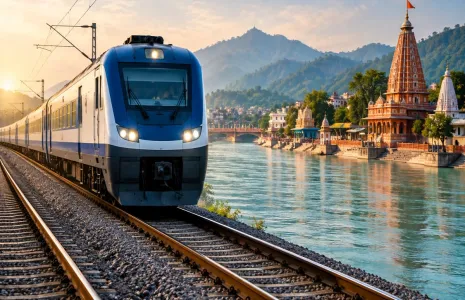
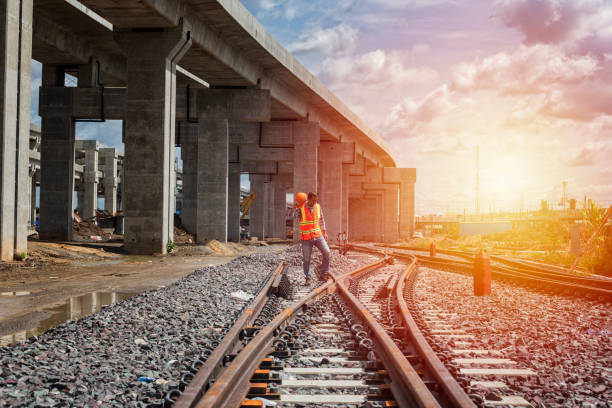
The train will go at a speed of 100 km per hour on this segment. The task of laying rails is now in progress.

The deck is now being built, and the Pylon work has been done. This deck will include composite steel slabs that are 15 m wide and 10 m deep.

The first phase entails the continuous casting of 370 metric tonnes of reinforced steel and 900 cusecs of concrete over a 196.25 m long deck.

The government's gigantic dream project will be fulfilled in mission mode for the time being. Direct rail services from Kashmir to Kanyakumari will begin after this project is completed.

This project is also significant from a strategic standpoint. In 2022, it was designated as a national project.

Image Source

The stations and tracks for the Sirnagar-Baramulla rail link massive project will be erected at a height greater than that of Qutab Minar, making train travel at such a height nothing less than a miracle. Ashutosh Gangal, general manager of Northern Railway, told the media that construction on the remaining 111 km of the complete 272 km route is progressing quickly. A tunnel will run for 58 kilometres of the 111 km span. The work on the Reasi railway station in Jammu and Kashmir's Reasi district, which is part of the Jammu-Baramulla line, is nearing completion, with concrete slabs being poured at bridge number 39, which spans a 105-foot valley. The bridge will be supported by 96 cables ranging in length from 82 m to 295 m, ensuring that the train can move at high speeds in the Himalayan area. The Northern Railway succeeded in constructing the longest rail tunnel in the Katra-Banihal part in February. With the line and level breakthrough in the 12.758 km long T 49 tunnel, work on linking Kashmir Valley to the rest of the nation by railroads would pick up speed. The train will go at a speed of 100 km per hour on this segment. The task of laying rails is now in progress. The deck is now being built, and the Pylon work has been done. This deck will include composite steel slabs that are 15 m wide and 10 m deep. The first phase entails the continuous casting of 370 metric tonnes of reinforced steel and 900 cusecs of concrete over a 196.25 m long deck. The government's gigantic dream project will be fulfilled in mission mode for the time being. Direct rail services from Kashmir to Kanyakumari will begin after this project is completed. This project is also significant from a strategic standpoint. In 2022, it was designated as a national project. Image Source

Next Story
Infrastructure Urban

Implementation Status of Jal Jeevan Mission

Since August 2019 the Government has implemented Jal Jeevan Mission to provide assured potable water through household tap connections in rural India. At the start of the mission only 32.3 million (mn) rural households, representing 16.7 per cent, were reported to have tap water connections. States and union territories have reported that 125.8 mn additional rural households have since been provided with tap connections. As a result, of about 193.6 mn rural households roughly 158.2 mn, or 81.71 per cent, are reported to have tap water supply at home.\n\nThe State, district and village level st..

Next Story
Infrastructure Urban

Jal Jeevan Mission Reaches Eighty One Per Cent Rural Coverage

The Government reported substantial progress under the Jal Jeevan Mission, launched in August 2019 to provide tap water to every rural household. At launch only 32.3 million (mn) rural households had tap connections and states and Union territories reported provision of 125.8 mn additional households by March 2026. Consequently, out of about 193.6 mn rural households around 158.2 mn, or 81.71 per cent, are reported to have tap water at home. The Finance Minister announced extension of the mission until 2028 in the 2025-26 budget speech. The Swachh Bharat Mission Grameen, launched in October 20..

Next Story
Infrastructure Urban

Empowering Local Governance for Sustainable Rural Water Supply

The Ministry of Jal Shakti has aligned the Jal Jeevan Mission (JJM) with the 73rd Amendment to strengthen village level planning and community ownership of water supply. Gram Panchayats, village water and sanitation committees and Pani Samitis are to plan, implement, manage and maintain piped water systems, with gram sabha processes formalising handover and oversight. Implementation support agencies including non government organisations, community based organisations and self help groups have been empanelled to train local committees and promote women participation. Under JJM, the department ..

Advertisement

Subscribe to Our Newsletter

Get daily newsletters around different themes from Construction world.

STAY CONNECTED

Advertisement

Advertisement

Advertisement