Cargo traffic at ports rise to 70.08 million tonnes in July: IPA
PORTS & SHIPPING

Cargo traffic at ports rise to 70.08 million tonnes in July: IPA

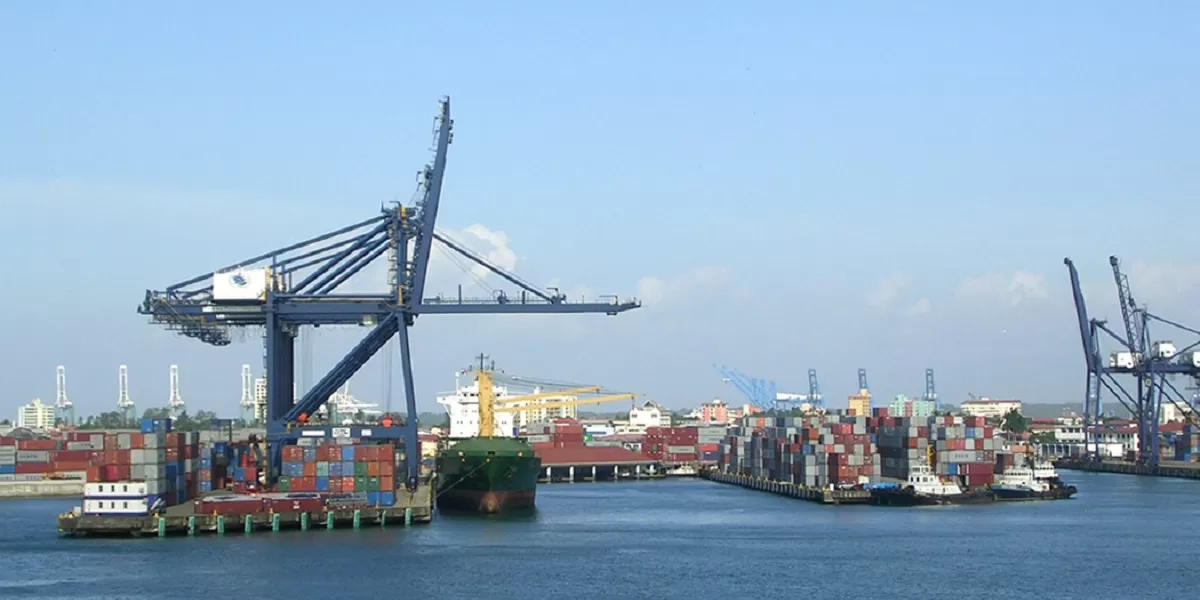
Cargo traffic at India's 12 major ports increased by 5.92% in July, reaching 70.08 million tonnes (MT) compared to 66.17 MT in the same month last year, according to data from the Indian Ports Association (IPA). Among these ports, 10 experienced positive growth in cargo handling, while 2 ports saw a decline. The major ports include Deendayal (Kandla), Mumbai, Mormugao, New Mangalore, Cochin, Chennai, Ennore (Kamarajar), Tuticorin (VO Chidambaranar), Visakhapatnam, Paradip, Kolkata (including Haldia), and Jawaharlal Nehru Port. Chennai Port recorded an 8.89% increase in traffic, while Deendayal Port and V O Chidambaranar Port saw growths of 7.13% and 6.74%, respectively. Paradip Port reported a 3.60% rise, SMP Kolkata Port 2.26%, and Kamarajar Port 0.69%. New Mangalore Port saw a slight increase of 0.18% in cargo traffic. Conversely, Mumbai Port experienced a 1.23% decrease, and Mormugao Port saw a 1% decline in cargo traffic, according to IPA. (Business Standard)

"Join industry leaders at RAHSTA Expo, India's premier platform for roads, highways and traffic infrastructure. Register now to explore innovations, network with experts and shape the future of mobility."

Cargo traffic at India's 12 major ports increased by 5.92% in July, reaching 70.08 million tonnes (MT) compared to 66.17 MT in the same month last year, according to data from the Indian Ports Association (IPA). Among these ports, 10 experienced positive growth in cargo handling, while 2 ports saw a decline. The major ports include Deendayal (Kandla), Mumbai, Mormugao, New Mangalore, Cochin, Chennai, Ennore (Kamarajar), Tuticorin (VO Chidambaranar), Visakhapatnam, Paradip, Kolkata (including Haldia), and Jawaharlal Nehru Port. Chennai Port recorded an 8.89% increase in traffic, while Deendayal Port and V O Chidambaranar Port saw growths of 7.13% and 6.74%, respectively. Paradip Port reported a 3.60% rise, SMP Kolkata Port 2.26%, and Kamarajar Port 0.69%. New Mangalore Port saw a slight increase of 0.18% in cargo traffic. Conversely, Mumbai Port experienced a 1.23% decrease, and Mormugao Port saw a 1% decline in cargo traffic, according to IPA. (Business Standard)

Next Story
Real Estate

The Workplace Reset

If the past few years have seen sustainability emerge as a buzzword in the design of commercial spaces, the next few years will see the focus shift to ‘experience’. Workplaces that prioritise superior employee experiences consistently report stronger talent attraction and higher retention rates and productivity, while using resources sustainably.First things first; what sort of experiences are expected from a workplace?As Vandana Dhawan Saxena, Founder and Design Principal, Studio IV Designs, explains, “Offices have grown into environments that need to support various kinds of experience..

Next Story
Infrastructure Urban

Designing Human-Centric High-Rises

The Institution of Engineers (India) (IEI), Navi Mumbai Local Centre, under the aegis of the Architectural Engineering Division Board, organised a one-day national seminar, ‘Reaching New Heights – Overcoming High-Rise Construction Challenges’, at CBD Belapur, Navi Mumbai.The seminar brought together architects, engineers, planners, developers, academicians and industry professionals to deliberate on the design, construction, operation and sustainability of tall buildings in rapidly urbanising cities...To read the full article Click Here ..

Next Story
Infrastructure Urban

Carbon-negative and ultra-low carbon are not just claims!

In an interaction with Construction World, Tarun Jami, Founder, GreenJams, explains how the company is cutting cement’s carbon footprint by 80 per cent through Binder, while scaling innovations such as Agrocrete® and Novastone to make buildings lighter, faster and carbon-negative.Agrocrete® is positioned as a carbon-negative material. What does this mean for developers?For developers, Agrocrete® offers a practical way to reduce embodied carbon at the material level. Since walling forms a significant part of a building’s material footprint, using carbon-negative blocks can bring the net ..

Advertisement

Subscribe to Our Newsletter

Get daily newsletters around different themes from Construction world.

STAY CONNECTED

Advertisement

Advertisement

Advertisement