

Concerns mount over VOC port project cost estimates
PORTS & SHIPPING

Concerns mount over VOC port project cost estimates

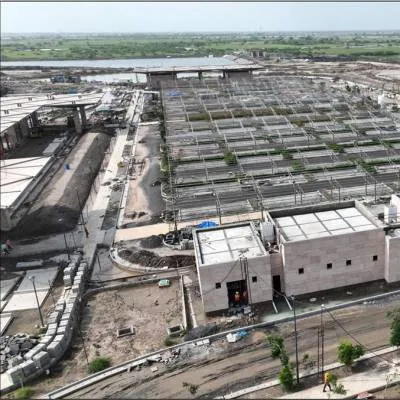
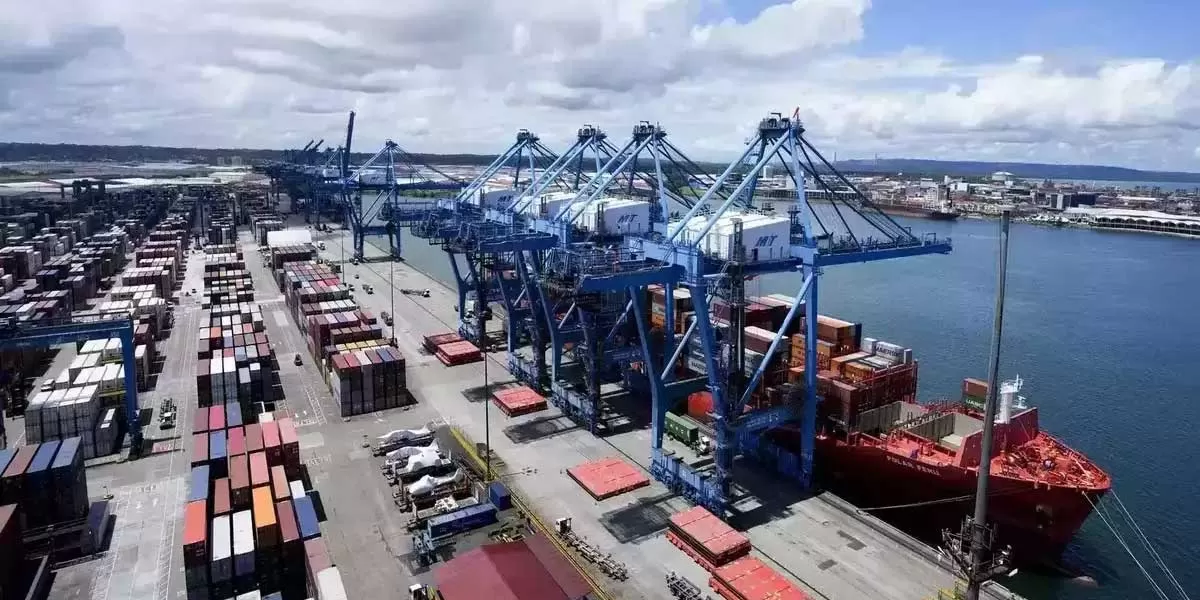
Potential bidders express concerns regarding VOC Port's outer harbour box terminal project cost estimates. The estimated investment is Rs 70,559.5 million for a four million twenty-foot equivalent units (TEUs) capacity container terminal. Bidders call for re-evaluating the project's cost, which they deem to be at least 50% lower than realistic estimates.

The National Technology Centre for Ports, Waterways and Coasts (NTCPWC) prepared the Detailed Project Report (DPR) for the project, estimating Rs 6,984.5 million for breakwater construction and Rs 12,335.1 million for dredging in the basin and outer harbour channel for the first phase. Concerns arise regarding the accuracy of these estimates.

Port expert Devdatta Bose highlights discrepancies in the estimated costs, particularly for breakwater construction and dredging. He suggests a higher cost analysis, indicating potential underestimation by NTCPWC.

The port authority defends the estimates, citing the methodology used and the proximity of material sources for construction. They maintain that the estimates were submitted for approval in January 2023.

Potential bidders propose revisiting cost estimates or increasing viability gap funding (VGF) to 50% to ensure project viability. However, the port authority stands by its estimates, expressing confidence in the methodology used.

Secretary TK Ramachandran assures flexibility in revisiting project terms if necessary. He encourages potential developers to approach the project with a positive mindset, emphasizing its viability and market-driven tariffs.

Suggestions are made to enhance the project's attractiveness, including allocating land for a free trade zone. These suggestions are acknowledged for further consideration.

Potential bidders express concerns regarding VOC Port's outer harbour box terminal project cost estimates. The estimated investment is Rs 70,559.5 million for a four million twenty-foot equivalent units (TEUs) capacity container terminal. Bidders call for re-evaluating the project's cost, which they deem to be at least 50% lower than realistic estimates. The National Technology Centre for Ports, Waterways and Coasts (NTCPWC) prepared the Detailed Project Report (DPR) for the project, estimating Rs 6,984.5 million for breakwater construction and Rs 12,335.1 million for dredging in the basin and outer harbour channel for the first phase. Concerns arise regarding the accuracy of these estimates. Port expert Devdatta Bose highlights discrepancies in the estimated costs, particularly for breakwater construction and dredging. He suggests a higher cost analysis, indicating potential underestimation by NTCPWC. The port authority defends the estimates, citing the methodology used and the proximity of material sources for construction. They maintain that the estimates were submitted for approval in January 2023. Potential bidders propose revisiting cost estimates or increasing viability gap funding (VGF) to 50% to ensure project viability. However, the port authority stands by its estimates, expressing confidence in the methodology used. Secretary TK Ramachandran assures flexibility in revisiting project terms if necessary. He encourages potential developers to approach the project with a positive mindset, emphasizing its viability and market-driven tariffs. Suggestions are made to enhance the project's attractiveness, including allocating land for a free trade zone. These suggestions are acknowledged for further consideration.

Next Story
Infrastructure Urban

Implementation Status of Jal Jeevan Mission

Since August 2019 the Government has implemented Jal Jeevan Mission to provide assured potable water through household tap connections in rural India. At the start of the mission only 32.3 million (mn) rural households, representing 16.7 per cent, were reported to have tap water connections. States and union territories have reported that 125.8 mn additional rural households have since been provided with tap connections. As a result, of about 193.6 mn rural households roughly 158.2 mn, or 81.71 per cent, are reported to have tap water supply at home.\n\nThe State, district and village level st..

Next Story
Infrastructure Urban

Jal Jeevan Mission Reaches Eighty One Per Cent Rural Coverage

The Government reported substantial progress under the Jal Jeevan Mission, launched in August 2019 to provide tap water to every rural household. At launch only 32.3 million (mn) rural households had tap connections and states and Union territories reported provision of 125.8 mn additional households by March 2026. Consequently, out of about 193.6 mn rural households around 158.2 mn, or 81.71 per cent, are reported to have tap water at home. The Finance Minister announced extension of the mission until 2028 in the 2025-26 budget speech. The Swachh Bharat Mission Grameen, launched in October 20..

Next Story
Infrastructure Urban

Empowering Local Governance for Sustainable Rural Water Supply

The Ministry of Jal Shakti has aligned the Jal Jeevan Mission (JJM) with the 73rd Amendment to strengthen village level planning and community ownership of water supply. Gram Panchayats, village water and sanitation committees and Pani Samitis are to plan, implement, manage and maintain piped water systems, with gram sabha processes formalising handover and oversight. Implementation support agencies including non government organisations, community based organisations and self help groups have been empanelled to train local committees and promote women participation. Under JJM, the department ..

Advertisement

Subscribe to Our Newsletter

Get daily newsletters around different themes from Construction world.

STAY CONNECTED

Advertisement

Advertisement

Advertisement