Vedanta Utilizes 2.60+ Bn Units of Renewable Energy in FY25
POWER & RENEWABLE ENERGY

Vedanta Utilizes 2.60+ Bn Units of Renewable Energy in FY25

On Akshay Urja Diwas, Vedanta, India’s leading critical minerals, transition metals, energy, and technology conglomerate, announced that it has consumed over 2.6 billion units of renewable energy in FY25, enough to power nearly 20 lakh Indian households for a year. This reflects a significant rise from 1.6 billion units in FY24, registering a 1.6x increase in clean energy utilization.

In Q1 FY26 alone, Vedanta consumed around 850 million units of renewable power, underscoring its accelerated green energy transition. The company has already secured power delivery agreements for 1.9 GW of renewable capacity, expected to become operational in the coming years, enabling major emission reductions across its businesses.

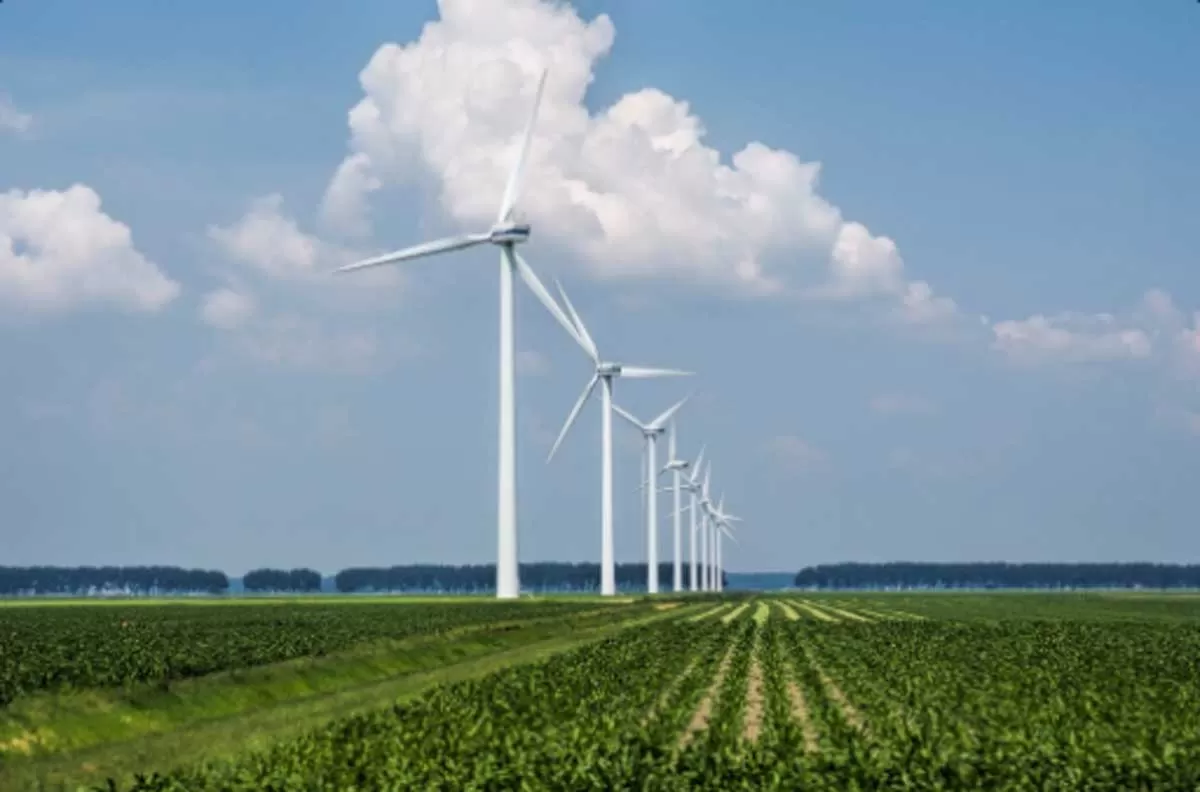
Subsidiaries such as Hindustan Zinc and BALCO have begun receiving renewable energy for operations, while other units will follow. Hindustan Zinc is also one of India’s largest wind power producers with 273.5 MW capacity spread across five states.

In addition, Vedanta continues to diversify its renewable portfolio through biomass energy, consuming 6.5 lakh gigajoules (GJ) in FY25—equivalent to the annual electricity requirement of 50,000 Indian homes. Its power arm, Talwandi Sabo Power (TSPL), has also enabled Punjab’s largest torrefied bio-pellet facility near its 1,980 MW Mansa-based plant.

Vedanta’s decarbonisation strategy is built on four levers:

  • Scaling up renewable energy
  • Transitioning to low-carbon fuels
  • Driving energy and process efficiency
  • Leveraging carbon offsets

Through these initiatives, Vedanta has introduced Restora & Restora Ultra, India’s first low-carbon ‘green’ aluminium, and EcoZen, Asia’s first low-carbon ‘green’ zinc. These products align with the needs of environmentally conscious customers seeking sustainable supply chains.

Over the past three years, the company has mitigated 28 million tonnes of carbon emissions, equivalent to the annual carbon absorption of over 1 billion trees. Vedanta has earned a (B) rating from the Carbon Disclosure Project (CDP) for its water security and climate change actions. Its aluminium and zinc product lines are also Environmental Product Declaration (EPD)-verified, offering transparency on their environmental footprint.

On Akshay Urja Diwas, Vedanta, India’s leading critical minerals, transition metals, energy, and technology conglomerate, announced that it has consumed over 2.6 billion units of renewable energy in FY25, enough to power nearly 20 lakh Indian households for a year. This reflects a significant rise from 1.6 billion units in FY24, registering a 1.6x increase in clean energy utilization.In Q1 FY26 alone, Vedanta consumed around 850 million units of renewable power, underscoring its accelerated green energy transition. The company has already secured power delivery agreements for 1.9 GW of renewable capacity, expected to become operational in the coming years, enabling major emission reductions across its businesses.Subsidiaries such as Hindustan Zinc and BALCO have begun receiving renewable energy for operations, while other units will follow. Hindustan Zinc is also one of India’s largest wind power producers with 273.5 MW capacity spread across five states.In addition, Vedanta continues to diversify its renewable portfolio through biomass energy, consuming 6.5 lakh gigajoules (GJ) in FY25—equivalent to the annual electricity requirement of 50,000 Indian homes. Its power arm, Talwandi Sabo Power (TSPL), has also enabled Punjab’s largest torrefied bio-pellet facility near its 1,980 MW Mansa-based plant.Vedanta’s decarbonisation strategy is built on four levers:Scaling up renewable energyTransitioning to low-carbon fuelsDriving energy and process efficiencyLeveraging carbon offsetsThrough these initiatives, Vedanta has introduced Restora & Restora Ultra, India’s first low-carbon ‘green’ aluminium, and EcoZen, Asia’s first low-carbon ‘green’ zinc. These products align with the needs of environmentally conscious customers seeking sustainable supply chains.Over the past three years, the company has mitigated 28 million tonnes of carbon emissions, equivalent to the annual carbon absorption of over 1 billion trees. Vedanta has earned a (B) rating from the Carbon Disclosure Project (CDP) for its water security and climate change actions. Its aluminium and zinc product lines are also Environmental Product Declaration (EPD)-verified, offering transparency on their environmental footprint.

Next Story
Infrastructure Transport

India Becomes First to Produce Bio-Bitumen for Roads

India has become the first country in the world to commercially produce bio-bitumen for use in road construction, according to Road, Transport and Highways Minister Nitin Gadkari. Bitumen, a black and viscous hydrocarbon derived from crude oil, is a key binding material in road building, and the bio-based alternative is expected to significantly improve the sector’s environmental footprint.Addressing the CSIR Technology Transfer Ceremony in New Delhi, Mr Gadkari congratulated Council of Scientific and Industrial Research on achieving the milestone, noting that the initiative would help curb ..

Next Story
Infrastructure Urban

HILT Policy Seen Boosting Telangana Revenue Sharply

The Hyderabad Industrial Land Transformation (HILT) Policy is expected to generate around Rs 1.08 billion in revenue for the Telangana state exchequer, according to Deputy Chief Minister Bhatti Vikramarka Mallu. Speaking in the Telangana Legislative Assembly, he said the policy would be implemented within a six-month timeframe in a transparent manner, with uniform rules applicable to all stakeholders. Mr Vikramarka noted that without the HILT Policy, the state would have earned only about Rs 1.2 million per acre. Under the new framework, however, revenue is projected to rise sharply to Rs 70 ..

Next Story
Infrastructure Urban

India Post, MoRD Tie Up to Boost Rural Inclusion

The Department of Posts and the Ministry of Rural Development have signed a Memorandum of Understanding to accelerate rural transformation and expand financial, digital and logistics services for Self-Help Groups (SHGs) and rural households across India. The agreement was signed in the presence of Union Minister of Communications and Development of North Eastern Region Jyotiraditya M. Scindia and Union Minister of Rural Development and Agriculture and Farmers’ Welfare Shivraj Singh Chouhan. The collaboration aligns with the government’s “Dak Sewa, Jan Sewa” vision and seeks to repositi..

Advertisement

Subscribe to Our Newsletter

Get daily newsletters around different themes from Construction world.

STAY CONNECTED

Advertisement

Advertisement

Advertisement

Advertisement

Open In App