




+
GE Shipping Takes Delivery Of Medium Range Tanker
PORTS & SHIPPING

GE Shipping Takes Delivery Of Medium Range Tanker

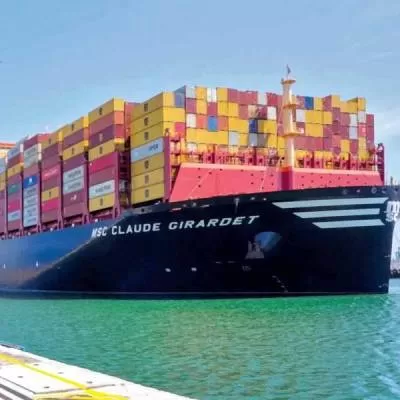
The Great Eastern Shipping Company Limited took delivery of the 2013 South Korean built medium range tanker Jag Pranesh of about 51,565 dwt on 24 February 2026. The company had contracted to buy the vessel in Q3 FY26 and financed the acquisition entirely from internal accruals. The addition increases the company owned fleet and enhances its tanker capacity. The vessel will be integrated into the company operational pool and deployed in line with chartering opportunities.

After this transaction the company owned fleet stands at 41 vessels, comprising 27 tankers, including five crude tankers, 17 product tankers and five LPG carriers, and 14 dry bulk carriers, comprising two Capesize, nine Kamsarmax, one Ultramax and two Supramax, aggregating 3.25 mn dwt. The company reported that current capacity utilisation is close to 100 per cent. The fleet mix supports a diversified presence across liquid and dry segments. The company indicated that the acquisition aligns with its strategy of fleet optimisation and operational resilience.

Additionally the company has contracted to sell one Very Large Gas Carrier named Jag Vishnu and expects the sale transaction to be completed in Q4 FY26. The disposal is part of ongoing portfolio management and will be finalised subject to customary closing formalities. Management will continue to monitor market conditions to optimise asset deployment and balance sheet outcomes.

The company notified the stock exchanges of the delivery and requested stakeholders to take note of the transaction. Further details have been communicated through corporate communications channels and the company will issue updates as necessary. The development reflects continued activity in the company fleet and a focus on sustaining operational capacity ahead.

The Great Eastern Shipping Company Limited took delivery of the 2013 South Korean built medium range tanker Jag Pranesh of about 51,565 dwt on 24 February 2026. The company had contracted to buy the vessel in Q3 FY26 and financed the acquisition entirely from internal accruals. The addition increases the company owned fleet and enhances its tanker capacity. The vessel will be integrated into the company operational pool and deployed in line with chartering opportunities. After this transaction the company owned fleet stands at 41 vessels, comprising 27 tankers, including five crude tankers, 17 product tankers and five LPG carriers, and 14 dry bulk carriers, comprising two Capesize, nine Kamsarmax, one Ultramax and two Supramax, aggregating 3.25 mn dwt. The company reported that current capacity utilisation is close to 100 per cent. The fleet mix supports a diversified presence across liquid and dry segments. The company indicated that the acquisition aligns with its strategy of fleet optimisation and operational resilience. Additionally the company has contracted to sell one Very Large Gas Carrier named Jag Vishnu and expects the sale transaction to be completed in Q4 FY26. The disposal is part of ongoing portfolio management and will be finalised subject to customary closing formalities. Management will continue to monitor market conditions to optimise asset deployment and balance sheet outcomes. The company notified the stock exchanges of the delivery and requested stakeholders to take note of the transaction. Further details have been communicated through corporate communications channels and the company will issue updates as necessary. The development reflects continued activity in the company fleet and a focus on sustaining operational capacity ahead.

Next Story
Infrastructure Urban

India Expands Semiconductor Training To 500 Institutions

Under the Chips to Startups programme of the India Semiconductor Mission, the Union minister responsible for Railways, Information and Broadcasting, and Electronics and IT reported notable progress in talent development. He indicated that over the past four years substantial steps have been taken towards a 10-year target of training 85,000 engineers in semiconductor design. World-class EDA tools have been deployed in 315 academic institutions across the country to provide students with practical exposure to chip design. These EDA tools are supported by leading global firms and are accessible t..

Next Story
Infrastructure Urban

Delhi Institutions Support India Semiconductor Mission

The Government of India has prioritised talent development through training, upskilling and workforce development under the Chips to Startups initiative of the India Semiconductor Mission, with officials noting progress in four years towards a 10-year target of training 85,000 engineers in semiconductor design. Electronic design automation tools provided by Synopsys, Cadence, Siemens, Renesas, Ansys and AMD have been deployed in 315 academic institutions, enabling students to gain practical chip design experience. Chips have been fabricated and tested at the Semiconductor Laboratory, Mohali, a..

Next Story
Infrastructure Urban

NHA Announces Winners Of NHCX Hackathon At IIT Hyderabad

The National Health Authority (NHA) has concluded the NHCX Hackathon under the Ayushman Bharat Digital Mission (ABDM) to stimulate innovation around the National Health Claims Exchange (NHCX). The winning teams presented their solutions at the NHCX Innovation Meet held at IIT Hyderabad during a two-day event in March 2026 that also served as the hackathon grand finale. The hackathon itself ran from 22 to 28 February 2026 and aimed to accelerate paperless, transparent claims processing across India. The event was organised with a range of ecosystem partners, including the Insurance Regulatory a..

Advertisement

Subscribe to Our Newsletter

Get daily newsletters around different themes from Construction world.

STAY CONNECTED

Advertisement

Advertisement

Advertisement