


IFSCA Proposes Foreign Flag Ships for Indian Ports
PORTS & SHIPPING

IFSCA Proposes Foreign Flag Ships for Indian Ports

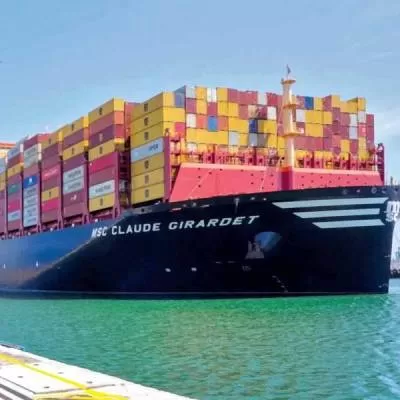
India's shipping sector faces scrutiny as the International Financial Services Centre Authority (IFSCA) seeks approval to permit foreign-flagged ships to operate from the Gujarat International Finance Tec-City (GIFT City). The move aims to alleviate challenges in the country's shipping industry, potentially introducing a solution to long-standing issues.

The proposal by IFSCA underscores the urgency of addressing woes in India's maritime sector. By allowing foreign-flagged ships to operate from GIFT City, a designated financial hub, the initiative seeks to enhance the efficiency and competitiveness of Indian ports. This could lead to improvements in logistics, trade, and overall maritime activities, contributing to the growth of the shipping industry.

The consideration of such a proposal highlights the complexity of challenges faced by Indian ports and the need for innovative solutions. The potential collaboration between IFSCA and GIFT City holds promise for transforming the landscape of the shipping sector, opening avenues for increased foreign participation and investment.

As discussions unfold, the maritime industry's stakeholders will keenly observe the potential impact on shipping operations and trade dynamics. The proposal signifies a step towards aligning India's shipping policies with global standards, fostering a more robust and internationally connected maritime infrastructure.

India's shipping sector faces scrutiny as the International Financial Services Centre Authority (IFSCA) seeks approval to permit foreign-flagged ships to operate from the Gujarat International Finance Tec-City (GIFT City). The move aims to alleviate challenges in the country's shipping industry, potentially introducing a solution to long-standing issues. The proposal by IFSCA underscores the urgency of addressing woes in India's maritime sector. By allowing foreign-flagged ships to operate from GIFT City, a designated financial hub, the initiative seeks to enhance the efficiency and competitiveness of Indian ports. This could lead to improvements in logistics, trade, and overall maritime activities, contributing to the growth of the shipping industry. The consideration of such a proposal highlights the complexity of challenges faced by Indian ports and the need for innovative solutions. The potential collaboration between IFSCA and GIFT City holds promise for transforming the landscape of the shipping sector, opening avenues for increased foreign participation and investment. As discussions unfold, the maritime industry's stakeholders will keenly observe the potential impact on shipping operations and trade dynamics. The proposal signifies a step towards aligning India's shipping policies with global standards, fostering a more robust and internationally connected maritime infrastructure.

Related Stories

Gold Stories

Next Story
Infrastructure Urban

KONE Opens India's First Digital Experience Centre in Pune

KONE, a global elevator and escalator manufacturer, has inaugurated its first Digital Experience Centre (DEC) in India, located in Pune. The facility aims to showcase how artificial intelligence (AI), connectivity and data-driven technologies can enhance customer experiences and improve building operations.The centre was inaugurated by Jussi Herlin, Executive Vice Chair, KONE Corporation; Philippe Delorme, President and CEO, KONE; and Nandan Nilekani, Co-founder and Chairman of the Board, Infosys.Designed as an interactive customer environment, the facility demonstrates digital solutions cover..

Next Story
Infrastructure Urban

CII GreenCo Launches Circularity Guidelines for Indian Industry

The Confederation of Indian Industry (CII) GreenCo Council has launched the CII GreenCo Circularity Guidelines – Pilot Version at the 17th CII GreenCo Waste & Resource Management Summit 2026 in Chennai. The initiative aims to strengthen resource efficiency, waste reduction and circular economy practices across Indian manufacturing and process industries.The guidelines introduce a structured framework with circularity indices covering raw materials, consumables, packaging and other resource inputs. These indicators will help industries assess existing practices, identify opportunities to ..

Next Story
Infrastructure Energy

Global Electronics Association Launches IPC-1783-CO2E Standard

The Global Electronics Association has introduced IPC-1783-CO2E, a new international standard aimed at improving consistency, transparency and comparability in product carbon footprint reporting across the electronics manufacturing industry.The standard, titled International Standard for Data Collection and Reporting of CO2 Equivalent (CO2e) Emissions for the Electronics Manufacturing Supply Chain, provides industry-specific guidance for collecting, estimating and reporting carbon emissions data.With increasing regulatory requirements and customer expectations, electronics manufacturers face c..

Advertisement

Subscribe to Our Newsletter

Get daily newsletters around different themes from Construction world.

STAY CONNECTED

Advertisement

SPECIAL OFFER
QR Code