



MSC Enhances Paradip-Colombo Connectivity
PORTS & SHIPPING

MSC Enhances Paradip-Colombo Connectivity

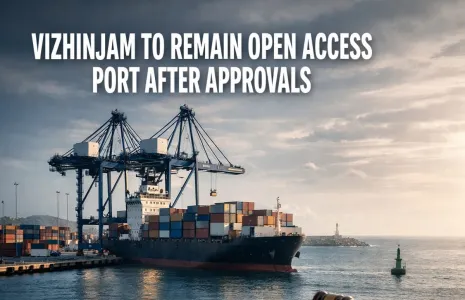
MSC, a global leader in shipping, has initiated a feeder service, strengthening maritime connectivity between Paradip and Colombo. This strategic move falls under the Odisha Government's visionary VGF scheme, fortifying regional trade dynamics.

The newly launched feeder service is a pivotal development in the maritime landscape, providing a reliable and efficient link between the ports of Paradip in India and Colombo in Sri Lanka. This initiative is set to catalyze economic growth, promoting smoother trade operations and fostering stronger ties between the two nations.

As part of the Odisha Government's VGF scheme, MSC's feeder service aligns with the broader vision to boost infrastructure and enhance logistical capabilities in the region. This collaboration signifies a commitment to facilitating seamless trade, reducing transit times, and optimising cargo movement.

Key Features:

Strategic Partnership: MSC's feeder service is a result of a strategic partnership with the Odisha Government, reflecting a shared commitment to economic development and maritime progress.

Efficient Cargo Movement: The Paradip-Colombo link is poised to streamline cargo movement, reducing delays and enhancing overall logistics efficiency for businesses in the region.

Regional Economic Impact: The initiative is expected to have a significant positive impact on the regional economy, creating new opportunities and contributing to job creation.

VGF Scheme Support: The Odisha Government's VGF scheme serves as a catalyst for this collaboration, providing essential support to bolster infrastructure and trade connectivity.

This development underscores the importance of robust maritime infrastructure in fostering international trade relations. MSC's commitment to elevating connectivity aligns with the broader vision of creating a dynamic and resilient trade ecosystem in the region.

MSC, a global leader in shipping, has initiated a feeder service, strengthening maritime connectivity between Paradip and Colombo. This strategic move falls under the Odisha Government's visionary VGF scheme, fortifying regional trade dynamics. The newly launched feeder service is a pivotal development in the maritime landscape, providing a reliable and efficient link between the ports of Paradip in India and Colombo in Sri Lanka. This initiative is set to catalyze economic growth, promoting smoother trade operations and fostering stronger ties between the two nations. As part of the Odisha Government's VGF scheme, MSC's feeder service aligns with the broader vision to boost infrastructure and enhance logistical capabilities in the region. This collaboration signifies a commitment to facilitating seamless trade, reducing transit times, and optimising cargo movement. Key Features: Strategic Partnership: MSC's feeder service is a result of a strategic partnership with the Odisha Government, reflecting a shared commitment to economic development and maritime progress. Efficient Cargo Movement: The Paradip-Colombo link is poised to streamline cargo movement, reducing delays and enhancing overall logistics efficiency for businesses in the region. Regional Economic Impact: The initiative is expected to have a significant positive impact on the regional economy, creating new opportunities and contributing to job creation. VGF Scheme Support: The Odisha Government's VGF scheme serves as a catalyst for this collaboration, providing essential support to bolster infrastructure and trade connectivity. This development underscores the importance of robust maritime infrastructure in fostering international trade relations. MSC's commitment to elevating connectivity aligns with the broader vision of creating a dynamic and resilient trade ecosystem in the region.

Next Story
Infrastructure Urban

Implementation Status of Jal Jeevan Mission

Since August 2019 the Government has implemented Jal Jeevan Mission to provide assured potable water through household tap connections in rural India. At the start of the mission only 32.3 million (mn) rural households, representing 16.7 per cent, were reported to have tap water connections. States and union territories have reported that 125.8 mn additional rural households have since been provided with tap connections. As a result, of about 193.6 mn rural households roughly 158.2 mn, or 81.71 per cent, are reported to have tap water supply at home.\n\nThe State, district and village level st..

Next Story
Infrastructure Urban

Jal Jeevan Mission Reaches Eighty One Per Cent Rural Coverage

The Government reported substantial progress under the Jal Jeevan Mission, launched in August 2019 to provide tap water to every rural household. At launch only 32.3 million (mn) rural households had tap connections and states and Union territories reported provision of 125.8 mn additional households by March 2026. Consequently, out of about 193.6 mn rural households around 158.2 mn, or 81.71 per cent, are reported to have tap water at home. The Finance Minister announced extension of the mission until 2028 in the 2025-26 budget speech. The Swachh Bharat Mission Grameen, launched in October 20..

Next Story
Infrastructure Urban

Empowering Local Governance for Sustainable Rural Water Supply

The Ministry of Jal Shakti has aligned the Jal Jeevan Mission (JJM) with the 73rd Amendment to strengthen village level planning and community ownership of water supply. Gram Panchayats, village water and sanitation committees and Pani Samitis are to plan, implement, manage and maintain piped water systems, with gram sabha processes formalising handover and oversight. Implementation support agencies including non government organisations, community based organisations and self help groups have been empanelled to train local committees and promote women participation. Under JJM, the department ..

Advertisement

Subscribe to Our Newsletter

Get daily newsletters around different themes from Construction world.

STAY CONNECTED

Advertisement

Advertisement

Advertisement