+
Oil PSUs Invest Rs 170 bn in Mega Shipping JV Led by SCI
PORTS & SHIPPING

Oil PSUs Invest Rs 170 bn in Mega Shipping JV Led by SCI

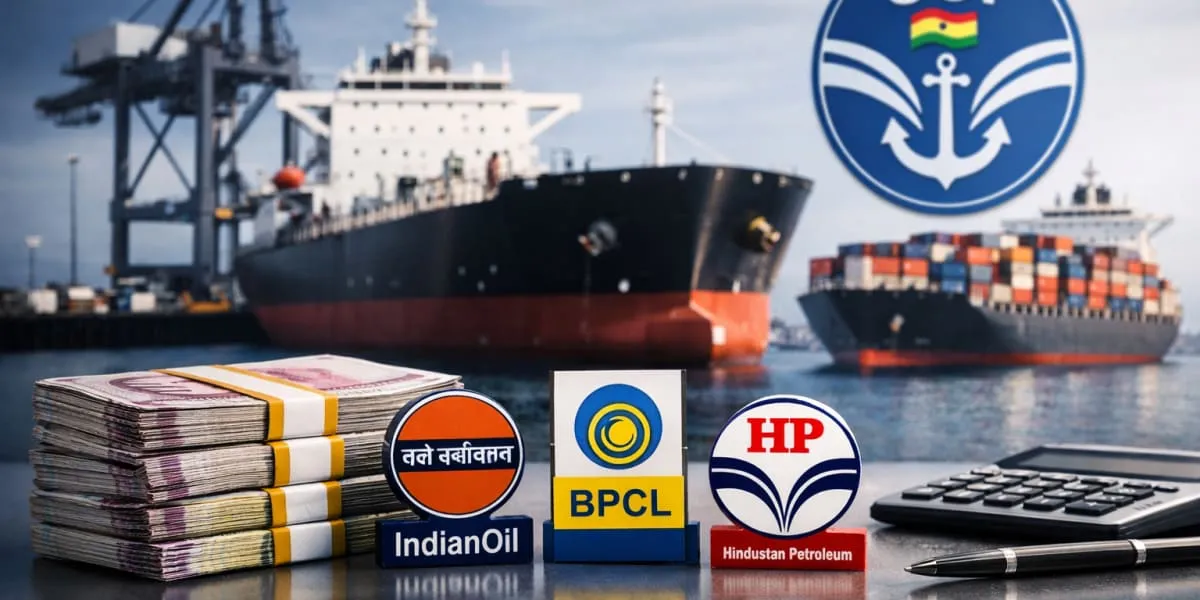
A consortium of Indian Oil Corporation Limited (IOCL), Bharat Petroleum Corporation Limited (BPCL) and Hindustan Petroleum Corporation Limited (HPCL) is set to invest in a major shipping joint venture led by the Shipping Corporation of India (SCI). Under the proposed structure SCI will hold 50 per cent majority, the Maritime Development Fund (MDF) will hold 15 per cent and the three oil PSUs will hold a combined 35 per cent stake.

The move is aimed at reducing reliance on foreign-flagged shipping, as nearly 90 per cent of India’s crude imports currently travel on non-Indian vessels. Analysts cited in the release calculated that India spends about $75 billion, roughly Rs 6.2 tn, annually on freight to foreign companies, exposing the energy chain to geopolitical disruptions and soaring insurance premiums during crises. Bringing shipping into a domestic, captive model is intended to retain freight outgo within the national economy and improve supply security.

The joint venture envisages the acquisition or construction of 59 new vessels by 2030 with planned capital deployment of about Rs 150 bn to Rs 170 bn. The fleet will include Very Large Crude Carriers, designated VLCCs, Very Large Gas Carriers, designated VLGCs, product tankers for refined fuels and offshore support vessels to assist exploration and production companies. A significant share of construction is expected to be sourced from Indian shipyards in line with the Atmanirbhar Bharat objective.

Officials described the initiative as a catalyst for reviving domestic shipbuilding, generating thousands of skilled maritime jobs and standardising designs for both commercial and naval requirements. The venture will also need rapid fleet modernisation and a commercial mindset to compete with global operators, while low-cost funding from the MDF will be a key determinant of pace. Sponsors expect the business to reach profitability within three years of full operations, transforming SCI into a strategic logistics asset and improving margins for the oil PSUs.

A consortium of Indian Oil Corporation Limited (IOCL), Bharat Petroleum Corporation Limited (BPCL) and Hindustan Petroleum Corporation Limited (HPCL) is set to invest in a major shipping joint venture led by the Shipping Corporation of India (SCI). Under the proposed structure SCI will hold 50 per cent majority, the Maritime Development Fund (MDF) will hold 15 per cent and the three oil PSUs will hold a combined 35 per cent stake. The move is aimed at reducing reliance on foreign-flagged shipping, as nearly 90 per cent of India’s crude imports currently travel on non-Indian vessels. Analysts cited in the release calculated that India spends about $75 billion, roughly Rs 6.2 tn, annually on freight to foreign companies, exposing the energy chain to geopolitical disruptions and soaring insurance premiums during crises. Bringing shipping into a domestic, captive model is intended to retain freight outgo within the national economy and improve supply security. The joint venture envisages the acquisition or construction of 59 new vessels by 2030 with planned capital deployment of about Rs 150 bn to Rs 170 bn. The fleet will include Very Large Crude Carriers, designated VLCCs, Very Large Gas Carriers, designated VLGCs, product tankers for refined fuels and offshore support vessels to assist exploration and production companies. A significant share of construction is expected to be sourced from Indian shipyards in line with the Atmanirbhar Bharat objective. Officials described the initiative as a catalyst for reviving domestic shipbuilding, generating thousands of skilled maritime jobs and standardising designs for both commercial and naval requirements. The venture will also need rapid fleet modernisation and a commercial mindset to compete with global operators, while low-cost funding from the MDF will be a key determinant of pace. Sponsors expect the business to reach profitability within three years of full operations, transforming SCI into a strategic logistics asset and improving margins for the oil PSUs.

Next Story
Infrastructure Urban

Implementation Status of Jal Jeevan Mission

Since August 2019 the Government has implemented Jal Jeevan Mission to provide assured potable water through household tap connections in rural India. At the start of the mission only 32.3 million (mn) rural households, representing 16.7 per cent, were reported to have tap water connections. States and union territories have reported that 125.8 mn additional rural households have since been provided with tap connections. As a result, of about 193.6 mn rural households roughly 158.2 mn, or 81.71 per cent, are reported to have tap water supply at home.\n\nThe State, district and village level st..

Next Story
Infrastructure Urban

Jal Jeevan Mission Reaches Eighty One Per Cent Rural Coverage

The Government reported substantial progress under the Jal Jeevan Mission, launched in August 2019 to provide tap water to every rural household. At launch only 32.3 million (mn) rural households had tap connections and states and Union territories reported provision of 125.8 mn additional households by March 2026. Consequently, out of about 193.6 mn rural households around 158.2 mn, or 81.71 per cent, are reported to have tap water at home. The Finance Minister announced extension of the mission until 2028 in the 2025-26 budget speech. The Swachh Bharat Mission Grameen, launched in October 20..

Next Story
Infrastructure Urban

Empowering Local Governance for Sustainable Rural Water Supply

The Ministry of Jal Shakti has aligned the Jal Jeevan Mission (JJM) with the 73rd Amendment to strengthen village level planning and community ownership of water supply. Gram Panchayats, village water and sanitation committees and Pani Samitis are to plan, implement, manage and maintain piped water systems, with gram sabha processes formalising handover and oversight. Implementation support agencies including non government organisations, community based organisations and self help groups have been empanelled to train local committees and promote women participation. Under JJM, the department ..

Advertisement

Subscribe to Our Newsletter

Get daily newsletters around different themes from Construction world.

STAY CONNECTED

Advertisement

Advertisement

Advertisement