PM Modi to Inaugurate Rs. 2.61 bn Coal Berth at Kamarajar Port
PORTS & SHIPPING

PM Modi to Inaugurate Rs. 2.61 bn Coal Berth at Kamarajar Port

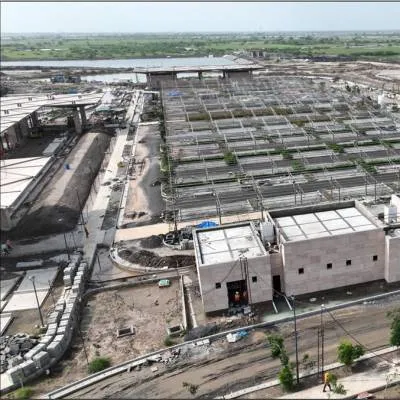
Prime Minister Narendra Modi is scheduled to inaugurate Coal Berth–3 at Kamarajar Port on Sunday and lay the foundation stone for the modernisation of an ageing cargo berth. The two projects, with a combined investment of Rs. 4.82 bn, are intended to strengthen Tamil Nadu’s energy security, improve maritime logistics and support industrial activity.

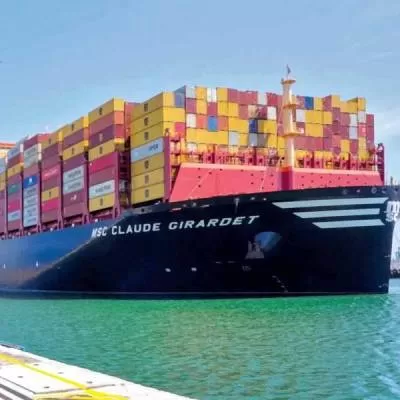
The new Coal Berth–3, developed at a cost of Rs. 2.61 bn, will have an annual handling capacity of 9 mn t. It will be operated on a captive basis by Tamil Nadu Power Generation Corporation (TNPGCL), serving the state utility’s requirements rather than third-party cargo. The berth is designed to handle Capesize vessels, the largest class of dry-bulk carriers, with drafts of up to 18 metres.

The facility will have two ship unloaders, each capable of handling 2,000 t an hour. A conveyor system with a capacity of 4,000 t an hour will transport coal directly to the North Chennai thermal power plants.

General Cargo Berth–1 (GCB–1), which currently has an annual capacity of 3 mn t, will be upgraded and mechanised under a public-private partnership. The estimated investment is Rs. 2.21 bn. The work is intended to accelerate cargo handling, increase throughput, expand the range of commodities handled and reduce the time vessels remain alongside the berth.

Kamarajar Port said the GCB–1 project would encourage private-sector participation and improve the port’s logistics efficiency and competitiveness. The port authority also said the two developments would reinforce its role in Tamil Nadu’s energy network and maritime logistics. The coal berth is intended to provide a dedicated route for fuel supplies, while the cargo berth upgrade is designed to support more efficient commercial operations. The projects are aligned with the government’s Viksit Bharat 2047 development vision, according to the release.

Prime Minister Narendra Modi is scheduled to inaugurate Coal Berth–3 at Kamarajar Port on Sunday and lay the foundation stone for the modernisation of an ageing cargo berth. The two projects, with a combined investment of Rs. 4.82 bn, are intended to strengthen Tamil Nadu’s energy security, improve maritime logistics and support industrial activity. The new Coal Berth–3, developed at a cost of Rs. 2.61 bn, will have an annual handling capacity of 9 mn t. It will be operated on a captive basis by Tamil Nadu Power Generation Corporation (TNPGCL), serving the state utility’s requirements rather than third-party cargo. The berth is designed to handle Capesize vessels, the largest class of dry-bulk carriers, with drafts of up to 18 metres. The facility will have two ship unloaders, each capable of handling 2,000 t an hour. A conveyor system with a capacity of 4,000 t an hour will transport coal directly to the North Chennai thermal power plants. General Cargo Berth–1 (GCB–1), which currently has an annual capacity of 3 mn t, will be upgraded and mechanised under a public-private partnership. The estimated investment is Rs. 2.21 bn. The work is intended to accelerate cargo handling, increase throughput, expand the range of commodities handled and reduce the time vessels remain alongside the berth. Kamarajar Port said the GCB–1 project would encourage private-sector participation and improve the port’s logistics efficiency and competitiveness. The port authority also said the two developments would reinforce its role in Tamil Nadu’s energy network and maritime logistics. The coal berth is intended to provide a dedicated route for fuel supplies, while the cargo berth upgrade is designed to support more efficient commercial operations. The projects are aligned with the government’s Viksit Bharat 2047 development vision, according to the release.

Related Stories

Gold Stories

Next Story
Products

Antica Ceramica launches terracotta breeze block collection

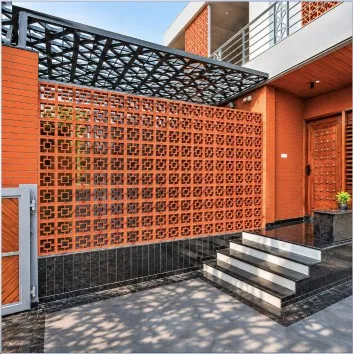
Antica Ceramica has introduced its Terracotta Breeze Block Collection, combining terracotta craftsmanship with functional applications in contemporary architecture. The collection is designed for architects, interior designers and homeowners seeking decorative architectural elements that provide natural ventilation, filtered light and privacy.Traditionally used for ventilated partitions and enclosures, terracotta breeze blocks are increasingly being incorporated into residential and commercial spaces as design features. Antica Ceramica's collection can be used across facades, balcony enclosure..

Next Story
Infrastructure Urban

Shivtek Enters Electronic-Grade Speciality Chemicals Market

Shivtek Spechemi Industries, a flagship company of the Shiva Group of Industries, recently announced its entry into India’s semiconductor manufacturing value chain through the production of electronic-grade speciality chemicals.The company plans to establish a manufacturing facility in Pungam, Gujarat, with a proposed annual production capacity of 50,000 tonnes of electronic-grade hydrochloric acid (HCl), 6,000 tonnes of isopropyl alcohol (IPA) under Phase I, and 5,000 tonnes of hydrogen peroxide (H2O2).Commercial production of electronic-grade hydrochloric acid is expected to commence in FY..
Next Story
Infrastructure Urban

SFC Environmental Reports 80.5% Revenue Growth in H1 FY27

SFC Environmental Technologies recently announced its first financial results as a listed company for the quarter and half year ended September 30, 2026. The company reported an 80.5 per cent year-on-year (YoY) increase in revenue from operations to Rs 2.97 billion in H1 FY27.EBITDA increased by 86.9 per cent YoY to Rs 200.5 million, with an EBITDA margin of 6.8 per cent. Profit after tax (PAT) rose to Rs 35.8 million from Rs 0.4 million in H1 FY26. The company’s order book stood at Rs 16.56 billion, approximately 2.1 times its FY26 revenue.The wastewater treatment segment recorded a 77.6 pe..

Subscribe to Our Newsletter

Get daily newsletters around different themes from Construction world.

STAY CONNECTED

Advertisement

SPECIAL OFFER
QR Code