+
Tamil Nadu Unveils Shipbuilding Policy 2026 To Boost Green Maritime Technology
PORTS & SHIPPING

Tamil Nadu Unveils Shipbuilding Policy 2026 To Boost Green Maritime Technology

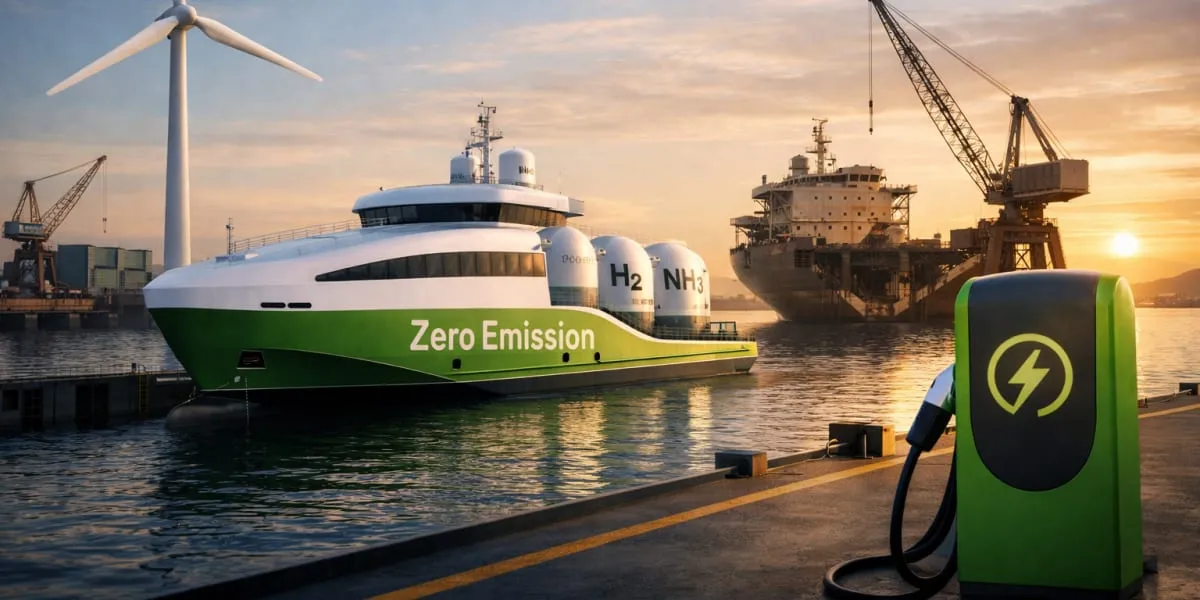
Tamil Nadu unveiled Shipbuilding Policy 2026, prioritising green shipbuilding and circular economy practices. The policy aims to establish the state as a leader in sustainable maritime technology and to promote zero-emission vessels and green recycling facilities. The measure provides incentives for vessels powered by green hydrogen, ammonia and electric propulsion.

It aligns with India's Maritime Amrit Kaal Vision 2047 to lower carbon emissions across the shipping fleet. The policy promotes Green Ship Recycling clusters and offers a 15 per cent capital subsidy to the first five recycling yards that obtain international environmental certifications. The yards will supply low-carbon ferrous scrap under Waste to Wealth principles.

A Sunrise Sector status is created for marine component manufacturers to encourage eco-friendly technologies and a domestic supply chain. Investments of at least Rs 500 million (mn) in this category will qualify for a structured package of incentives. The state will work with the Indian Maritime University to introduce a specialised Green Shipping Technology curriculum.

The policy proposes a single-window clearance system and financial assistance to attract global demand for green shipbuilding. A five-year roadmap seeks to correct the market share gap where India accounts for zero point zero six per cent of global shipbuilding. The document aims to integrate regulation, finance and skills to boost competitiveness.

The state intends to leverage its 1,068 km coastline and natural deep-water access to facilitate construction of high-value vessels, including Very Large Crude Carriers exceeding 200,000 Dead Weight Tons. Favourable bathymetry is cited as reducing the need for dredging and the tropical climate in southern districts is expected to enable year-round shipbuilding and repair operations.

A Structured Package of Assistance is proposed for shipyards committing a minimum investment of Rs 10 billion (bn) and the creation of at least 1,000 jobs. Investors are offered four financial models including state equity participation up to 49 per cent, asset leasing up to Rs 60 billion (bn) and tiered capital subsidies of 10 to 25 per cent. The state will form NSHIPTN and a Shipbuilding Skill Council to support infrastructure and research.

Tamil Nadu unveiled Shipbuilding Policy 2026, prioritising green shipbuilding and circular economy practices. The policy aims to establish the state as a leader in sustainable maritime technology and to promote zero-emission vessels and green recycling facilities. The measure provides incentives for vessels powered by green hydrogen, ammonia and electric propulsion. It aligns with India's Maritime Amrit Kaal Vision 2047 to lower carbon emissions across the shipping fleet. The policy promotes Green Ship Recycling clusters and offers a 15 per cent capital subsidy to the first five recycling yards that obtain international environmental certifications. The yards will supply low-carbon ferrous scrap under Waste to Wealth principles. A Sunrise Sector status is created for marine component manufacturers to encourage eco-friendly technologies and a domestic supply chain. Investments of at least Rs 500 million (mn) in this category will qualify for a structured package of incentives. The state will work with the Indian Maritime University to introduce a specialised Green Shipping Technology curriculum. The policy proposes a single-window clearance system and financial assistance to attract global demand for green shipbuilding. A five-year roadmap seeks to correct the market share gap where India accounts for zero point zero six per cent of global shipbuilding. The document aims to integrate regulation, finance and skills to boost competitiveness. The state intends to leverage its 1,068 km coastline and natural deep-water access to facilitate construction of high-value vessels, including Very Large Crude Carriers exceeding 200,000 Dead Weight Tons. Favourable bathymetry is cited as reducing the need for dredging and the tropical climate in southern districts is expected to enable year-round shipbuilding and repair operations. A Structured Package of Assistance is proposed for shipyards committing a minimum investment of Rs 10 billion (bn) and the creation of at least 1,000 jobs. Investors are offered four financial models including state equity participation up to 49 per cent, asset leasing up to Rs 60 billion (bn) and tiered capital subsidies of 10 to 25 per cent. The state will form NSHIPTN and a Shipbuilding Skill Council to support infrastructure and research.

Next Story
Infrastructure Urban

India Expands Semiconductor Training To 500 Institutions

Under the Chips to Startups programme of the India Semiconductor Mission, the Union minister responsible for Railways, Information and Broadcasting, and Electronics and IT reported notable progress in talent development. He indicated that over the past four years substantial steps have been taken towards a 10-year target of training 85,000 engineers in semiconductor design. World-class EDA tools have been deployed in 315 academic institutions across the country to provide students with practical exposure to chip design. These EDA tools are supported by leading global firms and are accessible t..

Next Story
Infrastructure Urban

Delhi Institutions Support India Semiconductor Mission

The Government of India has prioritised talent development through training, upskilling and workforce development under the Chips to Startups initiative of the India Semiconductor Mission, with officials noting progress in four years towards a 10-year target of training 85,000 engineers in semiconductor design. Electronic design automation tools provided by Synopsys, Cadence, Siemens, Renesas, Ansys and AMD have been deployed in 315 academic institutions, enabling students to gain practical chip design experience. Chips have been fabricated and tested at the Semiconductor Laboratory, Mohali, a..

Next Story
Infrastructure Urban

NHA Announces Winners Of NHCX Hackathon At IIT Hyderabad

The National Health Authority (NHA) has concluded the NHCX Hackathon under the Ayushman Bharat Digital Mission (ABDM) to stimulate innovation around the National Health Claims Exchange (NHCX). The winning teams presented their solutions at the NHCX Innovation Meet held at IIT Hyderabad during a two-day event in March 2026 that also served as the hackathon grand finale. The hackathon itself ran from 22 to 28 February 2026 and aimed to accelerate paperless, transparent claims processing across India. The event was organised with a range of ecosystem partners, including the Insurance Regulatory a..

Advertisement

Subscribe to Our Newsletter

Get daily newsletters around different themes from Construction world.

STAY CONNECTED

Advertisement

Advertisement

Advertisement