






+
Army Renames 246 Military Sites To Shed Colonial Legacy
DEFENSE

Army Renames 246 Military Sites To Shed Colonial Legacy

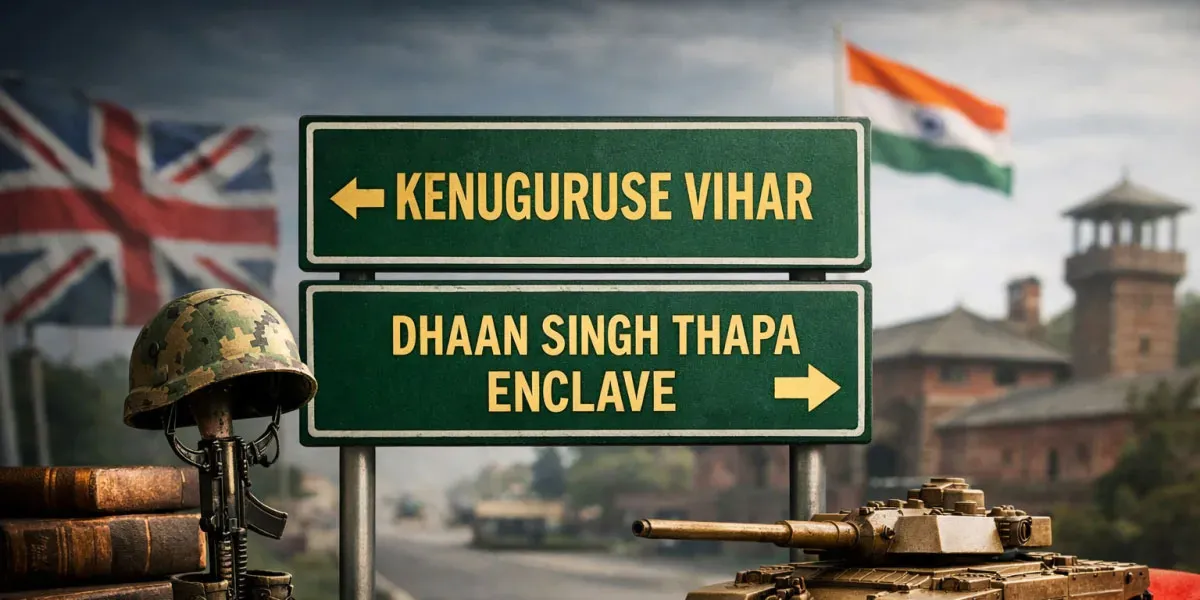
The Indian Army has renamed 246 roads, buildings and facilities across cantonments and military stations to shed colonial-era names and honour figures from India’s military history. In Delhi Cantonment, Kirby Place has been renamed Kenuguruse Vihar and Mall Road is now Arun Khetrapal Marg. In Ambala Cantonment, Patterson Road Quarters has been redesignated Dhan Singh Thapa Enclave, while New Horn Line in Mathura Cantonment has been renamed Abdul Hamid Lines. The programme covers a broad range of residential, administrative and training sites.

Other changes include Queens Line Road in Jaipur Cantonment, which has been renamed Sundar Singh Marg, New Birdwood Line in Bareilly Cantonment, now Thimayya Colony, and Malcolm Lines in Mhow Cantonment, which has been rechristened Piru Singh Lines. At the Indian Military Academy in Dehradun, Colins Block has been renamed Nubra Block and Kingsway Block is now Kargil Block. In Kolkata, Fort William has been renamed Vijay Durg. The Sports Complex at Rangapahar Military Station has been renamed the Laishram Jyotin Singh Sports Complex and Spear Lake Marg at Zakhama Military Station is now Hangpan Dada Marg.

Officials said the renamings are intended to commemorate distinguished service and exemplary leadership displayed across different operations and campaigns. The initiative is presented as a measure to embed national military heritage within the Army's living, training and working environments. Authorities indicated that the changes form part of a broader effort to reinforce the institution's commitment to India’s sovereignty, integrity and enduring values. Administrative updates to signage, records and maps are being carried out as the new names are adopted.

Observers noted that the move follows similar renaming efforts by other public bodies, including the railways, which has renamed the Waltair division as Visakhapatnam. The Army’s action is being described as part of an ongoing reappraisal of historical nomenclature across public spaces. Service departments will implement the revised toponymy through phased administrative procedures. Officials said the process aims to ensure continuity of operational clarity while reflecting national heritage.

The Indian Army has renamed 246 roads, buildings and facilities across cantonments and military stations to shed colonial-era names and honour figures from India’s military history. In Delhi Cantonment, Kirby Place has been renamed Kenuguruse Vihar and Mall Road is now Arun Khetrapal Marg. In Ambala Cantonment, Patterson Road Quarters has been redesignated Dhan Singh Thapa Enclave, while New Horn Line in Mathura Cantonment has been renamed Abdul Hamid Lines. The programme covers a broad range of residential, administrative and training sites. Other changes include Queens Line Road in Jaipur Cantonment, which has been renamed Sundar Singh Marg, New Birdwood Line in Bareilly Cantonment, now Thimayya Colony, and Malcolm Lines in Mhow Cantonment, which has been rechristened Piru Singh Lines. At the Indian Military Academy in Dehradun, Colins Block has been renamed Nubra Block and Kingsway Block is now Kargil Block. In Kolkata, Fort William has been renamed Vijay Durg. The Sports Complex at Rangapahar Military Station has been renamed the Laishram Jyotin Singh Sports Complex and Spear Lake Marg at Zakhama Military Station is now Hangpan Dada Marg. Officials said the renamings are intended to commemorate distinguished service and exemplary leadership displayed across different operations and campaigns. The initiative is presented as a measure to embed national military heritage within the Army's living, training and working environments. Authorities indicated that the changes form part of a broader effort to reinforce the institution's commitment to India’s sovereignty, integrity and enduring values. Administrative updates to signage, records and maps are being carried out as the new names are adopted. Observers noted that the move follows similar renaming efforts by other public bodies, including the railways, which has renamed the Waltair division as Visakhapatnam. The Army’s action is being described as part of an ongoing reappraisal of historical nomenclature across public spaces. Service departments will implement the revised toponymy through phased administrative procedures. Officials said the process aims to ensure continuity of operational clarity while reflecting national heritage.

Next Story
Infrastructure Urban

Implementation Status of Jal Jeevan Mission

Since August 2019 the Government has implemented Jal Jeevan Mission to provide assured potable water through household tap connections in rural India. At the start of the mission only 32.3 million (mn) rural households, representing 16.7 per cent, were reported to have tap water connections. States and union territories have reported that 125.8 mn additional rural households have since been provided with tap connections. As a result, of about 193.6 mn rural households roughly 158.2 mn, or 81.71 per cent, are reported to have tap water supply at home.\n\nThe State, district and village level st..

Next Story
Infrastructure Urban

Jal Jeevan Mission Reaches Eighty One Per Cent Rural Coverage

The Government reported substantial progress under the Jal Jeevan Mission, launched in August 2019 to provide tap water to every rural household. At launch only 32.3 million (mn) rural households had tap connections and states and Union territories reported provision of 125.8 mn additional households by March 2026. Consequently, out of about 193.6 mn rural households around 158.2 mn, or 81.71 per cent, are reported to have tap water at home. The Finance Minister announced extension of the mission until 2028 in the 2025-26 budget speech. The Swachh Bharat Mission Grameen, launched in October 20..

Next Story
Infrastructure Urban

Empowering Local Governance for Sustainable Rural Water Supply

The Ministry of Jal Shakti has aligned the Jal Jeevan Mission (JJM) with the 73rd Amendment to strengthen village level planning and community ownership of water supply. Gram Panchayats, village water and sanitation committees and Pani Samitis are to plan, implement, manage and maintain piped water systems, with gram sabha processes formalising handover and oversight. Implementation support agencies including non government organisations, community based organisations and self help groups have been empanelled to train local committees and promote women participation. Under JJM, the department ..

Advertisement

Subscribe to Our Newsletter

Get daily newsletters around different themes from Construction world.

STAY CONNECTED

Advertisement

Advertisement

Advertisement











