



India Strengthens National Space Infrastructure In 2025
DEFENSE

India Strengthens National Space Infrastructure In 2025

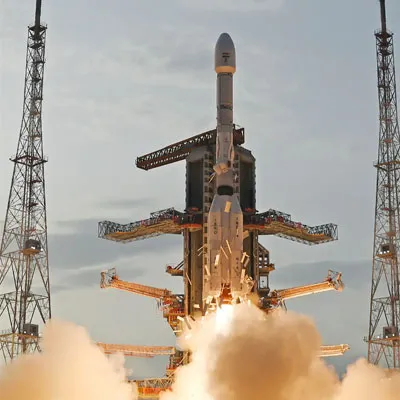
The Indian Space Research Organisation (ISRO) reported key advances in national launch and space infrastructure in 2025. The SPADEX mission demonstrated autonomous docking and undocking with power transfer and completed circumnavigation, making India the fourth nation to demonstrate docking in space. The PSLV Orbital Experimental Module (POEM-04) carried multiple payloads from ISRO, startups and academia, completed over 1,000 orbits and demonstrated a robotic arm and seed germination.

GSLV-F15/NVS-02 was the 100th mission to lift off from Sriharikota and injected its satellite precisely to the intended orbit. GSLV-F16 carried NISAR, the NASA-ISRO Synthetic Aperture Radar satellite with a twelve metre unfurlable antenna, marking the first joint ISRO-NASA mission; NISAR, the first dual frequency SAR satellite, is now fully operational. LVM3 missions achieved heaviest payload milestones and validated S200 actuation improvements.

The Department of Space obtained financial approval for a third launch pad at Sriharikota and is establishing a dedicated launch site for the Small Satellite Launch Vehicle (SSLV) at Kulasekarapattinam, Tamil Nadu, with construction under way. A 10 tonne (t) vertical mixer and an additional process line at the Ammonium Perchlorate Plant were commissioned, while cryogenic turbopump testing and an integrated titanium alloy tank production facility were brought into operation.

ISRO completed and qualified a high thrust electric propulsion system rated at 300 mN and demonstrated re-ignition of a cryogenic thrust chamber in flight and bootstrap starting of a gas-generator cycle cryogenic engine during ground tests, advancing reusable transportation efforts. Indigenous processor development advanced with the VIKRAM3201 32-bit processor and the KALPANA32 SPARC-based processor realised jointly with Semiconductor Laboratory (SCL).

Industry received SSLV technology and transfers of batteries, integrated modular avionics and sensors, while firms and start-ups realised micro earth observation satellites. Three industries will produce about 0.1 million (mn) two way mobile satellite service (MSS) terminals and NewSpace India Limited signed 100 technology transfer agreements. ISRO noted ten cooperative international documents in 2025 and reported more than 2,260 disaster management datasets; the minister provided the information in a written reply.

The Indian Space Research Organisation (ISRO) reported key advances in national launch and space infrastructure in 2025. The SPADEX mission demonstrated autonomous docking and undocking with power transfer and completed circumnavigation, making India the fourth nation to demonstrate docking in space. The PSLV Orbital Experimental Module (POEM-04) carried multiple payloads from ISRO, startups and academia, completed over 1,000 orbits and demonstrated a robotic arm and seed germination. GSLV-F15/NVS-02 was the 100th mission to lift off from Sriharikota and injected its satellite precisely to the intended orbit. GSLV-F16 carried NISAR, the NASA-ISRO Synthetic Aperture Radar satellite with a twelve metre unfurlable antenna, marking the first joint ISRO-NASA mission; NISAR, the first dual frequency SAR satellite, is now fully operational. LVM3 missions achieved heaviest payload milestones and validated S200 actuation improvements. The Department of Space obtained financial approval for a third launch pad at Sriharikota and is establishing a dedicated launch site for the Small Satellite Launch Vehicle (SSLV) at Kulasekarapattinam, Tamil Nadu, with construction under way. A 10 tonne (t) vertical mixer and an additional process line at the Ammonium Perchlorate Plant were commissioned, while cryogenic turbopump testing and an integrated titanium alloy tank production facility were brought into operation. ISRO completed and qualified a high thrust electric propulsion system rated at 300 mN and demonstrated re-ignition of a cryogenic thrust chamber in flight and bootstrap starting of a gas-generator cycle cryogenic engine during ground tests, advancing reusable transportation efforts. Indigenous processor development advanced with the VIKRAM3201 32-bit processor and the KALPANA32 SPARC-based processor realised jointly with Semiconductor Laboratory (SCL). Industry received SSLV technology and transfers of batteries, integrated modular avionics and sensors, while firms and start-ups realised micro earth observation satellites. Three industries will produce about 0.1 million (mn) two way mobile satellite service (MSS) terminals and NewSpace India Limited signed 100 technology transfer agreements. ISRO noted ten cooperative international documents in 2025 and reported more than 2,260 disaster management datasets; the minister provided the information in a written reply.

Next Story
Infrastructure Urban

HVAC: Cool Advice

India’s Cooling Action Plan forecasts cooling demand to grow nearly eight times in the next 20 years. In light of the fact that cooling is no longer just a comfort product but lies at the intersection of national development, public health, climate action and energy security, this means the HVAC industry shoulders a very serious responsibility. Mihir Sanghavi, Managing Partner, Auro Engineering Company, Immediate Past President RATA, Secretary, ISHRAE, and Regional Representative, ASHRAE Region XV, describes that responsibility as “identifying a system that can serve for 15 to 20 years o..

Next Story
Infrastructure Urban

Wanted: 2 Million Workers

Construction, India’s second largest employer by industry, employs about 50 million workers but could additionally absorb another 40 million workers, according to estimates shared by the Construction Skill Development Council of India (CSDCI) in 2023. Within this, citing trade estimates, Rahul Bahl, Managing Director, Krishna Buildestates, says the shortage of trained, skilled workers is currently about 2 million, and is expected to rise to 5 million by 2030.Not only is the construction industry struggling to find workers but construction labour productivity in India significantly trails glo..

Next Story
Infrastructure Transport

The Critical Path

In Ircon International Ltd v. Afcons Infrastructure Ltd, OMP (Comm) 279/2019, the Delhi High Court examined how delay and extension of time (‘EOT’) are to be assessed in construction contracts, particularly in the context of the ‘critical path’ while dealing with challenge to an arbitral award under Section 34 of the Arbitration and Conciliation Act 1996 (‘the Act’). The High Court’s observations regarding the critical path are of significant import for construction and infrastructure projects and related arbitration. The parties entered into a contract for construction of T..

Advertisement

Subscribe to Our Newsletter

Get daily newsletters around different themes from Construction world.

STAY CONNECTED

Advertisement

Advertisement

Advertisement