Andhra Sets Roadmap To Be National Logistics Hub
WAREHOUSING & LOGISTICS

Andhra Sets Roadmap To Be National Logistics Hub

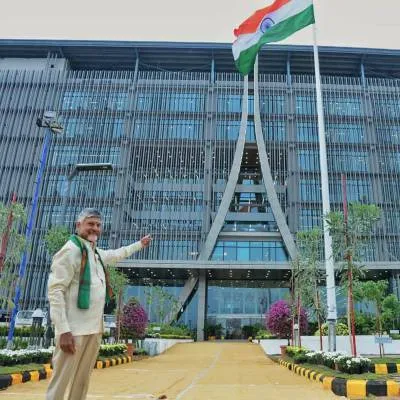
Andhra Pradesh has unveiled a comprehensive plan to position itself as a national logistics hub, aiming to achieve the lowest logistics costs in India and to match global standards. The roadmap was presented at a Ministers and Secretaries Conference on February nine and details major investments in highways, railways, ports and airports supported by technology driven reforms and fiscal allocations. The strategy emphasises efficiency gains, multimodal connectivity and regulatory measures to lower transit times and logistics expenses.

The State will develop 3,358 km of national highways over three years at a cost of Rs 760 billion (bn). 12 State highways covering 709 km are set for upgradation. The plan indicates these projects will strengthen east–west connectivity and link industrial corridors such as VCIC, HBIC and CBIC with export gateways.

On the railway front, the State plans to eliminate all level crossings by constructing 774 overbridges and underbridges at an estimated cost of Rs 145 bn. Of these, 372 projects have already been sanctioned. Major railway infrastructure worth over Rs 3 trillion (tn), including new lines and high-speed rail proposals, is lined up for commissioning between 2026 and 2029.

Air connectivity will expand with Bhogapuram International Airport reported to be 96.8 per cent complete and expected to be operational by June 2026. Nine new greenfield airports are planned, including Amaravati, Srikakulam, Nagarjuna Sagar and Kuppam, and tenders have been floated for Dagadarthi Airport while feasibility studies for water aerodromes at nine tourism sites are complete. Ports are progressing with Ramayapatnam at 75 per cent, Mulapeta at 65 per cent, Machilipatnam at 50 per cent and Kakinada SEZ Port at 32 per cent under execution and fishing infrastructure Phase one harbours worth Rs 15.23 bn are nearing completion. Technology integration underpins the plan, with a unified logistics intelligence dashboard, a bilingual mobile application for real time cargo tracking and predictive analytics, and commodity specific studies have identified gaps in cold storage and processing while the Finance Minister allocated Rs 12.83 bn to the Infrastructure and Investments Department for 2026–27 to support implementation.

Andhra Pradesh has unveiled a comprehensive plan to position itself as a national logistics hub, aiming to achieve the lowest logistics costs in India and to match global standards. The roadmap was presented at a Ministers and Secretaries Conference on February nine and details major investments in highways, railways, ports and airports supported by technology driven reforms and fiscal allocations. The strategy emphasises efficiency gains, multimodal connectivity and regulatory measures to lower transit times and logistics expenses. The State will develop 3,358 km of national highways over three years at a cost of Rs 760 billion (bn). 12 State highways covering 709 km are set for upgradation. The plan indicates these projects will strengthen east–west connectivity and link industrial corridors such as VCIC, HBIC and CBIC with export gateways. On the railway front, the State plans to eliminate all level crossings by constructing 774 overbridges and underbridges at an estimated cost of Rs 145 bn. Of these, 372 projects have already been sanctioned. Major railway infrastructure worth over Rs 3 trillion (tn), including new lines and high-speed rail proposals, is lined up for commissioning between 2026 and 2029. Air connectivity will expand with Bhogapuram International Airport reported to be 96.8 per cent complete and expected to be operational by June 2026. Nine new greenfield airports are planned, including Amaravati, Srikakulam, Nagarjuna Sagar and Kuppam, and tenders have been floated for Dagadarthi Airport while feasibility studies for water aerodromes at nine tourism sites are complete. Ports are progressing with Ramayapatnam at 75 per cent, Mulapeta at 65 per cent, Machilipatnam at 50 per cent and Kakinada SEZ Port at 32 per cent under execution and fishing infrastructure Phase one harbours worth Rs 15.23 bn are nearing completion. Technology integration underpins the plan, with a unified logistics intelligence dashboard, a bilingual mobile application for real time cargo tracking and predictive analytics, and commodity specific studies have identified gaps in cold storage and processing while the Finance Minister allocated Rs 12.83 bn to the Infrastructure and Investments Department for 2026–27 to support implementation.

Next Story
Equipment

MYCRANE Crosses 1,000 Customers in India

MYCRANE, the global platform for crane rental and purchase, has achieved major commercial milestones in India, reinforcing the country’s position as one of its fastest-growing strategic markets. The company has surpassed 1,000 registered customers and 1,000 crane suppliers nationwide, while completing more than 100 paid orders.The growth reflects rising adoption of digital procurement solutions across India’s construction, infrastructure, energy and industrial sectors. Equipment sourced through the platform is supporting projects across the country, with several leading contractors and EPC..

Next Story
Infrastructure Urban

AMTOE 2026 Opens Global Machine Tool Sourcing Hub

The Asian Machine Tool Online Exhibition 2026 (AMTOE 2026) has officially opened as a B2B sourcing platform connecting global buyers with verified Asian suppliers across the machine tool and manufacturing sector. The exhibition will run until 31 October 2026 through a hybrid online and offline model, offering extended sourcing and business networking opportunities.Co-organised by AsianNet and TradeAsia, the event aims to strengthen links between Asian manufacturers and international importers while improving cross-border procurement efficiency and supplier matching.Since launching in 2022, AMT..

Next Story
Infrastructure Energy

Vedanta Lifts Renewable Energy Use by Over 50%

On World Earth Day, Vedanta Limited announced that its renewable energy usage rose by over 50 per cent year on year to 3.97 billion units in FY26, helping avoid 3 million tonnes of carbon dioxide emissions.The company said its portfolio of metals, minerals, power, and oil & gas continues to support advanced manufacturing, electrification, energy transition and clean technology. Aluminium, copper and silver remain critical for applications such as mobility, power transmission, renewable infrastructure and solar photovoltaics, while iron, steel and zinc continue to support energy infrastruct..

Advertisement

Subscribe to Our Newsletter

Get daily newsletters around different themes from Construction world.

STAY CONNECTED

Advertisement

Advertisement

Advertisement