Centre Examines Duty Relief Under MOOWR For Battery Storage Imports
WAREHOUSING & LOGISTICS

Centre Examines Duty Relief Under MOOWR For Battery Storage Imports

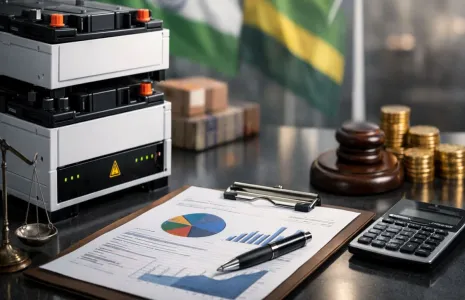
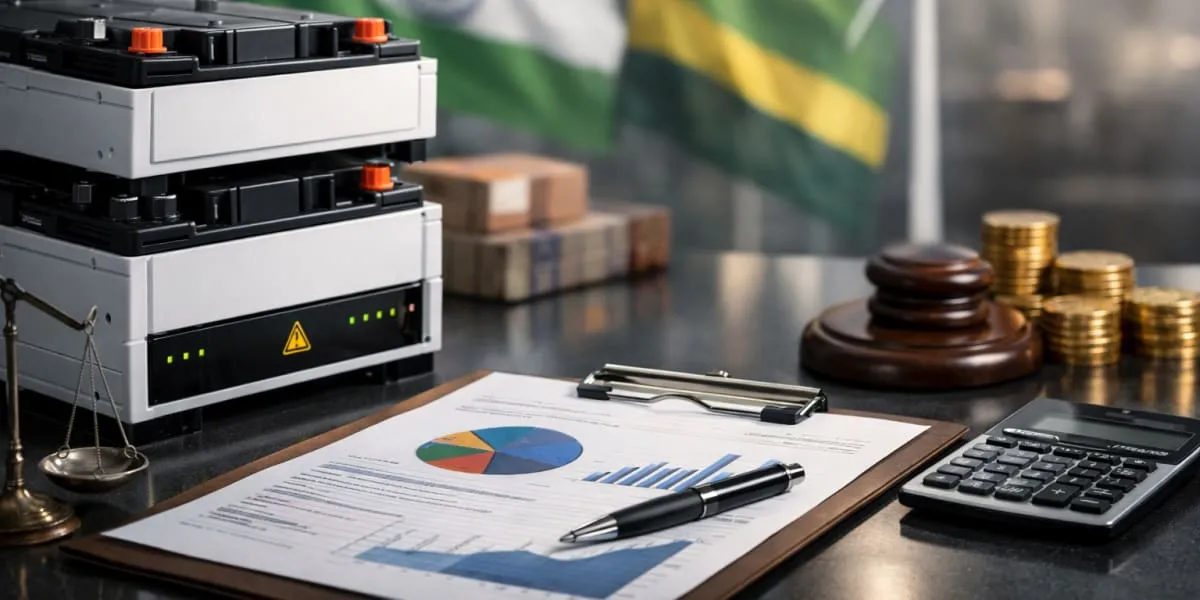
The finance ministry is examining whether to continue customs warehousing benefits under the Manufacture and Other Operations in Warehouse Regulations, 2019 framework for imported battery energy storage systems. It plans consultations with the ministries of power and new and renewable energy to decide on the future scope of duty and GST deferment for such imports. The review follows concerns from the renewable energy sector that the current approach is creating an uneven playing field.

Under the regulations, companies may import goods without paying customs duty or goods and services tax upfront, with taxes deferred until goods are cleared for domestic use or export. Industry bodies including Assocham and the India Energy Storage Alliance have submitted representations to the Department of Revenue and the Central Board of Indirect Taxes and Customs on behalf of developers and suppliers. Stakeholders have flagged that some developers import fully assembled battery systems under the warehousing route and then deploy them directly in domestic power projects.

The regulatory framework allows deferment of about 44 per cent of customs duty and around 12 per cent GST incidence, which reduces upfront capital costs and can confer a pricing edge in auction based procurement. Officials indicate that differential treatment between warehoused imports and standard imports has the potential to affect tariff discovery in renewable plus storage auctions where battery systems are increasingly paired with solar and wind capacity. The finance ministry will weigh these commercial impacts alongside wider energy security considerations.

A final decision is expected after inter ministerial consultations and legal and revenue impact analysis that will determine whether the warehousing benefit is retained, narrowed or withdrawn for battery energy storage imports. Any change could alter procurement economics for developers, equipment suppliers and project financiers and influence future auction outcomes. The ministry will seek to calibrate policy so that incentives do not distort competition while supporting domestic energy transition objectives.

The finance ministry is examining whether to continue customs warehousing benefits under the Manufacture and Other Operations in Warehouse Regulations, 2019 framework for imported battery energy storage systems. It plans consultations with the ministries of power and new and renewable energy to decide on the future scope of duty and GST deferment for such imports. The review follows concerns from the renewable energy sector that the current approach is creating an uneven playing field. Under the regulations, companies may import goods without paying customs duty or goods and services tax upfront, with taxes deferred until goods are cleared for domestic use or export. Industry bodies including Assocham and the India Energy Storage Alliance have submitted representations to the Department of Revenue and the Central Board of Indirect Taxes and Customs on behalf of developers and suppliers. Stakeholders have flagged that some developers import fully assembled battery systems under the warehousing route and then deploy them directly in domestic power projects. The regulatory framework allows deferment of about 44 per cent of customs duty and around 12 per cent GST incidence, which reduces upfront capital costs and can confer a pricing edge in auction based procurement. Officials indicate that differential treatment between warehoused imports and standard imports has the potential to affect tariff discovery in renewable plus storage auctions where battery systems are increasingly paired with solar and wind capacity. The finance ministry will weigh these commercial impacts alongside wider energy security considerations. A final decision is expected after inter ministerial consultations and legal and revenue impact analysis that will determine whether the warehousing benefit is retained, narrowed or withdrawn for battery energy storage imports. Any change could alter procurement economics for developers, equipment suppliers and project financiers and influence future auction outcomes. The ministry will seek to calibrate policy so that incentives do not distort competition while supporting domestic energy transition objectives.

Next Story
Equipment

Doosan Bobcat Drives Skills with Loader Training Push

Doosan Bobcat India has launched a comprehensive Skid Steer Loader Operator Training Programme to address the growing shortage of skilled operators and support faster adoption of compact equipment across India’s expanding infrastructure sector.The structured two-month programme is being conducted in partnership with Industrial Training Institute Bharathmatha Educational Trust, Annur. It combines classroom-based theoretical instruction with intensive hands-on practical training using advanced skid steer loaders. Participants will gain knowledge of safe machine handling, routine maintenance, e..

Advertisement

Subscribe to Our Newsletter

Get daily newsletters around different themes from Construction world.

STAY CONNECTED

Advertisement

Advertisement

Advertisement