+
Delhi NCR Warehousing Stock To Surpass 120 Million Sq Ft
WAREHOUSING & LOGISTICS

Delhi NCR Warehousing Stock To Surpass 120 Million Sq Ft

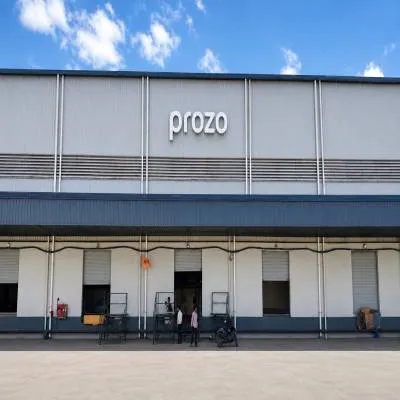
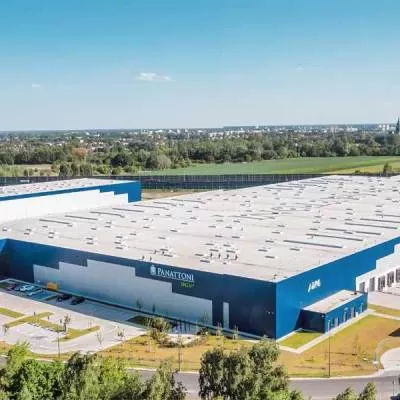
The warehouse market across the Asia-Pacific region is expanding, with three major centres reporting significant additions to supply. Delhi NCR warehousing stock is set to surpass 120 million (mn) sq ft this year as developers complete new projects and speculative schemes move forward. Sydney and Greater Jakarta are also recording notable increases in logistics space, reinforcing a wider regional trend.

Market participants attribute the growth to rising e-commerce volumes and reconfiguration of supply chains that prioritise faster last mile delivery. Investment activity has been supported by institutional capital seeking stable, income generating assets and by occupiers seeking modern, higher clear height facilities. Vacancy levels in core submarkets have tightened, placing upward pressure on rents in several corridors. Developers are focusing on sustainability and modern features such as higher clear heights and improved dock configurations.

In Sydney the pipeline of new warehouse space is forecast to reach one point four mn sqm over the next 12 months, with the under construction stock showing a precommitment rate of 58 per cent. Developers report that the level of precommitment reflects a measured approach to delivery amid stronger demand for well located distribution hubs. The delivery schedule is expected to alleviate some near term shortages while supporting logistical efficiency. Supply timing will be critical as occupiers balance cost and service requirements carefully.

Greater Jakarta logistics stock reached three point one mn sqm in 2025 as net absorption hit 489,500 sqm for the year, setting a new annual record. The strong take up underlines the rapid expansion of regional manufacturing and the need for strategically sited logistics parks. Observers expect continued development activity in primary corridors even as occupiers optimise networks and seek cost efficient last mile solutions. Policy support and transport infrastructure improvements are expected to influence the pace of development and operational efficiency.

The warehouse market across the Asia-Pacific region is expanding, with three major centres reporting significant additions to supply. Delhi NCR warehousing stock is set to surpass 120 million (mn) sq ft this year as developers complete new projects and speculative schemes move forward. Sydney and Greater Jakarta are also recording notable increases in logistics space, reinforcing a wider regional trend. Market participants attribute the growth to rising e-commerce volumes and reconfiguration of supply chains that prioritise faster last mile delivery. Investment activity has been supported by institutional capital seeking stable, income generating assets and by occupiers seeking modern, higher clear height facilities. Vacancy levels in core submarkets have tightened, placing upward pressure on rents in several corridors. Developers are focusing on sustainability and modern features such as higher clear heights and improved dock configurations. In Sydney the pipeline of new warehouse space is forecast to reach one point four mn sqm over the next 12 months, with the under construction stock showing a precommitment rate of 58 per cent. Developers report that the level of precommitment reflects a measured approach to delivery amid stronger demand for well located distribution hubs. The delivery schedule is expected to alleviate some near term shortages while supporting logistical efficiency. Supply timing will be critical as occupiers balance cost and service requirements carefully. Greater Jakarta logistics stock reached three point one mn sqm in 2025 as net absorption hit 489,500 sqm for the year, setting a new annual record. The strong take up underlines the rapid expansion of regional manufacturing and the need for strategically sited logistics parks. Observers expect continued development activity in primary corridors even as occupiers optimise networks and seek cost efficient last mile solutions. Policy support and transport infrastructure improvements are expected to influence the pace of development and operational efficiency.

Related Stories

Gold Stories

Next Story
Infrastructure Urban

KONE Opens India's First Digital Experience Centre in Pune

KONE, a global elevator and escalator manufacturer, has inaugurated its first Digital Experience Centre (DEC) in India, located in Pune. The facility aims to showcase how artificial intelligence (AI), connectivity and data-driven technologies can enhance customer experiences and improve building operations.The centre was inaugurated by Jussi Herlin, Executive Vice Chair, KONE Corporation; Philippe Delorme, President and CEO, KONE; and Nandan Nilekani, Co-founder and Chairman of the Board, Infosys.Designed as an interactive customer environment, the facility demonstrates digital solutions cover..

Next Story
Infrastructure Urban

CII GreenCo Launches Circularity Guidelines for Indian Industry

The Confederation of Indian Industry (CII) GreenCo Council has launched the CII GreenCo Circularity Guidelines – Pilot Version at the 17th CII GreenCo Waste & Resource Management Summit 2026 in Chennai. The initiative aims to strengthen resource efficiency, waste reduction and circular economy practices across Indian manufacturing and process industries.The guidelines introduce a structured framework with circularity indices covering raw materials, consumables, packaging and other resource inputs. These indicators will help industries assess existing practices, identify opportunities to ..

Next Story
Infrastructure Energy

Global Electronics Association Launches IPC-1783-CO2E Standard

The Global Electronics Association has introduced IPC-1783-CO2E, a new international standard aimed at improving consistency, transparency and comparability in product carbon footprint reporting across the electronics manufacturing industry.The standard, titled International Standard for Data Collection and Reporting of CO2 Equivalent (CO2e) Emissions for the Electronics Manufacturing Supply Chain, provides industry-specific guidance for collecting, estimating and reporting carbon emissions data.With increasing regulatory requirements and customer expectations, electronics manufacturers face c..

Advertisement

Subscribe to Our Newsletter

Get daily newsletters around different themes from Construction world.

STAY CONNECTED

Advertisement

SPECIAL OFFER
QR Code