How ecommerce is driving growth for warehousing and logistics
WAREHOUSING & LOGISTICS

How ecommerce is driving growth for warehousing and logistics

E -commerce has turned out to be a huge driver of warehousing and logistics in India, especially through the pandemic according to Knight Frank. In the last year alone, the sector’s share in transactions grew from 23 per cent (FY2020) to 31 per cent (FY2021)....

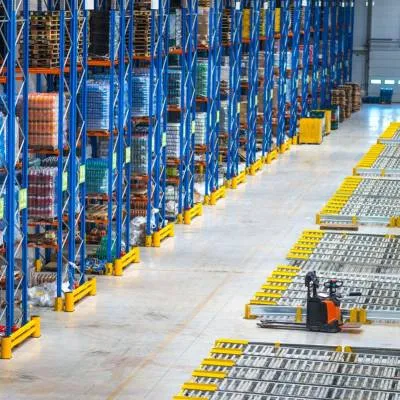
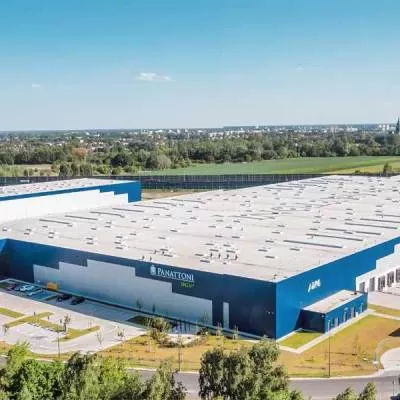
E -commerce has turned out to be a huge driver of warehousing and logistics in India, especially through the pandemic according to Knight Frank. In the last year alone, the sector’s share in transactions grew from 23 per cent (FY2020) to 31 per cent (FY2021). “E-commerce companies became our major occupiers during the pandemic, with active expansion in Tier-I cities and select Tier-II and Tier-III markets,” says Abhijit Malkani, CEO, ESR India. “The e-commerce industry has seen exponential growth during the pandemic, and there is still room for substantial growth.” “The pandemic particularly catalysed e-commerce and generated warehousing requirements in Tier-II and Tier-III cities,” adds Architect Sneha Gurjar, Director, CEM Engineers. The e-commerce industry is the fastest-growing segment in the logistics sector, agrees Rajesh Jaggi, Vice Chairman, Real Estate, The Everstone Group. “E-commerce and thirdparty logistics providers are driving businesses to ramp up supply and storage to deliver products to customers quickly.” Knight Frank estimates that the share of the e-commerce sector, 3PL and other sector companies will grow from 78 per cent of the total transacted space to 86 per cent of the total transacted space in the next five years. Anshuman Magazine, Chairman & CEO - India, South-East Asia, Middle East & Africa, CBRE, expects the logistics sector to reach $330 billion by 2025 due to the rapid growth of the e-commerce sector and the growing retail sales market. “To fulfil the requirements of e-commerce and 3PL companies, and their shift from traditional to digital, the demand for omnichannel, multicategory large-scale warehouse has increased,” says Jaggi. “We have witnessed an increase in demand for in-city warehouses across the country owing to the expectations of faster, last-mile deliveries. The increasing volume and complexity of business operations are also driving the demand for built-to-suit facilities that are tailor-made to suit the company’s specific needs.” Apart from e-commerce, other sectors too have played a key role in intensifying the demand for logistics and warehousing “Logistics is also being driven by sectors such as cold storage, FMCG, pharmaceutical, retail and healthcare,” says Jaggi. “Government incentives in warehousing have also helped place the industry on a high-growth trajectory.” The slowdown during the pandemic caused demand to pent-up, as a result of which we are seeing accelerated expansion from retail, says Malkani. “Leading international manufacturing companies are actively looking at India’s potential post the pandemic, and there has been a surge amongst international occupiers looking at setting up their operations in India.”

Next Story
Technology

AI-Enabled Workflows Lift Profitability and Productivity

Organisations modernising frontline workflows with artificial intelligence, automation and real-time data are reporting stronger financial performance, higher productivity and improved employee engagement, according to a global study by Zebra Technologies and Oxford Economics.The research covered 1,000 senior leaders across retail, manufacturing, transportation and logistics in the US, Mexico, the UK, Germany, India, Japan, Australia and New Zealand.In transportation and logistics, 54 per cent of companies that improved picking and packing operations reported faster operational performance, wh..

Next Story
Real Estate

India Leads Global AI Readiness but Implementation Lags

Indian companies lead global averages across all eight artificial intelligence readiness indicators tracked by JLL, but only 19 per cent have started making changes to their workplaces, according to the JLL 2026 Future of Work Survey.The study found that 77 per cent of Indian business leaders expect AI to change their office requirements, creating a 58-percentage-point gap between awareness and implementation. The survey covered more than 2,200 CEOs, CFOs and real estate leaders across 21 countries during the first quarter of 2026.Despite concerns over automation, 58 per cent of Indian leaders..

Next Story
Equipment

Three WOLFF Cranes Build Riyadh Cable-Stayed Bridges

Three WOLFF 180 B luffing jib cranes are supporting the construction of two cable-stayed bridges alongside the existing Wadi Laban Bridge in Riyadh, Saudi Arabia. The project is being developed for the Royal Commission for Riyadh City and executed by the ICRC joint venture comprising IC Ictas and Al Rashid Trading & Contracting Company.The cranes are handling lifting operations including formwork, reinforcement, concrete placement, work platforms, surveying equipment and other construction materials. Each crane is fitted with a 40 m jib, reaches a hook height of 157 m and offers a maximum ..

Advertisement

Subscribe to Our Newsletter

Get daily newsletters around different themes from Construction world.

STAY CONNECTED

Advertisement

Advertisement

Advertisement