+
IWAI Moves Over Dimensional Cargo To Support Assam Semiconductor Growth
WAREHOUSING & LOGISTICS

IWAI Moves Over Dimensional Cargo To Support Assam Semiconductor Growth

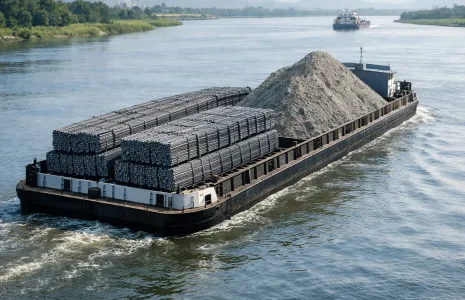
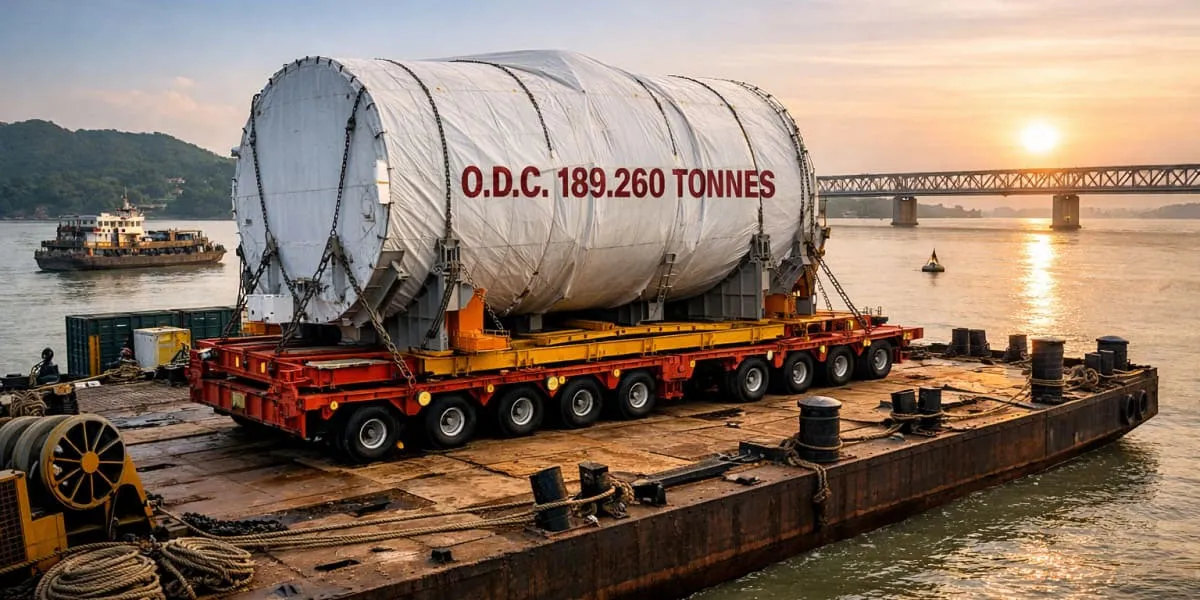
The Inland Waterways Authority of India (IWAI) has facilitated the movement of a large over dimensional cargo consignment destined for Assam's semiconductor industry, reinforcing efforts to use inland waterways for heavy logistics. The consignment weighed 189.260 tonne (t) and was described as crucial for strengthening the semiconductor ecosystem in the state. The cargo reached Pandu in Guwahati after transit along National Waterway two (NW-2), also known as the Brahmaputra. The movement forms part of a wider strategy to promote sustainable transport modes.

The consignment commenced its journey from Diamond Harbour and was ferried by the vessel MV Chitrangada through the Indo-Bangladesh Protocol Route (IBPR) via Dhubri. The shipment is scheduled for unloading at Silghat before onward movement to the Tata Semiconductor Assembly at Morigaon. Authorities highlighted the operational coordination required to move oversized equipment across international protocol routes while maintaining compliance with regulatory and safety norms. The transit underlined the feasibility of riverine corridors for time sensitive industrial supply chains.

The authority positioned the movement as a cost effective and environmentally preferable alternative to road and rail for specialised loads, citing lower emissions and reduced congestion as advantages. Use of inland waterways was presented as aligning with national objectives to decarbonise freight and to expand multimodal options for industrial logistics. Stakeholders from public and private sectors were said to be exploring further routings that leverage international protocol arrangements for regional trade facilitation. The operation is expected to inform future planning for heavy cargo destined for strategic manufacturing projects.

The movement to support the Tata Semiconductor Assembly in Morigaon marks a practical example of how maritime inland infrastructures can be integrated into national industrial strategies. IWAI will continue to facilitate similar consignments as part of its mandate to enhance navigability and logistics efficiency on National Waterway two (NW-2). Continued emphasis on coordinated customs and handling protocols across borders was noted as essential to scale such operations. The episode reinforces the view that river transport can play a central role in supporting technology manufacturing hubs in the region.

The Inland Waterways Authority of India (IWAI) has facilitated the movement of a large over dimensional cargo consignment destined for Assam's semiconductor industry, reinforcing efforts to use inland waterways for heavy logistics. The consignment weighed 189.260 tonne (t) and was described as crucial for strengthening the semiconductor ecosystem in the state. The cargo reached Pandu in Guwahati after transit along National Waterway two (NW-2), also known as the Brahmaputra. The movement forms part of a wider strategy to promote sustainable transport modes. The consignment commenced its journey from Diamond Harbour and was ferried by the vessel MV Chitrangada through the Indo-Bangladesh Protocol Route (IBPR) via Dhubri. The shipment is scheduled for unloading at Silghat before onward movement to the Tata Semiconductor Assembly at Morigaon. Authorities highlighted the operational coordination required to move oversized equipment across international protocol routes while maintaining compliance with regulatory and safety norms. The transit underlined the feasibility of riverine corridors for time sensitive industrial supply chains. The authority positioned the movement as a cost effective and environmentally preferable alternative to road and rail for specialised loads, citing lower emissions and reduced congestion as advantages. Use of inland waterways was presented as aligning with national objectives to decarbonise freight and to expand multimodal options for industrial logistics. Stakeholders from public and private sectors were said to be exploring further routings that leverage international protocol arrangements for regional trade facilitation. The operation is expected to inform future planning for heavy cargo destined for strategic manufacturing projects. The movement to support the Tata Semiconductor Assembly in Morigaon marks a practical example of how maritime inland infrastructures can be integrated into national industrial strategies. IWAI will continue to facilitate similar consignments as part of its mandate to enhance navigability and logistics efficiency on National Waterway two (NW-2). Continued emphasis on coordinated customs and handling protocols across borders was noted as essential to scale such operations. The episode reinforces the view that river transport can play a central role in supporting technology manufacturing hubs in the region.

Next Story
Infrastructure Urban

Implementation Status of Jal Jeevan Mission

Since August 2019 the Government has implemented Jal Jeevan Mission to provide assured potable water through household tap connections in rural India. At the start of the mission only 32.3 million (mn) rural households, representing 16.7 per cent, were reported to have tap water connections. States and union territories have reported that 125.8 mn additional rural households have since been provided with tap connections. As a result, of about 193.6 mn rural households roughly 158.2 mn, or 81.71 per cent, are reported to have tap water supply at home.\n\nThe State, district and village level st..

Next Story
Infrastructure Urban

Jal Jeevan Mission Reaches Eighty One Per Cent Rural Coverage

The Government reported substantial progress under the Jal Jeevan Mission, launched in August 2019 to provide tap water to every rural household. At launch only 32.3 million (mn) rural households had tap connections and states and Union territories reported provision of 125.8 mn additional households by March 2026. Consequently, out of about 193.6 mn rural households around 158.2 mn, or 81.71 per cent, are reported to have tap water at home. The Finance Minister announced extension of the mission until 2028 in the 2025-26 budget speech. The Swachh Bharat Mission Grameen, launched in October 20..

Next Story
Infrastructure Urban

Empowering Local Governance for Sustainable Rural Water Supply

The Ministry of Jal Shakti has aligned the Jal Jeevan Mission (JJM) with the 73rd Amendment to strengthen village level planning and community ownership of water supply. Gram Panchayats, village water and sanitation committees and Pani Samitis are to plan, implement, manage and maintain piped water systems, with gram sabha processes formalising handover and oversight. Implementation support agencies including non government organisations, community based organisations and self help groups have been empanelled to train local committees and promote women participation. Under JJM, the department ..

Advertisement

Subscribe to Our Newsletter

Get daily newsletters around different themes from Construction world.

STAY CONNECTED

Advertisement

Advertisement

Advertisement