JM Financial Flags Risks to Indian Port Logistics Amid West Asia Tensions
WAREHOUSING & LOGISTICS

JM Financial Flags Risks to Indian Port Logistics Amid West Asia Tensions

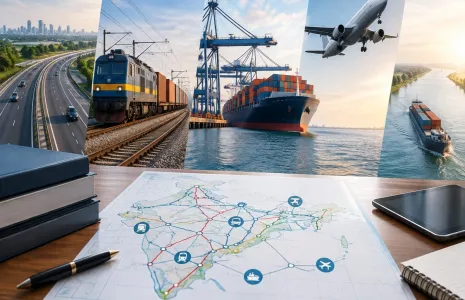
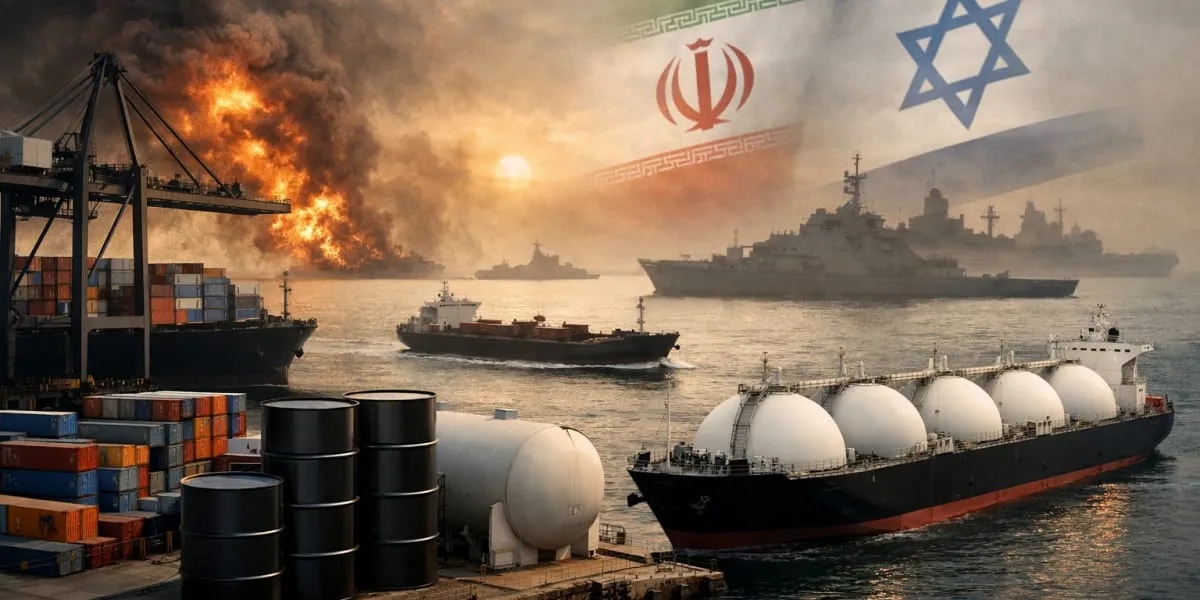
JM Financial has warned that escalation in the US–Israel and Iran conflict could disrupt shipping through the Red Sea and the Persian Gulf and pose risks to Indian port logistics. The brokerage said liquefied natural gas (LNG) and crude oil shipments were especially vulnerable and refiners shifting suppliers could realign cargo flows, affecting port volumes in March 2026. Container traffic to the Middle East may be affected though major terminals could see limited fallout.

Adani Ports and Special Economic Zone (ADSEZ), which handles nine million (mn) twenty-foot equivalent units (TEUs) annually, has 15 per cent of Mundra’s volumes linked to the Middle East. That equals around one point three to one point four mn TEUs and could hit monthly volumes at Mundra by three to four per cent, JM Financial said after channel checks. If the conflict lasts beyond three months the brokerage estimated the cumulative annual impact might be about one per cent.

Shippers are seeking routes that avoid the Strait of Hormuz, with ports such as Khor Fakkan and Salalah under consideration, and India is diversifying liquefied petroleum gas (LPG) imports. The Habshan?Fujairah pipeline, with capacity of one point five mn barrels per day, and Saudi Arabia’s East?West line to Yanbu, with five mn barrels per day capacity, could ease crude export disruption.

India sourced 50 per cent of its LPG imports in calendar year 25 from Gulf suppliers, and Indian oil marketing companies have agreed to import two point two mn tonnes of LPG from the United States from calendar year 26, equal to 10 per cent of annual imports. JM Financial noted LNG prices had risen about 40 per cent while propane and butane increased about 17 per cent, widening the LNG?LPG price gap and supporting distribution margins for some logistics firms. The brokerage said its views were its own and readers should consult certified experts before making investment decisions.

"Join industry leaders at RAHSTA Expo, India's premier platform for roads, highways and traffic infrastructure. Register now to explore innovations, network with experts and shape the future of mobility."

JM Financial has warned that escalation in the US–Israel and Iran conflict could disrupt shipping through the Red Sea and the Persian Gulf and pose risks to Indian port logistics. The brokerage said liquefied natural gas (LNG) and crude oil shipments were especially vulnerable and refiners shifting suppliers could realign cargo flows, affecting port volumes in March 2026. Container traffic to the Middle East may be affected though major terminals could see limited fallout. Adani Ports and Special Economic Zone (ADSEZ), which handles nine million (mn) twenty-foot equivalent units (TEUs) annually, has 15 per cent of Mundra’s volumes linked to the Middle East. That equals around one point three to one point four mn TEUs and could hit monthly volumes at Mundra by three to four per cent, JM Financial said after channel checks. If the conflict lasts beyond three months the brokerage estimated the cumulative annual impact might be about one per cent. Shippers are seeking routes that avoid the Strait of Hormuz, with ports such as Khor Fakkan and Salalah under consideration, and India is diversifying liquefied petroleum gas (LPG) imports. The Habshan?Fujairah pipeline, with capacity of one point five mn barrels per day, and Saudi Arabia’s East?West line to Yanbu, with five mn barrels per day capacity, could ease crude export disruption. India sourced 50 per cent of its LPG imports in calendar year 25 from Gulf suppliers, and Indian oil marketing companies have agreed to import two point two mn tonnes of LPG from the United States from calendar year 26, equal to 10 per cent of annual imports. JM Financial noted LNG prices had risen about 40 per cent while propane and butane increased about 17 per cent, widening the LNG?LPG price gap and supporting distribution margins for some logistics firms. The brokerage said its views were its own and readers should consult certified experts before making investment decisions.

Next Story
Infrastructure Energy

Centre Prioritising Energy Security With Coal Gasification

Union minister for Coal and Mines G Kishan Reddy said the Centre is prioritising energy security through a strategic shift to coal gasification and has announced incentives totalling Rs 460 billion (bn) to support the effort. He said more than 35 companies will start coal gasification activities in India within two months and that the government is encouraging firms that bring technology to close the domestic technology gap. The minister described the initiative as aimed at reducing import dependence and developing indigenous capacity. India has the fifth-largest coal reserve in the world, and..

Next Story
Infrastructure Urban

BHEL and Coal India Invest Rs 250 bn in Odisha Gasification

Bharat Heavy Electricals (BHEL) and Coal India (CIL) are jointly investing Rs 250 billion in a coal gasification project in Odisha, with the Prime Minister laying the foundation stone in Jharsuguda. Union Coal and Mines Minister G Kishan Reddy described the initiative as a transformative shift in coal utilisation that will open industrial avenues for the state. The project moves coal beyond conventional power generation to industrial feedstocks. Coal gasification will convert coal into synthesis gas, a versatile feedstock for chemicals, fertilisers and synthetic fuels, and the technology is ex..

Next Story
Infrastructure Energy

BCCL Hands Over Dugdha Coal Washery To JSW Steel

Bharat Coking Coal has handed over the Dugdha Coal Washery to JSW Steel, marking the first coal washery asset monetisation under the Ministry of Coal's asset monetisation programme. The handover took place in the presence of senior officials from Bharat Coking Coal Ltd, JSW Steel and JSW Energy. The washery has a capacity of two million tonnes per annum (mn t per annum), and its transfer is intended to introduce private sector practices into coal beneficiation operations. The monetisation is aimed at modernising coal sector assets, improving operational efficiency and enhancing resource utilis..

Advertisement

Subscribe to Our Newsletter

Get daily newsletters around different themes from Construction world.

STAY CONNECTED

Advertisement

Advertisement

Advertisement