



Floating Pontoons To Block Waste From Entering Yamuna
WATER & WASTE

Floating Pontoons To Block Waste From Entering Yamuna

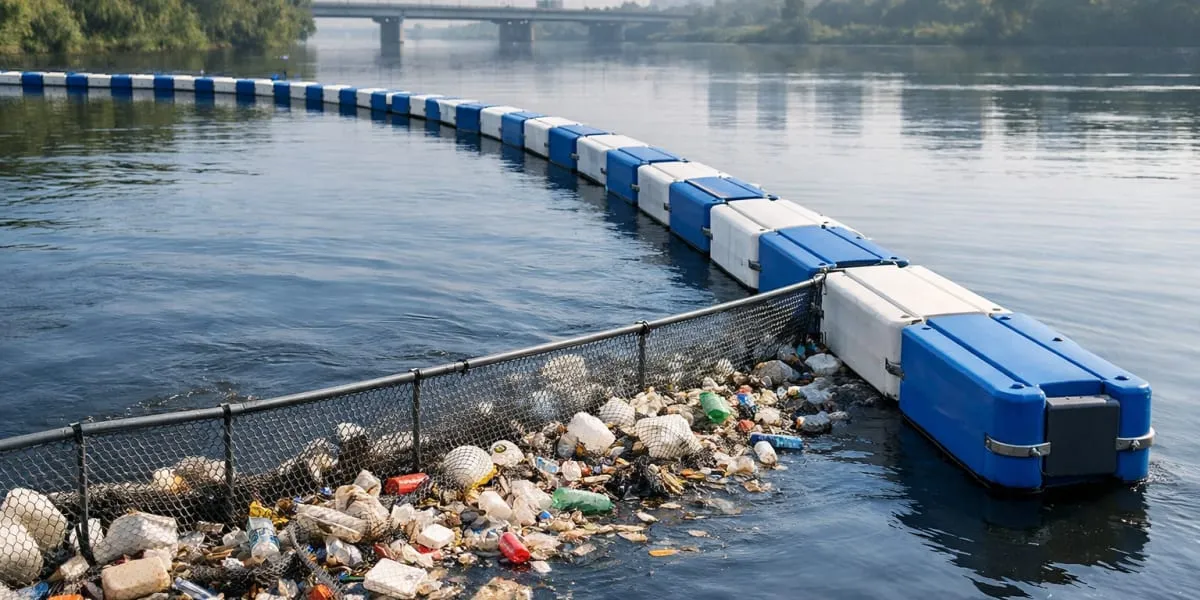
City authorities have installed floating pontoons to block waste from entering the Yamuna River (Yamuna). The structures are intended to intercept plastics and other debris before it travels downstream and to reduce visible pollution along the river banks. The initiative forms part of efforts to restore the river and to improve urban sanitation in affected localities.

The pontoons comprise modular floating barriers anchored to riverbed points and linked to allow water flow while trapping solids. Their design facilitates collection by sanitation teams using boats and mechanised skimmers, reducing manual handling of hazardous waste. The passive system requires periodic clearing and maintenance to prevent clogging and to sustain effectiveness.

Authorities said the measure aims to reduce contamination levels and to protect aquatic life, while complementing laboratory monitoring of water quality. Early assessments will focus on stretches where surface waste accumulation is highest and where drains enter the river. Coordination with local civic bodies seeks to ensure timely removal of collected material and proper disposal.

The pontoons are expected to complement existing measures such as booms and nets and to offer a more durable option in high flow conditions. The initiative is intended to work alongside efforts to improve solid waste collection, to prevent littering and to strengthen enforcement against dumping. Experts have emphasised that river restoration depends on curbing land based pollution as much as on in river interventions.

Officials indicated plans to pilot the system across several stretches and to scale up if outcomes meet expectations, while continuing public awareness campaigns. Success will depend on sustained funding, regular maintenance and on community participation in waste segregation at source. The pontoons are one component of a broader push to rehabilitate the Yamuna and to enhance urban resilience to pollution.

"Join industry leaders at RAHSTA Expo, India's premier platform for roads, highways and traffic infrastructure. Register now to explore innovations, network with experts and shape the future of mobility."

City authorities have installed floating pontoons to block waste from entering the Yamuna River (Yamuna). The structures are intended to intercept plastics and other debris before it travels downstream and to reduce visible pollution along the river banks. The initiative forms part of efforts to restore the river and to improve urban sanitation in affected localities. The pontoons comprise modular floating barriers anchored to riverbed points and linked to allow water flow while trapping solids. Their design facilitates collection by sanitation teams using boats and mechanised skimmers, reducing manual handling of hazardous waste. The passive system requires periodic clearing and maintenance to prevent clogging and to sustain effectiveness. Authorities said the measure aims to reduce contamination levels and to protect aquatic life, while complementing laboratory monitoring of water quality. Early assessments will focus on stretches where surface waste accumulation is highest and where drains enter the river. Coordination with local civic bodies seeks to ensure timely removal of collected material and proper disposal. The pontoons are expected to complement existing measures such as booms and nets and to offer a more durable option in high flow conditions. The initiative is intended to work alongside efforts to improve solid waste collection, to prevent littering and to strengthen enforcement against dumping. Experts have emphasised that river restoration depends on curbing land based pollution as much as on in river interventions. Officials indicated plans to pilot the system across several stretches and to scale up if outcomes meet expectations, while continuing public awareness campaigns. Success will depend on sustained funding, regular maintenance and on community participation in waste segregation at source. The pontoons are one component of a broader push to rehabilitate the Yamuna and to enhance urban resilience to pollution.

Next Story
Infrastructure Urban

ABS Marine Sees CRISIL Credit Rating Upgrade

ABS Marine Services has secured an upgrade to its long term and short term credit ratings from CRISIL, reflecting improved profitability and revenue growth through long term contracts. CRISIL moved the long term rating from BBB+/Stable to A-/Stable and revised the short term rating from A2 to A2+. The action signals strengthened financial metrics and operational resilience. The company benefited from durable client relationships with firms such as ONGC and Schlumberger. The rating decision followed stronger cash flows and an enlarged bank loan facility, which increased from Rs 3,705 million (m..

Next Story
Infrastructure Transport

Project BRAHMANK Marks 16 Years Of Strategic Roads In Arunachal

Project BRAHMANK is marking 16 years of work to establish strategic road and bridge links across Arunachal Pradesh, maintaining and developing 811 kilometres of roads and nearly 86 bridges that range from small culverts to large steel and arch bridges. These transport links are described as critical for ensuring year-round movement of defence personnel, equipment and essential supplies while improving everyday travel for people in remote villages. The project balances national security requirements with regional development by focusing on reliable access in challenging terrain. Notable enginee..

Next Story
Infrastructure Transport

Longleng CSOs Give One Week Ultimatum Over Two-Lane Highway

Civil society organisations (CSOs) in Longleng district have demanded immediate restoration of the deteriorating Changtongya–Longleng two-lane road and sought a detailed status report on the stalled construction within one week. The demand followed a consultative meeting convened under the Phom Peoples' Council (PPC) to discuss welfare and development concerns. PPC president YB Angam Phom said prolonged non-maintenance had caused hardship to commuters and affected transportation, local commerce and the district's development. The meeting urged authorities to undertake immediate restoration a..

Advertisement

Subscribe to Our Newsletter

Get daily newsletters around different themes from Construction world.

STAY CONNECTED

Advertisement

Advertisement

Advertisement