GST Rationalisation To Accelerate India's Green Transition
WATER & WASTE

GST Rationalisation To Accelerate India's Green Transition

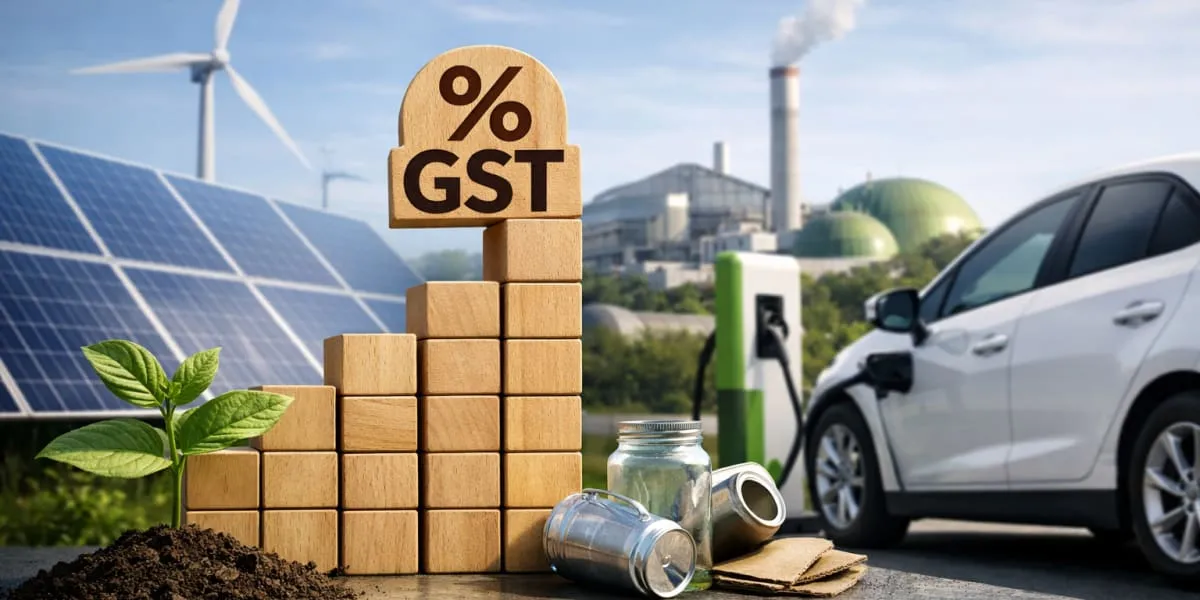
Recent goods and services tax rationalisation aims to accelerate sustainable manufacturing, strengthen waste treatment infrastructure and expand sustainable mobility across India under Prime Minister Narendra Modi. The changes align with the Viksit Bharat 2047 agenda, the Lifestyle for Environment (LiFE) movement and the country’s Net Zero 2070 ambition while reinforcing Paris Agreement commitments. The reforms seek to make eco-friendly products and services more accessible and affordable for both industry and consumers.

Common Effluent Treatment Plants (CETPs) offering collective wastewater services saw GST fall from 12 per cent to five per cent to incentivise shared treatment and lower costs for small and medium sized enterprises. 222 operational CETPs treat 2212 million litres per day (MLD) of industrial wastewater across 21 states, and the tax change is estimated to save industry about Rs 132.7 mn a day. The measure also supports 53 CETPs implementing Zero Liquid Discharge (ZLD) systems and promotes reuse of treated water.

GST on biodegradable carry bags has been cut from 18 per cent to five per cent to strengthen the ban on identified single use plastics and improve affordability. The typical sale price is expected to fall from Rs 200/kg to Rs 178/kg, a decline of approximately 11 per cent, making compostable materials more competitive. The move is intended to help over 200 certified manufacturers scale up production and to reduce plastic leakage into rivers and oceans.

Green mobility measures cut GST on buses and commercial goods vehicles from 28 per cent to 18 per cent to encourage fleet modernisation and cleaner transport. Lower upfront costs are intended to spur replacement of older vehicles with Bharat Stage VI compliant models that are up to 10 times cleaner than earlier standards and to enable wider public transport deployment. Reduced tax on goods vehicles is expected to lower logistics costs, expand market access and contribute to emissions reductions and improved air quality.

Recent goods and services tax rationalisation aims to accelerate sustainable manufacturing, strengthen waste treatment infrastructure and expand sustainable mobility across India under Prime Minister Narendra Modi. The changes align with the Viksit Bharat 2047 agenda, the Lifestyle for Environment (LiFE) movement and the country’s Net Zero 2070 ambition while reinforcing Paris Agreement commitments. The reforms seek to make eco-friendly products and services more accessible and affordable for both industry and consumers. Common Effluent Treatment Plants (CETPs) offering collective wastewater services saw GST fall from 12 per cent to five per cent to incentivise shared treatment and lower costs for small and medium sized enterprises. 222 operational CETPs treat 2212 million litres per day (MLD) of industrial wastewater across 21 states, and the tax change is estimated to save industry about Rs 132.7 mn a day. The measure also supports 53 CETPs implementing Zero Liquid Discharge (ZLD) systems and promotes reuse of treated water. GST on biodegradable carry bags has been cut from 18 per cent to five per cent to strengthen the ban on identified single use plastics and improve affordability. The typical sale price is expected to fall from Rs 200/kg to Rs 178/kg, a decline of approximately 11 per cent, making compostable materials more competitive. The move is intended to help over 200 certified manufacturers scale up production and to reduce plastic leakage into rivers and oceans. Green mobility measures cut GST on buses and commercial goods vehicles from 28 per cent to 18 per cent to encourage fleet modernisation and cleaner transport. Lower upfront costs are intended to spur replacement of older vehicles with Bharat Stage VI compliant models that are up to 10 times cleaner than earlier standards and to enable wider public transport deployment. Reduced tax on goods vehicles is expected to lower logistics costs, expand market access and contribute to emissions reductions and improved air quality.

Next Story
Infrastructure Urban

Flender Unveils N-ZAPEX Gear Couplings for Cost-Effective Operation

Flender has unveiled its new N-ZAPEX gear couplings, setting a new industry standard for drive applications in harsh conditions, such as those found in steel, cement, mining, and oil & gas industries. Designed to deliver economic benefits over the entire lifecycle, the N-ZAPEX series offers the highest torque density and misalignment capacities on the market.The N-ZAPEX is available in two versions, XN and XW, each tailored to meet different customer requirements. The XN variant focuses on standardisation, reduced complexity, and cost-effectiveness for smaller sizes, featuring reusable com..

Next Story
Infrastructure Urban

Anil Agarwal Calls for Entrepreneurial Role in Natural Resource PSUs

Anil Agarwal, Chairman of Vedanta, has highlighted the transformative potential of greater entrepreneurial involvement in India's public sector companies within the natural resources space. In a LinkedIn post, he emphasised the importance of empowering India’s pool of entrepreneurs alongside skilled public-sector talent to strengthen domestic production and reduce the country’s reliance on imports.Agarwal drew comparisons with India’s agricultural success, where self-sufficiency and surplus production were achieved. He suggested that a similar approach could unlock substantial value in p..

Next Story
Technology

Advaiya Launches Change Log Archival App for Microsoft Dynamics 365

Advaiya has launched its Change Log Archival app for Microsoft Dynamics 365 Business Central on the Microsoft Marketplace. The app enables organisations to securely archive large volumes of change log data outside the core ERP system while ensuring auditability, compliance, and traceability.As organisations face growing change log records that increase database size and impact system performance, the Change Log Archival app addresses these challenges by archiving historical logs to Azure Blob Storage. This solution optimises storage, maintains data integrity, and ensures accessibility, allowin..

Advertisement

Subscribe to Our Newsletter

Get daily newsletters around different themes from Construction world.

STAY CONNECTED

Advertisement

Advertisement

Advertisement