New Waste Rules From April One: Four-Stream Segregation Mandatory
WATER & WASTE

New Waste Rules From April One: Four-Stream Segregation Mandatory

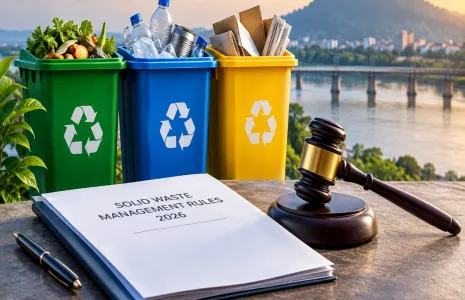
The Ministry of Environment, Forest and Climate Change has notified the Solid Waste Management (SWM) Rules, 2026, replacing the 2016 framework with effect from April one, 2026. The revised rules were issued under the Environment (Protection) Act, 1986, and aim to strengthen waste handling through principles of circular economy and Extended Producer Responsibility. The framework introduces stricter compliance measures and environmental compensation based on the polluter pays principle.

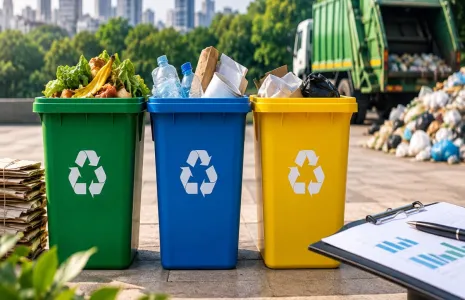
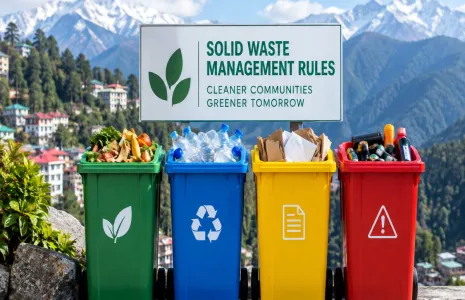
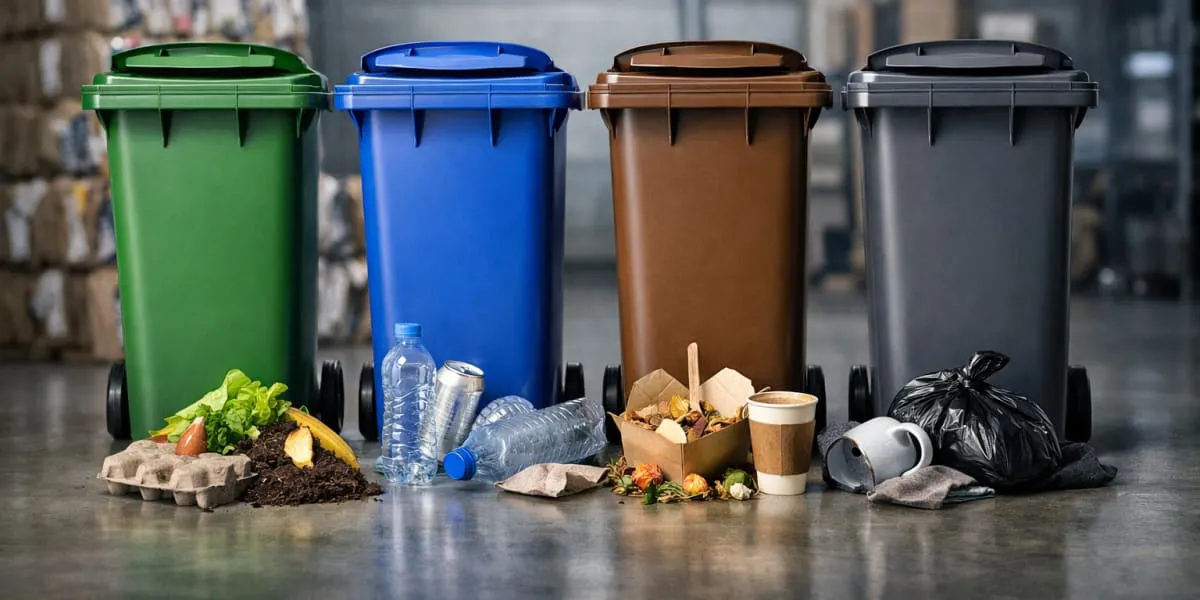
A central feature is mandatory four-stream segregation of waste at source into wet, dry, sanitary and special care waste, with wet waste such as food and organic material required to be composted or processed locally. Dry waste including plastic, paper and metal will be routed to material recovery facilities that are expected to play a key role in recycling and recovery. Sanitary and hazardous household waste will require separate handling through authorised channels.

The rules increase accountability for bulk waste generators by mandating on-site processing where feasible and by introducing an Extended Bulk Waste Generator Responsibility mechanism to ensure proper management. The Central Pollution Control Board (CPCB) will roll out a centralised online portal to track the entire waste lifecycle from generation to disposal and to streamline registrations, reporting and audits of waste facilities. Provisions are included for faster land allocation for waste processing units as well as stricter restrictions on landfill operations and time bound remediation of legacy dumpsites through biomining and bioremediation.

Local bodies are assigned clarified responsibilities for collection, segregation and transportation while material recovery facilities will be recognised as formal sorting hubs to support circular practices. The rules promote the use of refuse derived fuel and raise the substitution rate from five per cent to 15 per cent over six years to encourage industrial use of processed waste. Special measures target hilly and island regions with tourist user fees and decentralised waste processing by hotels and establishments to reduce environmental pressure.

The Ministry of Environment, Forest and Climate Change has notified the Solid Waste Management (SWM) Rules, 2026, replacing the 2016 framework with effect from April one, 2026. The revised rules were issued under the Environment (Protection) Act, 1986, and aim to strengthen waste handling through principles of circular economy and Extended Producer Responsibility. The framework introduces stricter compliance measures and environmental compensation based on the polluter pays principle. A central feature is mandatory four-stream segregation of waste at source into wet, dry, sanitary and special care waste, with wet waste such as food and organic material required to be composted or processed locally. Dry waste including plastic, paper and metal will be routed to material recovery facilities that are expected to play a key role in recycling and recovery. Sanitary and hazardous household waste will require separate handling through authorised channels. The rules increase accountability for bulk waste generators by mandating on-site processing where feasible and by introducing an Extended Bulk Waste Generator Responsibility mechanism to ensure proper management. The Central Pollution Control Board (CPCB) will roll out a centralised online portal to track the entire waste lifecycle from generation to disposal and to streamline registrations, reporting and audits of waste facilities. Provisions are included for faster land allocation for waste processing units as well as stricter restrictions on landfill operations and time bound remediation of legacy dumpsites through biomining and bioremediation. Local bodies are assigned clarified responsibilities for collection, segregation and transportation while material recovery facilities will be recognised as formal sorting hubs to support circular practices. The rules promote the use of refuse derived fuel and raise the substitution rate from five per cent to 15 per cent over six years to encourage industrial use of processed waste. Special measures target hilly and island regions with tourist user fees and decentralised waste processing by hotels and establishments to reduce environmental pressure.

Next Story
Infrastructure Transport

Tunnelling Begins for Thane, Borivali twin tunnel project

Tunnelling work has commenced for the 11.84-km Thane–Borivali Twin Tunnel, set to be India’s longest urban road tunnel, marking a key milestone in Mumbai’s infrastructure development.As per a post shared by Mumbai Metropolitan Region Development Authority on social media platform X, the tunnel boring machine (TBM) ‘Nayak’—the country’s largest single-shield hard rock TBM for an urban tunnel—was launched by Devendra Fadnavis on Tuesday. The event was attended by Eknath Shinde and Sunetra Pawar, among other dignitaries. A second TBM, ‘Arjuna’, is expected to be launched so..

Next Story
Infrastructure Transport

Large Format Store Planned At M G Road Metro Station

M G Road station in Bengaluru is set to host the city’s first large-format commercial and experience space, with planning led by Bangalore Metro Rail Corporation Limited. BMRCL has invited proposals to develop and operate a central business district destination at the Purple?Pink Line interchange. The plan positions the station as a commercial hub designed to serve a broad commuter base across the city. The proposal is part of a broader effort to activate transit nodes commercially. Tender documents set a minimum monthly rental of Rs 0.944 million (mn), inclusive of GST, for the large-format..

Next Story
Infrastructure Energy

Government Cancels Auction Of Eleven Critical Mineral Blocks

The government has cancelled the auction of 11 critical and strategic mineral blocks after receiving a poor investor response and failing to attract a sufficient number of qualified bidders. The decision represents a setback to plans to ramp up domestic exploration and production of critical minerals amid global supply chain disruptions and rising demand for materials used in clean energy and advanced technologies. The mines ministry issued an annulment notice setting out the reasons for the cancellations. The annulment notice indicated that the auction process for five mineral blocks was canc..

Advertisement

Subscribe to Our Newsletter

Get daily newsletters around different themes from Construction world.

STAY CONNECTED

Advertisement

Advertisement

Advertisement