373 projects show cost overruns of Rs 3.89 trillion
ECONOMY & POLICY

373 projects show cost overruns of Rs 3.89 trillion

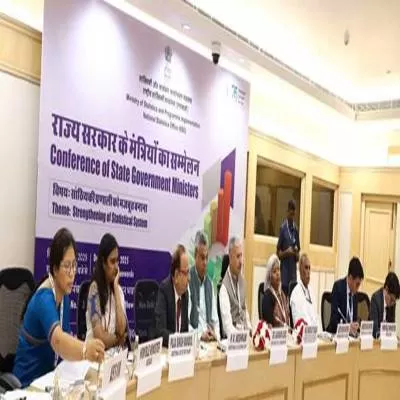
The Ministry of Statistics and Programme Implementation (MoSPI), charged with the responsibility of monitoring infrastructure projects worth Rs 1.5 billion or more, has released a report for August 2019, according to which, out of a total 1,634 projects, around 373 have shown cost overruns to the tune of Rs 3.89 trillion.

The report states that the original estimated cost of all the projects is approximately Rs 19.40 trillion. Completion cost is now expected to be around Rs 23.29 trillion. This amounts to cost overruns of around 20.05 per cent from the original cost – of around Rs 3.89 trillion. Till August 2019, the expenses incurred by these projects amounts to Rs 9.75 trillion, which is 41.85 per cent of the expected cost of the projects.

Additionally, the report included the number of projects that had crossed their deadlines; these amounted to 552. The average time overrun for all 552 projects was reported to be 38.89 months.

Reportedly, out of all the 552 projects showing time overruns, 181 projects are showing an overall delay in the range of 1 to 12 months, 128 projects have delay of 13 to 24 months, 127 projects show delay in the range of 25 to 60 months and 116 projects reflect delay of 61 months and above. However, as per the report, the number of delayed projects decreases to 489 if the delay is calculated on the basis of latest schedule of completion. Moreover, for 687 projects neither the year of commissioning nor the tentative gestation period has been reported.

Escalations in time could be caused by issues relating to obtaining forest clearances, acquiring required land and supply of equipment. According to the report, developers also face additional constraints because of funding, geographical conditions, labour issues and court cases, among other reasons. Reportedly, it is possible that the time and cost overrun figures have been under-reported since project agencies have not reported revised cost estimates and commissioning schedules for numerous projects.

The Ministry of Statistics and Programme Implementation (MoSPI), charged with the responsibility of monitoring infrastructure projects worth Rs 1.5 billion or more, has released a report for August 2019, according to which, out of a total 1,634 projects, around 373 have shown cost overruns to the tune of Rs 3.89 trillion. The report states that the original estimated cost of all the projects is approximately Rs 19.40 trillion. Completion cost is now expected to be around Rs 23.29 trillion. This amounts to cost overruns of around 20.05 per cent from the original cost – of around Rs 3.89 trillion. Till August 2019, the expenses incurred by these projects amounts to Rs 9.75 trillion, which is 41.85 per cent of the expected cost of the projects. Additionally, the report included the number of projects that had crossed their deadlines; these amounted to 552. The average time overrun for all 552 projects was reported to be 38.89 months. Reportedly, out of all the 552 projects showing time overruns, 181 projects are showing an overall delay in the range of 1 to 12 months, 128 projects have delay of 13 to 24 months, 127 projects show delay in the range of 25 to 60 months and 116 projects reflect delay of 61 months and above. However, as per the report, the number of delayed projects decreases to 489 if the delay is calculated on the basis of latest schedule of completion. Moreover, for 687 projects neither the year of commissioning nor the tentative gestation period has been reported. Escalations in time could be caused by issues relating to obtaining forest clearances, acquiring required land and supply of equipment. According to the report, developers also face additional constraints because of funding, geographical conditions, labour issues and court cases, among other reasons. Reportedly, it is possible that the time and cost overrun figures have been under-reported since project agencies have not reported revised cost estimates and commissioning schedules for numerous projects.

Next Story
Real Estate

RBI Rate Cut Boosts Confidence Across Housing Market

Industry Context and Market DynamicsThe real estate industry has welcomed the RBI’s rate cut as a timely boost to affordability and demand. With home prices having risen steadily across major markets, even a marginal reduction in interest rates meaningfully strengthens purchasing power, especially for first-time and mid-income buyers.Ashish Jerath, President – Sales & Marketing, Smartworld Developers, observes:“The RBI’s 25-basis-point cut, bringing the repo rate down to 5.25%, is a timely boost for the real estate sector. Lower interest rates reduce borrowing costs, enabling homeb..

Next Story
Infrastructure Transport

BMC Resumes Rs 170 Billion Road Works, Targets 80 per cent By Jan 2026

Following the withdrawal of the southwest monsoon in October, the Brihanmumbai Municipal Corporation (BMC) has restarted work on 645 roads—covering 297.49 kilometres—under its large-scale concretisation programme. Data shows that more than 60 per cent of the resumed works are located in the western suburbs. Officials said the civic body aims to complete concretisation on 80 per cent of the roads where fresh work has begun by January 2026. Launched in 2022, the Rs 170 billion project seeks to concretise 700 kilometres of roads across Mumbai. All civil works were halted during the monsoon ..

Next Story
Infrastructure Urban

India Pushes Digital Shift In Urban Land Mapping

The Department of Land Resources (DoLR) under the Ministry of Rural Development has convened a National Symposium on NAKSHA – the National Geospatial Knowledge-based Land Survey of Urban Habitations – to advance India’s transition to modern, technology-driven land mapping. Speaking at the inaugural session, Secretary Manoj Joshi underscored the urgent need to move revenue departments away from outdated, tape-based methods and rough hand-drawn sketches. He stressed that adopting latitude–longitude-based digital mapping and GIS-linked registration systems is essential for economic stabi..

Advertisement

Subscribe to Our Newsletter

Get daily newsletters around different themes from Construction world.

STAY CONNECTED

Advertisement

Advertisement

Advertisement

Advertisement

Open In App