+
NDMC Rolls Out Intensive Sanitation Drive Across Lutyens Delhi
Cement

NDMC Rolls Out Intensive Sanitation Drive Across Lutyens Delhi

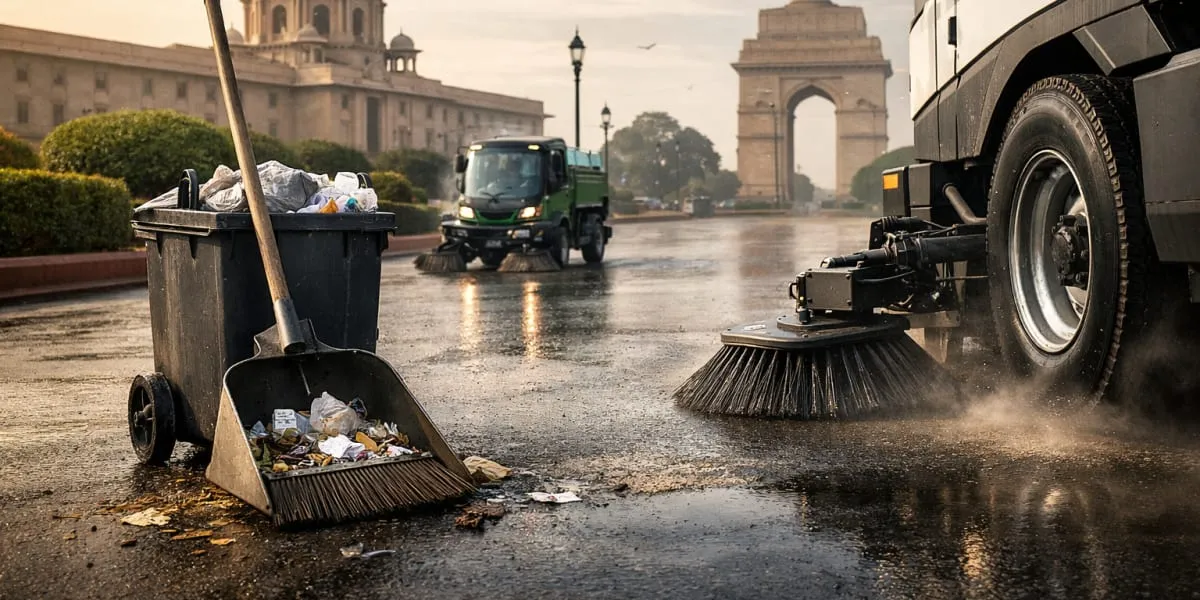
The New Delhi Municipal Council has launched an intensive sanitation drive across Lutyens' Delhi, aiming to raise cleanliness standards in the capital's central precincts. The programme will combine enhanced manual sweeping with mechanised cleaning and systematic waste removal to cover parks, heritage precincts and prominent thoroughfares. Authorities described the initiative as a sustained effort to improve public hygiene and reduce environmental hazards while maintaining the area's civic image.

Operational teams have been instructed to prioritise drain clearing and litter hotspots, with special attention to markets and transit nodes that attract heavy footfall. Coordination with city utilities and waste processing units will be stepped up to ensure timely collection and disposal, and supervisory rounds will monitor adherence to cleaning schedules. Officials also intend to use data-driven planning to deploy resources efficiently and to identify recurring problem areas.

The council plans to engage resident welfare associations and business stakeholders to foster community participation in maintaining cleanliness and to support behavioural change campaigns. Public communication will be amplified through notices and outreach to encourage responsible waste handling and to inform residents about collection timings and segregation norms. Enforcement measures for littering and unauthorised dumping will be reinforced as part of a broader strategy to deter violations and sustain cleanliness gains.

The move reflects a focus on urban sanitation that officials link to public health priorities and to the city administration's commitment to maintaining civic amenities. Monitoring mechanisms will include regular reporting and inspections to review outcomes and to recalibrate operations where necessary, according to municipal sources. The council emphasised that continued community cooperation will be essential for the drive to deliver lasting improvements in the appearance and hygiene of the capital's core areas.

The New Delhi Municipal Council has launched an intensive sanitation drive across Lutyens' Delhi, aiming to raise cleanliness standards in the capital's central precincts. The programme will combine enhanced manual sweeping with mechanised cleaning and systematic waste removal to cover parks, heritage precincts and prominent thoroughfares. Authorities described the initiative as a sustained effort to improve public hygiene and reduce environmental hazards while maintaining the area's civic image. Operational teams have been instructed to prioritise drain clearing and litter hotspots, with special attention to markets and transit nodes that attract heavy footfall. Coordination with city utilities and waste processing units will be stepped up to ensure timely collection and disposal, and supervisory rounds will monitor adherence to cleaning schedules. Officials also intend to use data-driven planning to deploy resources efficiently and to identify recurring problem areas. The council plans to engage resident welfare associations and business stakeholders to foster community participation in maintaining cleanliness and to support behavioural change campaigns. Public communication will be amplified through notices and outreach to encourage responsible waste handling and to inform residents about collection timings and segregation norms. Enforcement measures for littering and unauthorised dumping will be reinforced as part of a broader strategy to deter violations and sustain cleanliness gains. The move reflects a focus on urban sanitation that officials link to public health priorities and to the city administration's commitment to maintaining civic amenities. Monitoring mechanisms will include regular reporting and inspections to review outcomes and to recalibrate operations where necessary, according to municipal sources. The council emphasised that continued community cooperation will be essential for the drive to deliver lasting improvements in the appearance and hygiene of the capital's core areas.

Next Story
Infrastructure Urban

Implementation Status of Jal Jeevan Mission

Since August 2019 the Government has implemented Jal Jeevan Mission to provide assured potable water through household tap connections in rural India. At the start of the mission only 32.3 million (mn) rural households, representing 16.7 per cent, were reported to have tap water connections. States and union territories have reported that 125.8 mn additional rural households have since been provided with tap connections. As a result, of about 193.6 mn rural households roughly 158.2 mn, or 81.71 per cent, are reported to have tap water supply at home.\n\nThe State, district and village level st..

Next Story
Infrastructure Urban

Jal Jeevan Mission Reaches Eighty One Per Cent Rural Coverage

The Government reported substantial progress under the Jal Jeevan Mission, launched in August 2019 to provide tap water to every rural household. At launch only 32.3 million (mn) rural households had tap connections and states and Union territories reported provision of 125.8 mn additional households by March 2026. Consequently, out of about 193.6 mn rural households around 158.2 mn, or 81.71 per cent, are reported to have tap water at home. The Finance Minister announced extension of the mission until 2028 in the 2025-26 budget speech. The Swachh Bharat Mission Grameen, launched in October 20..

Next Story
Infrastructure Urban

Empowering Local Governance for Sustainable Rural Water Supply

The Ministry of Jal Shakti has aligned the Jal Jeevan Mission (JJM) with the 73rd Amendment to strengthen village level planning and community ownership of water supply. Gram Panchayats, village water and sanitation committees and Pani Samitis are to plan, implement, manage and maintain piped water systems, with gram sabha processes formalising handover and oversight. Implementation support agencies including non government organisations, community based organisations and self help groups have been empanelled to train local committees and promote women participation. Under JJM, the department ..

Advertisement

Subscribe to Our Newsletter

Get daily newsletters around different themes from Construction world.

STAY CONNECTED

Advertisement

Advertisement

Advertisement