Obstacle race
ECONOMY & POLICY

Obstacle race

India, the world’s fourth largest economy, has estimated its real GDP to grow by 8.2 per cent in Q2 and register a growth of 8 per cent in H1 (April-September) of FY 2025-26. GST collections in October grew by 4.6 per cent over the previous year.  Even merchandise exports for April-Octob...

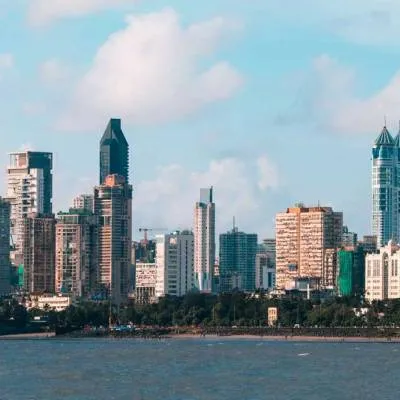
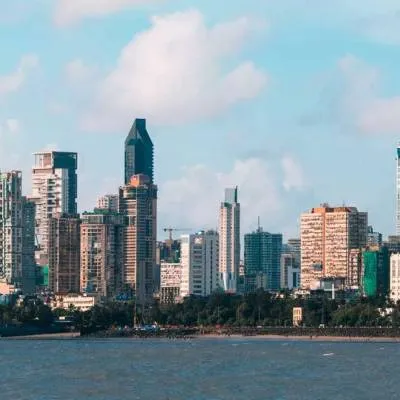
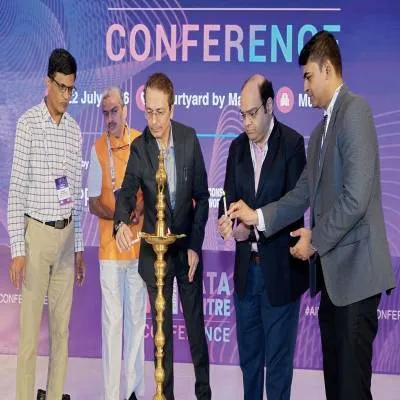
India, the world’s fourth largest economy, has estimated its real GDP to grow by 8.2 per cent in Q2 and register a growth of 8 per cent in H1 (April-September) of FY 2025-26. GST collections in October grew by 4.6 per cent over the previous year.  Even merchandise exports for April-October 2025 grew by 0.63 per cent despite US tariffs and other disruptions. The momentum shows that we are on course toward becoming the third largest by 2030, with a GDP projected at $ 7.3 trillion. India will host the Commonwealth Games in 2030 after two decades. The last one held in 2010 earned us a lot of flak and shame. This is India’s chance to redeem itself and prepare for the Olympics 2036, for which a bid is being made. This is not all. Data centre projects are gaining momentum with Visakhapatnam attracting Google, Reliance with Brookfield and TCS with TPG pouring in billions over the next five years. Coupled with the growth in data centres lies the need for efficient power sources; India is amending its Atomic Energy Act 1962 in the coming winter session so that private players can participate in nuclear power. Another major reform that has been undertaken is the conversion of 29 labour codes into four major codes. This could help formalise the labour force and make it easier for SMEs to scale up as the limit at which one needs government permission to retrench or downsize has been raised to 300 or more from 100 workers earlier. Employers may now increase the number of permanent workers over contract workers. They can now self-assess cess liabilities in respect to building and other construction work. Criminal liability has been rationalised too. Compliance would become easier and inspector harassment would ease. The contract labour applicability threshold has been raised from 20 to 50 workers, reducing compliance for small units. However, the direct responsibility for wage payments, safety conditions and social security compliance has now been placed with the principal employer if the contractor defaults. Cost of labour will rise in the near term but over the long term will build stability and better labour productivity.The recent fire in a Hong Kong high-rise building has rekindled the risks associated with high rises. Having amended its local laws, Mumbai is now aggressively being built vertically, and the Council of Tall Buildings & Urban Habitat’s Asia Conference will discuss several aspects among architectural and realty experts this month. However, these buildings can be dangerous entrapments if, like in the case of the Hong Kong building, the contractor uses flammable foam boards to block windows and openings during renovation. These boards are highly combustible, produce toxic smoke and can fuel a small fire into an inferno. With redevelopment also on the rise in Mumbai’s skylines, the upcoming high-rises ought to take special care of these hazards.We will need to fix the air quality (air pollution is costing us 3 per cent of GDP through healthcare costs, productivity losses, worker absenteeism) for our cities as Beijing has successfully done as constantly bringing construction activity to a standstill on account of this will only further delay our battle to achieve timely completion of projects, which is currently lagging not only for infrastructure projects but also real-estate projects where there is a widening gap between new project launches and actual physical construction. Indeed, air quality needs to become a national, political and social priority with policy and enforcement around emission standards. The construction equipment industry is already keeping up with the standards but enforcement in other sectors is not being seriously enforced. Construction sites ought to issue and monitor guidelines, like installing metal fencing and green cloth covering around construction sites to control dust, carrying out water sprinkling, properly storing and transporting debris with proper covering, installing air quality monitoring devices and setting up smoke absorption systems, among others.Just like being ahead in an obstacle race, India cannot afford to fumble.To attend the 2nd Mumbai Redevelopment Summit, register soon! Look for registration details on page…

Next Story
Infrastructure Transport

Tripura Rail Survey Approved For Jirania–Bodhjung Link

The Ministry of Railways has approved a Final Location Survey (FLS) for a proposed new railway line between Jirania and Bodhjung Nagar in Tripura. The planned section will span 14 km and is estimated to cost around Rs 4.2 million, with the entire alignment located within West Tripura district. The approval marks a key step towards strengthening railway infrastructure and supporting industrial growth in the state. Bodhjung Nagar is Tripura’s principal industrial and commercial hub, developed mainly for resource-based industries such as rubber, bamboo and food processing. The proposed Jirania..

Next Story
Infrastructure Transport

MCF Raebareli Rolls Out Its 15,000th Passenger Coach

The Modern Coach Factory (MCF) in Raebareli, Uttar Pradesh, has reached a major production milestone with the manufacture of its 15,000th passenger coach on December 15, the Ministry of Railways said. During the current financial year 2025–26, the unit has produced a total of 1,310 coaches so far. Established in 2007 at Lalganj in Raebareli, MCF is among India’s most advanced passenger coach manufacturing facilities. Built at a cost of around Rs 31.92 billion, the factory has an installed annual capacity of 1,000 coaches and is located about 3 km from Lalganj on the Kanpur–Raebareli Roa..

Next Story
Infrastructure Transport

RVNL Wins Gandak River Rail Bridge Contract

Rail Vikas Nigam Limited (RVNL) has received a Letter of Award from North Eastern Railway for a major railway infrastructure project valued at Rs 1.65 billion. The contract relates to the construction of the substructure for a key railway bridge over the Gandak River. The bridge will be constructed between Paniyahwa and Valmikinagar stations as part of the doubling of the Gorakhpur Cantt–Valmikinagar railway section. Designed to enhance capacity and operational efficiency, the structure will comprise 14 spans of 61 metres each and will be supported by double D-type well foundations. The des..

Advertisement

Subscribe to Our Newsletter

Get daily newsletters around different themes from Construction world.

STAY CONNECTED

Advertisement

Advertisement

Advertisement

Advertisement

Open In App