+
Andhra Pradesh Government Plans Coal Gasification In Chintalapudi-Racherla Mines
COAL & MINING

Andhra Pradesh Government Plans Coal Gasification In Chintalapudi-Racherla Mines

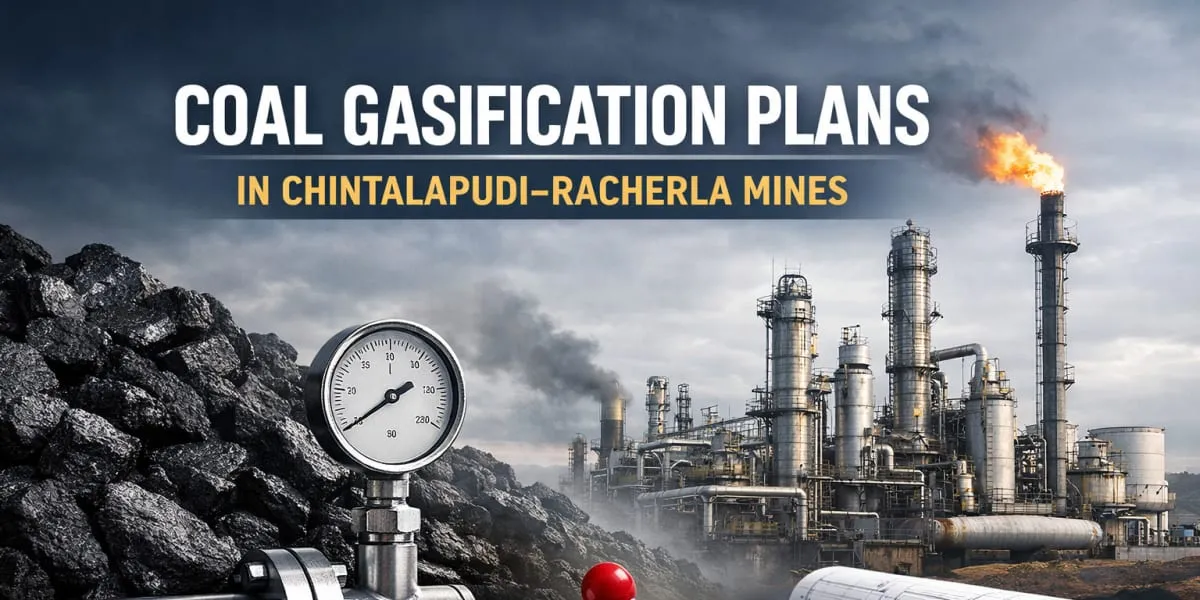
The Andhra Pradesh Government (APG) is planning a coal gasification initiative in the Chintalapudi-Racherla mines in Eluru district, officials said. The proposal aims to convert coal resources into synthesis gas that can be used as a cleaner feedstock for industrial use and power generation. Authorities have indicated that the plan is at a preparatory stage, with assessments and stakeholder consultations under way. Officials expect preliminary studies to examine resource quality and technical requirements before moving to detailed planning.

State agencies are reported to be studying technical feasibility, environmental impacts and logistical requirements for establishing gasification facilities near the mining complex. The APG has emphasised the need to align the project with environmental safeguards and regulatory norms to mitigate emissions and manage waste streams. Local administration will be involved in coordinating land access, infrastructure upgrades and workforce planning. Coordination with industry experts and research institutions is anticipated to inform technology choices and risk assessments.

Proponents expect the gasification process to add value to mined coal by producing combustible gases and chemical feedstocks that can support downstream industries. Observers noted that such a project would require integrated supply chains, reliable water and power supplies, and long-term operational planning to ensure viability. Economic assessments are understood to be part of the preparatory work to appraise investment requirements and potential returns. Financial modelling will consider capital expenditure, operating costs and revenue scenarios over the project lifecycle.

Community engagement and environmental clearances are likely to form critical components of the decision-making timeline before any final approvals are granted. The APG will need to balance industrial objectives with local livelihoods and ecological considerations as the project advances through planning stages. Officials indicated that further details would be released as studies conclude and formal proposals are prepared. Timelines will depend on approvals and study outcomes.

The Andhra Pradesh Government (APG) is planning a coal gasification initiative in the Chintalapudi-Racherla mines in Eluru district, officials said. The proposal aims to convert coal resources into synthesis gas that can be used as a cleaner feedstock for industrial use and power generation. Authorities have indicated that the plan is at a preparatory stage, with assessments and stakeholder consultations under way. Officials expect preliminary studies to examine resource quality and technical requirements before moving to detailed planning. State agencies are reported to be studying technical feasibility, environmental impacts and logistical requirements for establishing gasification facilities near the mining complex. The APG has emphasised the need to align the project with environmental safeguards and regulatory norms to mitigate emissions and manage waste streams. Local administration will be involved in coordinating land access, infrastructure upgrades and workforce planning. Coordination with industry experts and research institutions is anticipated to inform technology choices and risk assessments. Proponents expect the gasification process to add value to mined coal by producing combustible gases and chemical feedstocks that can support downstream industries. Observers noted that such a project would require integrated supply chains, reliable water and power supplies, and long-term operational planning to ensure viability. Economic assessments are understood to be part of the preparatory work to appraise investment requirements and potential returns. Financial modelling will consider capital expenditure, operating costs and revenue scenarios over the project lifecycle. Community engagement and environmental clearances are likely to form critical components of the decision-making timeline before any final approvals are granted. The APG will need to balance industrial objectives with local livelihoods and ecological considerations as the project advances through planning stages. Officials indicated that further details would be released as studies conclude and formal proposals are prepared. Timelines will depend on approvals and study outcomes.

Next Story
Infrastructure Urban

Implementation Status of Jal Jeevan Mission

Since August 2019 the Government has implemented Jal Jeevan Mission to provide assured potable water through household tap connections in rural India. At the start of the mission only 32.3 million (mn) rural households, representing 16.7 per cent, were reported to have tap water connections. States and union territories have reported that 125.8 mn additional rural households have since been provided with tap connections. As a result, of about 193.6 mn rural households roughly 158.2 mn, or 81.71 per cent, are reported to have tap water supply at home.\n\nThe State, district and village level st..

Next Story
Infrastructure Urban

Jal Jeevan Mission Reaches Eighty One Per Cent Rural Coverage

The Government reported substantial progress under the Jal Jeevan Mission, launched in August 2019 to provide tap water to every rural household. At launch only 32.3 million (mn) rural households had tap connections and states and Union territories reported provision of 125.8 mn additional households by March 2026. Consequently, out of about 193.6 mn rural households around 158.2 mn, or 81.71 per cent, are reported to have tap water at home. The Finance Minister announced extension of the mission until 2028 in the 2025-26 budget speech. The Swachh Bharat Mission Grameen, launched in October 20..

Next Story
Infrastructure Urban

Empowering Local Governance for Sustainable Rural Water Supply

The Ministry of Jal Shakti has aligned the Jal Jeevan Mission (JJM) with the 73rd Amendment to strengthen village level planning and community ownership of water supply. Gram Panchayats, village water and sanitation committees and Pani Samitis are to plan, implement, manage and maintain piped water systems, with gram sabha processes formalising handover and oversight. Implementation support agencies including non government organisations, community based organisations and self help groups have been empanelled to train local committees and promote women participation. Under JJM, the department ..

Advertisement

Subscribe to Our Newsletter

Get daily newsletters around different themes from Construction world.

STAY CONNECTED

Advertisement

Advertisement

Advertisement