Waterproofing buildings used to be an annual pre-monsoon affair but the evolution of real-estate development has changed that approach. In new developments, developers are weaving waterproofing solutions into both the design and construction phases, an approach that Nikhil Madan, Managing Director, Mahima Group, says, “is all about ensuring lasting durability [of the building] and keeping lifecycle risks including water seepage and extensive maintenance to a minimum.”
Watertight by design
Aluminium formwork systems aren’t commonly thought of as a waterproofing tool but at the Mahima Group, these systems and a carefully designed concrete mix help to reduce permeability and fortify structural integrity, he explains. Thereafter, “during the finishing stages, we use fabric mesh reinforcement in plastering to control cracks that could otherwise allow moisture to seep in.”
“We also design exposed piping systems, a choice that simplifies both inspection and maintenance, allowing for faster detection of any potential leaks,” adds Madan.
Coming to materials, he says, “Chinese mosaic flooring is a popular option for terraces for adding extra protection from water penetration and assisting in the reflection of heat. Additionally, special sealing treatments around the windows and other critical points prevent the penetration of water.”
Beyond structural options, the team at the Mahima Group frames a waterproofing plan during the design phase based on the specific requirements of areas such as terraces, toilets, podiums and water tanks, depending on the different amounts of water they are exposed to.
“Coordinating the design, engineering, and construction phases so that these waterproofing systems get integrated at the right time during the execution phase can be challenging,” says Madan. “Since many waterproofing systems are concealed, it is very important to supervise the work to ensure it is being done effectively.”
Application by area
Transcon Developers’ integrated foundation-to-roof proactive waterproofing strategy spans all its projects, such as Transcon Silver Bay, Bandra (W); Transcon UNO, off BKC; Ramdev Plaza, Santacruz (W); and Transcon Triumph at Andheri (W). “This ensures the structures remain a sanctuary for residents,” says Shraddha Kedia Agarwal, Director.
Starting from basements and retaining walls, “crystalline waterproofing is our preferred waterproofing system for becoming an integral part of the concrete matrix, effectively making the structure self-healing against hairline cracks and being extremely durable, almost permanent, albeit only effective against water under pressure and unable to bridge large structural cracks,” she shares.
For expansive podiums and wet areas, Kedia Agarwal says the crystalline technology is combined with HDPE membrane sheets. “HDPE membranes are highly elastic, which is crucial for handling the thermal expansion due to Mumbai’s climate, and provides a seamless, joint-free finish,” she says, while pointing out that HDPE applications are highly sensitive to substrate moisture and require specialised labour.
In a high-speed construction environment, ensuring the concrete substrate is perfectly dry before the HDPE application requires strict scheduling, cautions Kedia Agarwal. “Essentially, the curing window presents challenges.”
At Concorde, Penetron, a crystalline, cementitious waterproofing system for concrete, helps achieve water tightness on RCC structures like retaining walls, water bodies, underground sumps, overhead tanks, sewage treatment plants and swimming pools. Also, swell bars seal the construction joints of tanks and water-bearing structures. “Besides forming a seamless elastic membrane when applied, the product offers strong adhesion to different substrates, maintains its mechanical properties across a wide temperature range and is resistant to water, frost and commonly encountered chemicals,” explains Ajaz Ahmed, COO.
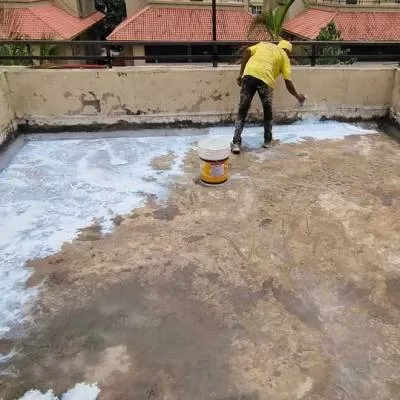
In Concorde’s residential project Concorde Antares and commercial project Concorde Econex, a cementitious polymer dispersion-based flexible protective coating system provides a breathable and flexible protective layer that acts as a reliable waterproof barrier for the balconies, chajjas, toilets, bathrooms and terraces.
“Since the coating is self-curing and capable of accommodating minor structural movement, it helps prevent the formation of cracks and water seepage over time,” says Ahmed. “Additionally, a liquid applied polyurethane waterproofing membrane was deployed for high-exposure areas such as terraces, podium slabs and balconies requiring superior long-term protection.”
Choose right
“Across all our projects, be it Viyaara Altiora at Dadar, Riverside Taloja at Taloja or upcoming developments across Mumbai and the MMR, we always integrate proactive waterproofing systems from the design and construction stage itself, and this includes advanced basement and terrace waterproofing, façade sealing and long-term protection solutions,” says Manoj Paliwal, Director, Viyaara Realty. “We work with proven systems that meet the project’s structural requirements, site conditions and long-term durability standards. Rather than focusing on perceived ‘cons’, we evaluate products based on their performance, reliability and suitability for the specific application.”
Paliwal points out that today’s well-informed homebuyers help make the conversation more transparent, and ensure that chosen solutions align with both industry best practices and their expectations.
At Concorde, the preference leans toward “relatively easy to apply products that don’t need heat-based processes, as this improves safety during installation”, adds Ahmed.
Cost matters
Proactive waterproofing systems typically cost about 50 per cent more than conventional repair-oriented waterproofing solutions, says Ahmed. From a lifecycle perspective, this investment is justified, he says, “because it significantly reduces the risk of seepage, structural deterioration and future repair work, while maintaining the asset’s long-term value and ensuring better living conditions for residents”.
However, Madan has a different take. Considering the breaking through the finished surfaces, refinishing and multiple maintenance activities involved in carrying out waterproofing as a repair process, he says incorporating waterproofing in the design as part of the construction process keeps the overall cost about the same as, and in some cases less than, the former route.
Despite the possibly slightly higher upfront cost of integrated systems, they offer far greater long-term value by preventing issues before they arise, sums up Paliwal. “Besides, today’s homebuyers clearly prioritise quality and long-term durability over short-term savings. Meanwhile, as developers, we ensure buyers receive the best possible materials and systems that enhance the building’s durability and overall lifecycle performance.”
Suggested waterproofing brands
Modern waterproofing solutions help protect structures from water ingress, corrosion and early deterioration. When designed and executed correctly, waterproofing systems significantly improve structural durability, reduce maintenance and extend a building’s lifecycle. Sidheshwar Jamma, Chairman, Gubbi Civil Engineers, identifies useful products in key waterproofing solution categories:
- Cementitious coatings are most suitable for basements and water tanks. In this category, Sika, Asian Paints, Constro Chem India and Fosroc’s products are recommended.
- Crystalline technology is used to seal water pathways within concrete. Krishna Chem India, Constro Chem India and Sika are good options.
- Polyurethane membranes are usually used for terraces and exposed roofs, in which category Asian Paints, Constro Chem India, Krishna Chem India and Fosroc are recommended.
- Bituminous membranes are widely used for roofs and foundations for their durability. Sika, Asian Paints, Constro Chem India and Fosroc offer useful products in this category.
- Elastomeric membranes support heavy-duty industrial applications. Sika, Asian Paints, Constro Chem India and Fosroc are leading players.
- Injection grouting seals structural cracks. Sika, Asian Paints, Constro Chem India, Krishna Chem India and Fosroc’s products are recommended.
- Damp-proofing creams control rising damp. Sika, Asian Paints, Constro Chem India and Fosroc offer useful products in this category.
- Vapour barriers prevent moisture migration. Sika, Asian Paints and Fosroc are good options.
Applying these advanced waterproofing systems requires skilled installation and proper surface preparation to ensure long-term performance, cautions Jamma. “Weather conditions like rain, humidity or extreme temperatures can affect application timelines. Sometimes, material compatibility, specialised equipment and multilayer curing times can also add complexity to the process.”
The right expertise and planning, however, can overcome these challenges to deliver durable and reliable waterproofing protection. “At Gubbi Civil Engineers, these challenges are expertly managed, ensuring durable, efficient and long-lasting waterproofing solutions tailored to every project,” he concludes.
Quick bytes
- Waterproofing integrated in building design
- Crystalline systems protect foundations
- HDPE membranes used on podium slabs
- Polyurethane protects terraces
- Integrated systems reduce lifecycle repairs
Quotes:
We weave waterproofing solutions into both the design and construction phases for lasting durability. - Nikhil Madan, Managing Director, Mahima Group
Today’s well-informed homebuyers help make the [waterproofing] conversation more transparent. - Manoj Paliwal, Director, Viyaara Realty
Proactive waterproofing typically costs about 50 per cent more than conventional repair-oriented solutions. - Ajaz Ahmed, COO, Concorde
Material compatibility, specialised equipment and multilayer curing times can add complexity to waterproofing. - Sidheshwar Jamma, Chairman, Gubbi Civil Engineers
Our foundation-to-roof proactive waterproofing strategy ensures structures remain a sanctuary for residents. - Shraddha Kedia Agarwal, Director, Transcon Developers