

Centre Proposes Faster Start For Auctioned Mines
COAL & MINING

Centre Proposes Faster Start For Auctioned Mines

The Centre has proposed reducing the time allowed for companies to operationalise newly auctioned mines from three years to two years, a move aimed at speeding up mineral production and investment.

The Ministry of Mines has suggested removing the one-year extension that state governments can currently grant under Section 4A(4) of the Mines and Minerals (Development and Regulation) Act. This would effectively shorten the window available to miners to begin production and dispatch from the date of lease execution.

In a notification issued on January 7, the ministry said advances in technology, infrastructure, automation and digital processes have significantly reduced the time required to make mines operational. It has invited public comments on the proposal by January 22 as part of the wider consultation process for the MMDR (Amendment) Bill, 2026.

Under the existing law, a mining lease automatically lapses if production and dispatch do not commence within two years of execution, although state governments are permitted to grant a one-year extension. The proposed amendment seeks to delete this provision, eliminating the possibility of any extension.

Industry representatives have raised concerns over the proposal. A senior executive at the Federation of Indian Mineral Industries said the move underestimates the time required to secure multiple sequential approvals even after a lease is granted. He said the current three-year period is already difficult to adhere to.

“After securing a mining lease, companies still need mine opening permission, consent to establish and consent to operate following environmental clearances, along with land acquisition, logistics and infrastructure development. Permissions for approach roads through forest areas and resolution of local social issues also take considerable time,” he said.

Legacy issues further complicate the process, particularly in cases where environmental and forest clearances were granted after lease execution and are still under litigation. Such disputes, he said, could significantly disrupt timelines.

The executive also warned that companies which have already received extensions under the existing framework could face uncertainty if the amendment is implemented, as even those cases may no longer be recognised.

FIMI has urged the government to retain the current safeguard, arguing that removing the extension provision would not be in the interest of mineral development. The ministry has said it will examine stakeholder submissions before finalising the amendment proposal.

The Centre has proposed reducing the time allowed for companies to operationalise newly auctioned mines from three years to two years, a move aimed at speeding up mineral production and investment. The Ministry of Mines has suggested removing the one-year extension that state governments can currently grant under Section 4A(4) of the Mines and Minerals (Development and Regulation) Act. This would effectively shorten the window available to miners to begin production and dispatch from the date of lease execution. In a notification issued on January 7, the ministry said advances in technology, infrastructure, automation and digital processes have significantly reduced the time required to make mines operational. It has invited public comments on the proposal by January 22 as part of the wider consultation process for the MMDR (Amendment) Bill, 2026. Under the existing law, a mining lease automatically lapses if production and dispatch do not commence within two years of execution, although state governments are permitted to grant a one-year extension. The proposed amendment seeks to delete this provision, eliminating the possibility of any extension. Industry representatives have raised concerns over the proposal. A senior executive at the Federation of Indian Mineral Industries said the move underestimates the time required to secure multiple sequential approvals even after a lease is granted. He said the current three-year period is already difficult to adhere to. “After securing a mining lease, companies still need mine opening permission, consent to establish and consent to operate following environmental clearances, along with land acquisition, logistics and infrastructure development. Permissions for approach roads through forest areas and resolution of local social issues also take considerable time,” he said. Legacy issues further complicate the process, particularly in cases where environmental and forest clearances were granted after lease execution and are still under litigation. Such disputes, he said, could significantly disrupt timelines. The executive also warned that companies which have already received extensions under the existing framework could face uncertainty if the amendment is implemented, as even those cases may no longer be recognised. FIMI has urged the government to retain the current safeguard, arguing that removing the extension provision would not be in the interest of mineral development. The ministry has said it will examine stakeholder submissions before finalising the amendment proposal.

Next Story
Infrastructure Transport

Dhalbhumgarh Airport Faces 150-km Rule Hurdle

The issue has resurfaced following a recent statement by Union Civil Aviation Minister Ram Mohan Naidu, who said that under existing aviation policy, a new greenfield airport is generally not permitted within an aerial distance of 150 kilometres of an operational civilian airport. He added, however, that if a formal proposal is submitted, its impact on the existing airport can be examined and relaxations may be considered on a case-by-case basis. While the clarification has revived some hope for Dhalbhumgarh, it has also underlined the scale of the technical challenge facing the project. Unde..
Next Story
Infrastructure Transport

Stakeholders Seek Parallel Ops For Vizag Airports

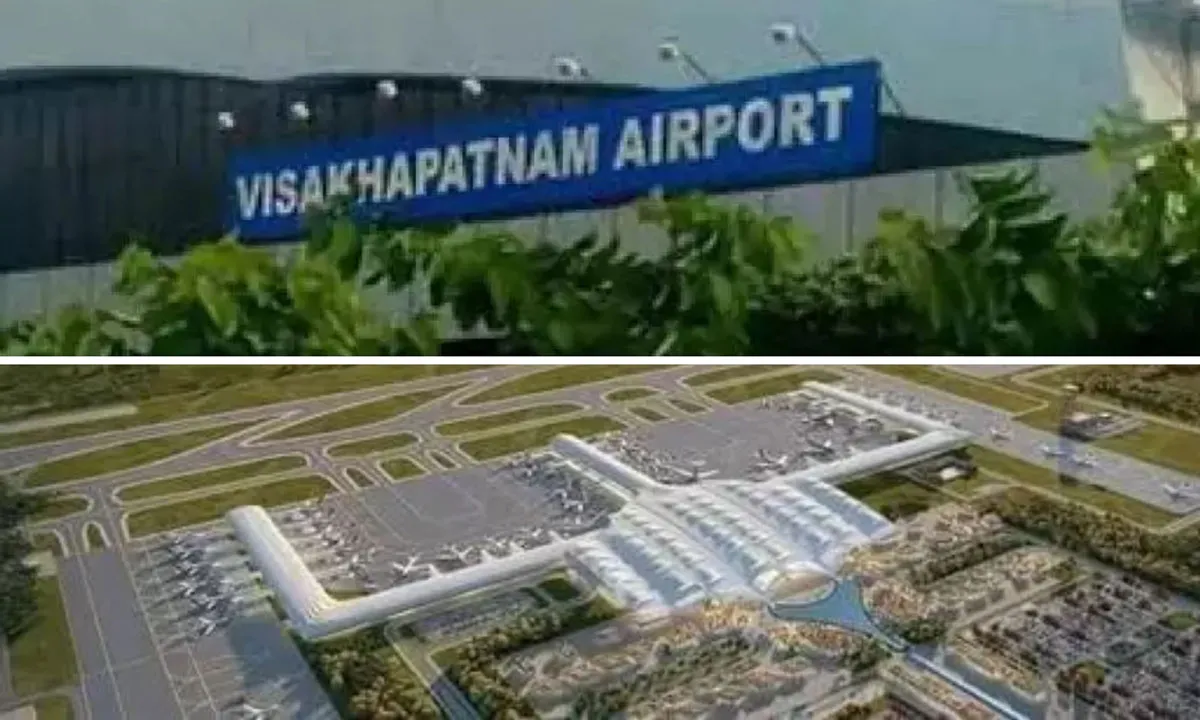
With road and metro rail links to Bhogapuram still several years away, stakeholders in north Andhra Pradesh have renewed demands to continue civil operations at INS Dega even after the commissioning of Bhogapuram International Airport. The new airport is expected to begin commercial operations from June. Officials said close to 80 per cent of the airport infrastructure at Bhogapuram, including the terminal building and internal approach roads, has already been completed. However, inadequate external connectivity remains a key concern. Making a case for parallel operations, Andhra Pradesh Air ..
Next Story
Infrastructure Transport

Govt To Roll Out V2V Tech To Cut Road Crashes

In an effort to curb road accidents, particularly in low-visibility conditions such as dense fog, the government is set to roll out vehicle-to-vehicle (V2V) communication technology that will allow cars to exchange real-time data and alert drivers to potential dangers. The announcement was made by Union Road Transport and Highways Minister Nitin Gadkari after the 43rd meeting of the Transport Development Council. The technology involves installing an on-board unit (OBU) in vehicles, enabling wireless data exchange between nearby cars. This will allow vehicles to share information such as spee..

Advertisement

Subscribe to Our Newsletter

Get daily newsletters around different themes from Construction world.

STAY CONNECTED

Advertisement

Advertisement

Advertisement

Advertisement

Open In App