AP Cabinet Clears Logistics Body, Funds, Mega Projects
ECONOMY & POLICY

AP Cabinet Clears Logistics Body, Funds, Mega Projects

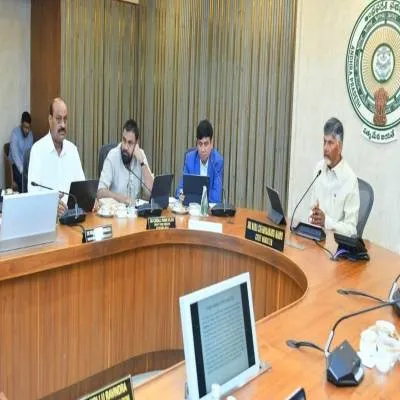
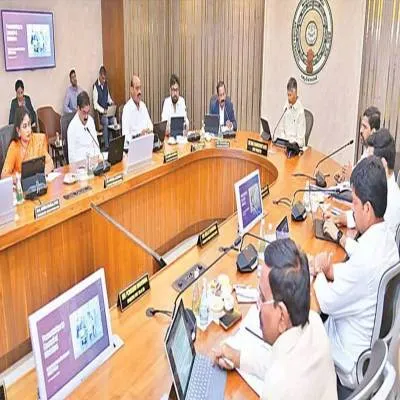
The Andhra Pradesh Cabinet on Thursday approved a series of decisions aimed at accelerating economic growth, boosting employment and strengthening social infrastructure, as the state pushes to emerge as a major industrial and logistics hub.

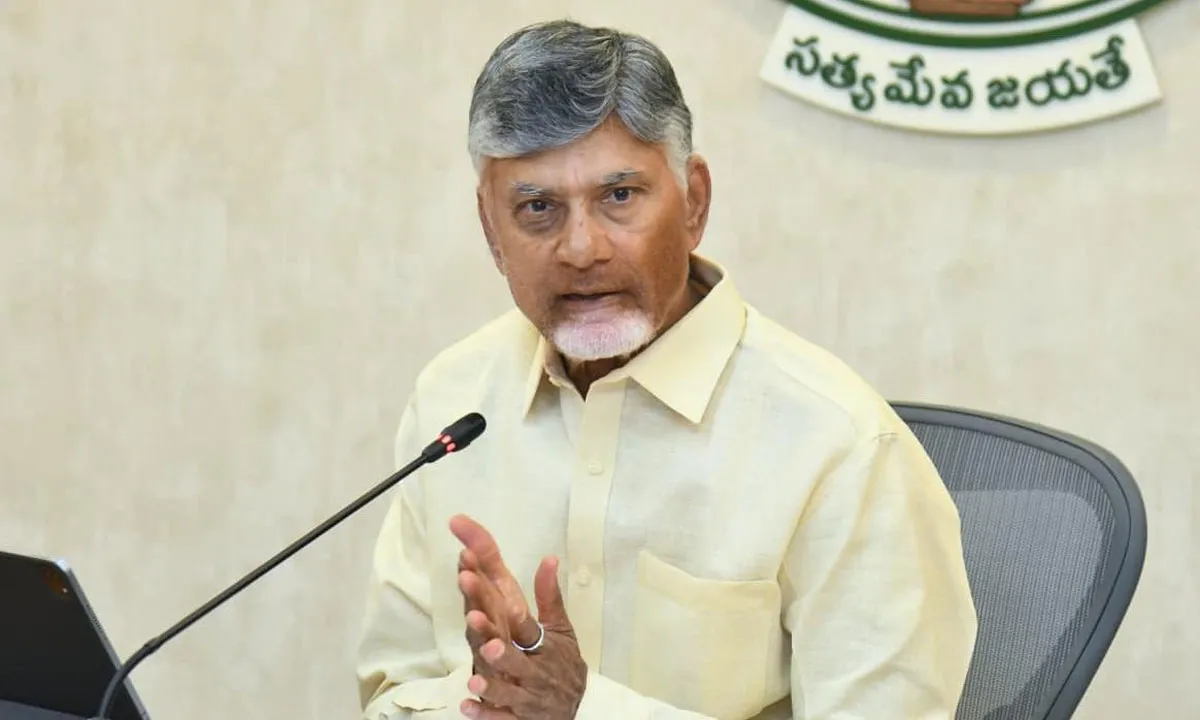
Chaired by Chief Minister N. Chandrababu Naidu, the Cabinet cleared the creation of the Andhra Pradesh Logistics Infrastructure Corporation (APLINC) along with a dedicated Logistics Fund. Briefing the media, Information Minister Kolusu Parthasarathy said the measures are designed to build strong institutional frameworks for industrial growth, attract large investments and generate employment at scale.

APLINC will function as an integrated holding company to plan, develop and manage logistics infrastructure across the state. Complementing this, the AP Logistics Fund will be structured as an Alternative Investment Fund, with the state government acting as the initial sponsor by contributing 10–20 per cent of the capital, while professional asset managers and trustee firms handle governance and operations.

The Cabinet also approved construction of the AP Judicial Academy at Amaravati at a cost of Rs 1.65 billion. In addition, it extended a government guarantee for a Rs 50 billion loan from National Bank for Financing Infrastructure and Development under the Jal Jeevan Mission to provide tap water connections to rural households.

In a key decision related to the port sector, the Cabinet approved the renaming of the captive port at DL Puram in Anakapalli district as M/s AMNS Ports Rajayyapeta Pvt Ltd, a special purpose vehicle of ArcelorMittal Nippon Steel.

To revitalise the MSME ecosystem, the Cabinet cleared the AP Cluster Development Programme with an outlay of Rs 2 billion. The scheme envisages setting up 45 Common Facility Centres in MSME parks over the next five years, generating direct employment for about 7,500 people. In line with the One Family–One Entrepreneur vision, priority will be given to rural areas and enterprises led by women and SC/ST entrepreneurs.

The Cabinet also endorsed major land allotments recommended by the State Investment Promotion Board. These include 149 acres in Tirupati district for M/s Ethereal Exploration Guild to develop end-to-end launch vehicles under the proposed Space City initiative, and 55 acres in Chittoor district for M/s Pioneer Clean Amps to establish a flight training school and an MRO facility for Hansa-3 aircraft. Large green energy projects by Tata Power for a 10 GW ingot and wafer plant, and Websol Renewable for a 4 GW solar cell facility in Nellore and Tirupati districts, were also approved along with incentives.

Providing relief to the hospitality sector, the Cabinet abolished the additional retail excise tax on bars to ensure price parity with retail outlets. However, the maximum retail price of IMFL and foreign liquor, excluding the Rs 99 category, will rise marginally by Rs 10 per bottle, a move expected to generate an additional Rs 13.91 billion annually. Microbreweries have been permitted near municipal corporations and in three-star hotels.

On the social sector front, a Rs 15 billion loan was sanctioned to the SC Cooperative Finance Corporation to ensure uninterrupted implementation of welfare schemes. The Cabinet also approved a proposal to set up a new government degree college at Kotabommali in Srikakulam district to cater to the educational needs of coastal backward regions. Amendments to the AP Public Libraries Act, 1960 were cleared, removing discriminatory provisions against persons affected by leprosy in line with Supreme Court directives.

In the power sector, concessions for the ferro alloys industry were extended for another year, while administrative approval was accorded for the Rs 73.76 billion Kamalapadu Pumped Storage Hydro Project with a capacity of 950 MW.

The Andhra Pradesh Cabinet on Thursday approved a series of decisions aimed at accelerating economic growth, boosting employment and strengthening social infrastructure, as the state pushes to emerge as a major industrial and logistics hub. Chaired by Chief Minister N. Chandrababu Naidu, the Cabinet cleared the creation of the Andhra Pradesh Logistics Infrastructure Corporation (APLINC) along with a dedicated Logistics Fund. Briefing the media, Information Minister Kolusu Parthasarathy said the measures are designed to build strong institutional frameworks for industrial growth, attract large investments and generate employment at scale. APLINC will function as an integrated holding company to plan, develop and manage logistics infrastructure across the state. Complementing this, the AP Logistics Fund will be structured as an Alternative Investment Fund, with the state government acting as the initial sponsor by contributing 10–20 per cent of the capital, while professional asset managers and trustee firms handle governance and operations. The Cabinet also approved construction of the AP Judicial Academy at Amaravati at a cost of Rs 1.65 billion. In addition, it extended a government guarantee for a Rs 50 billion loan from National Bank for Financing Infrastructure and Development under the Jal Jeevan Mission to provide tap water connections to rural households. In a key decision related to the port sector, the Cabinet approved the renaming of the captive port at DL Puram in Anakapalli district as M/s AMNS Ports Rajayyapeta Pvt Ltd, a special purpose vehicle of ArcelorMittal Nippon Steel. To revitalise the MSME ecosystem, the Cabinet cleared the AP Cluster Development Programme with an outlay of Rs 2 billion. The scheme envisages setting up 45 Common Facility Centres in MSME parks over the next five years, generating direct employment for about 7,500 people. In line with the One Family–One Entrepreneur vision, priority will be given to rural areas and enterprises led by women and SC/ST entrepreneurs. The Cabinet also endorsed major land allotments recommended by the State Investment Promotion Board. These include 149 acres in Tirupati district for M/s Ethereal Exploration Guild to develop end-to-end launch vehicles under the proposed Space City initiative, and 55 acres in Chittoor district for M/s Pioneer Clean Amps to establish a flight training school and an MRO facility for Hansa-3 aircraft. Large green energy projects by Tata Power for a 10 GW ingot and wafer plant, and Websol Renewable for a 4 GW solar cell facility in Nellore and Tirupati districts, were also approved along with incentives. Providing relief to the hospitality sector, the Cabinet abolished the additional retail excise tax on bars to ensure price parity with retail outlets. However, the maximum retail price of IMFL and foreign liquor, excluding the Rs 99 category, will rise marginally by Rs 10 per bottle, a move expected to generate an additional Rs 13.91 billion annually. Microbreweries have been permitted near municipal corporations and in three-star hotels. On the social sector front, a Rs 15 billion loan was sanctioned to the SC Cooperative Finance Corporation to ensure uninterrupted implementation of welfare schemes. The Cabinet also approved a proposal to set up a new government degree college at Kotabommali in Srikakulam district to cater to the educational needs of coastal backward regions. Amendments to the AP Public Libraries Act, 1960 were cleared, removing discriminatory provisions against persons affected by leprosy in line with Supreme Court directives. In the power sector, concessions for the ferro alloys industry were extended for another year, while administrative approval was accorded for the Rs 73.76 billion Kamalapadu Pumped Storage Hydro Project with a capacity of 950 MW.

Next Story
Infrastructure Urban

India Expands Semiconductor Training To 500 Institutions

Under the Chips to Startups programme of the India Semiconductor Mission, the Union minister responsible for Railways, Information and Broadcasting, and Electronics and IT reported notable progress in talent development. He indicated that over the past four years substantial steps have been taken towards a 10-year target of training 85,000 engineers in semiconductor design. World-class EDA tools have been deployed in 315 academic institutions across the country to provide students with practical exposure to chip design. These EDA tools are supported by leading global firms and are accessible t..

Next Story
Infrastructure Urban

Delhi Institutions Support India Semiconductor Mission

The Government of India has prioritised talent development through training, upskilling and workforce development under the Chips to Startups initiative of the India Semiconductor Mission, with officials noting progress in four years towards a 10-year target of training 85,000 engineers in semiconductor design. Electronic design automation tools provided by Synopsys, Cadence, Siemens, Renesas, Ansys and AMD have been deployed in 315 academic institutions, enabling students to gain practical chip design experience. Chips have been fabricated and tested at the Semiconductor Laboratory, Mohali, a..

Next Story
Infrastructure Urban

NHA Announces Winners Of NHCX Hackathon At IIT Hyderabad

The National Health Authority (NHA) has concluded the NHCX Hackathon under the Ayushman Bharat Digital Mission (ABDM) to stimulate innovation around the National Health Claims Exchange (NHCX). The winning teams presented their solutions at the NHCX Innovation Meet held at IIT Hyderabad during a two-day event in March 2026 that also served as the hackathon grand finale. The hackathon itself ran from 22 to 28 February 2026 and aimed to accelerate paperless, transparent claims processing across India. The event was organised with a range of ecosystem partners, including the Insurance Regulatory a..

Advertisement

Subscribe to Our Newsletter

Get daily newsletters around different themes from Construction world.

STAY CONNECTED

Advertisement

Advertisement

Advertisement