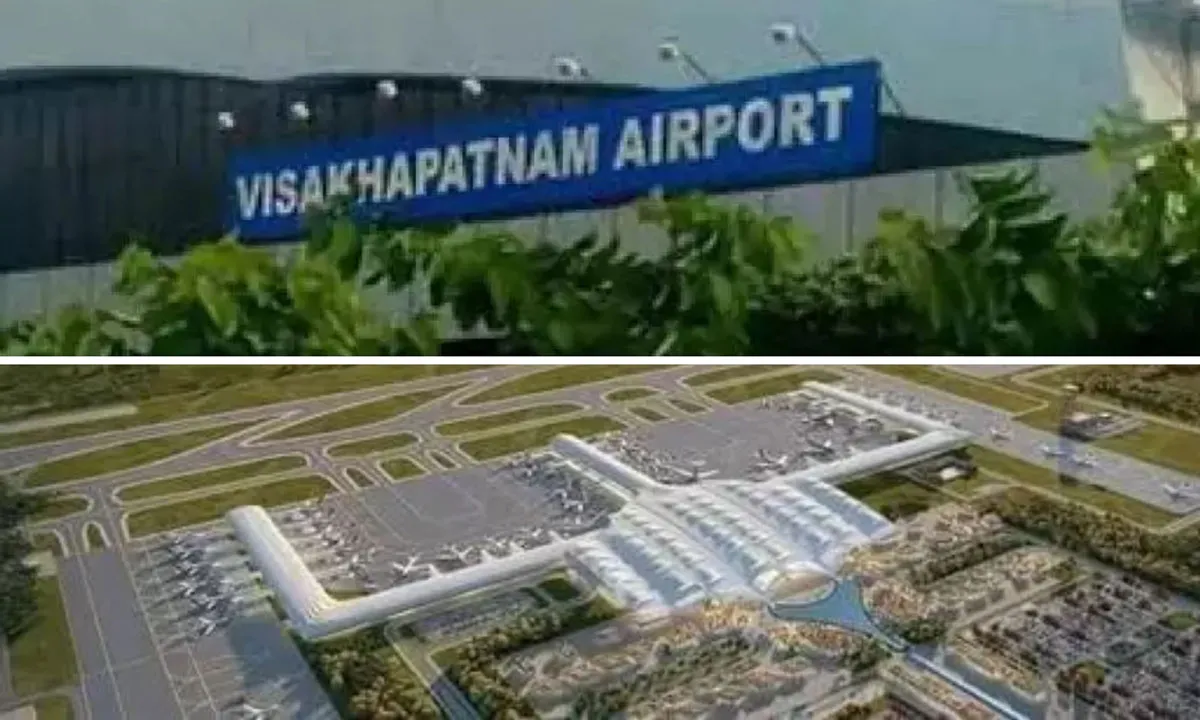
Stakeholders Seek Parallel Ops For Vizag Airports
AVIATION & AIRPORTS

Stakeholders Seek Parallel Ops For Vizag Airports

With road and metro rail links to Bhogapuram still several years away, stakeholders in north Andhra Pradesh have renewed demands to continue civil operations at INS Dega even after the commissioning of Bhogapuram International Airport. The new airport is expected to begin commercial operations from June.

Officials said close to 80 per cent of the airport infrastructure at Bhogapuram, including the terminal building and internal approach roads, has already been completed. However, inadequate external connectivity remains a key concern. Making a case for parallel operations, Andhra Pradesh Air Travellers Association president and IT entrepreneur Naresh Kumar said the proposed six-lane beach corridor between Visakhapatnam and Bhogapuram would take at least another three years to complete. He added that the planned Metro Rail link from Bhogapuram to the steel plant and the proposed 12 flyovers between Madhurawada and the steel plant are also likely to take around three years.

“With nearly 5,000 vehicles being added to the city every month, traffic congestion in Visakhapatnam has worsened during peak hours with the existing road infrastructure,” Kumar said. He noted that while the economy had gained momentum with large investments under the present government, infrastructure expansion had not kept pace with industrial growth and rising vehicle numbers.

Kumar pointed out that major industrial clusters such as Atchutapuram SEZ, Pharma City and the steel plant, together accounting for around 0.1 million frequent flyers, are located far from Bhogapuram, making the continued operation of the city airport essential. Supporting this view, CREDAI Visakhapatnam unit president Ashok Kumar said operating both airports in parallel would promote balanced regional development.

Drawing a comparison with Goa, he noted that Dabolim airport continues to handle substantial traffic even after the opening of Manohar International Airport, helping tourism and trade through better traffic distribution. Notably, the Airports Authority of India had stated in 2018 that it did not favour the closure of the Visakhapatnam airport, citing the scale of investments already made there.

With Andhra Pradesh targeting a $125–135 billion economy by 2032–35, stakeholders believe retaining both airports has become a strategic necessity for sustaining growth in north Andhra Pradesh. In 2025, the Visakhapatnam international airport handled more than 2.75 million passengers, nearly 19,000 flights and about 4,900 metric tonnes of domestic cargo, while recording an on-time performance of 81.5 per cent and expanding its international connectivity.

With road and metro rail links to Bhogapuram still several years away, stakeholders in north Andhra Pradesh have renewed demands to continue civil operations at INS Dega even after the commissioning of Bhogapuram International Airport. The new airport is expected to begin commercial operations from June. Officials said close to 80 per cent of the airport infrastructure at Bhogapuram, including the terminal building and internal approach roads, has already been completed. However, inadequate external connectivity remains a key concern. Making a case for parallel operations, Andhra Pradesh Air Travellers Association president and IT entrepreneur Naresh Kumar said the proposed six-lane beach corridor between Visakhapatnam and Bhogapuram would take at least another three years to complete. He added that the planned Metro Rail link from Bhogapuram to the steel plant and the proposed 12 flyovers between Madhurawada and the steel plant are also likely to take around three years. “With nearly 5,000 vehicles being added to the city every month, traffic congestion in Visakhapatnam has worsened during peak hours with the existing road infrastructure,” Kumar said. He noted that while the economy had gained momentum with large investments under the present government, infrastructure expansion had not kept pace with industrial growth and rising vehicle numbers. Kumar pointed out that major industrial clusters such as Atchutapuram SEZ, Pharma City and the steel plant, together accounting for around 0.1 million frequent flyers, are located far from Bhogapuram, making the continued operation of the city airport essential. Supporting this view, CREDAI Visakhapatnam unit president Ashok Kumar said operating both airports in parallel would promote balanced regional development. Drawing a comparison with Goa, he noted that Dabolim airport continues to handle substantial traffic even after the opening of Manohar International Airport, helping tourism and trade through better traffic distribution. Notably, the Airports Authority of India had stated in 2018 that it did not favour the closure of the Visakhapatnam airport, citing the scale of investments already made there. With Andhra Pradesh targeting a $125–135 billion economy by 2032–35, stakeholders believe retaining both airports has become a strategic necessity for sustaining growth in north Andhra Pradesh. In 2025, the Visakhapatnam international airport handled more than 2.75 million passengers, nearly 19,000 flights and about 4,900 metric tonnes of domestic cargo, while recording an on-time performance of 81.5 per cent and expanding its international connectivity.

Next Story
Infrastructure Transport

MMRDA: Engineering Mumbai’s Underground Future

Somewhere beneath Mumbai’s restless surface, a second city is being built into existence.In the late afternoon, as the day leaned towards evening, Dr Sanjay Mukherjee, Metropolitan Commissioner (MMRDA), led us into a realm that very few ever enter—the active heart of one of Mumbai’s most ambitious underground road projects. While the city surges forward in familiar chaos above the ground, another Mumbai is taking shape below: quietly, methodically, irrevocably. The metal lift doors clo..

Next Story
Building Material

Steel: Shielded or Strengthened?

Going forward, domestic steel mills are targeting capacity expansion of nearly 40 per cent through till FY31, adding 80-85 mt, translating into an investment pipeline of $ 45-50 billion. So, Jhunjhunwala points out that continuing the safeguard duty will be vital to prevent a surge in imports and protect domestic prices from external shocks. While in FY26, the industry operating profit per tonne is expected to hold at around $ 108, similar to last year, the industry’s earnings must meaningfully improve from hereon to sustain large-scale investments. Else, domestic mills could..

Next Story
Infrastructure Transport

Metro Moves: From Expansion to System Integration

India’s metro rail programme has entered a new phase—one where the focus is no longer only on adding kilometres, but on building integrated, reliable and financially sustainable urban transit systems. With more than 1,000 km of metro lines already operational and daily ridership exceeding 10 million, the challenge now lies in execution quality, underground risk management, multimodal integration, viable funding structures, and large-scale digital adoption. These themes framed deliber..

Advertisement

Subscribe to Our Newsletter

Get daily newsletters around different themes from Construction world.

STAY CONNECTED

Advertisement

Advertisement

Advertisement

Advertisement

Open In App