Garuda Opens Drone Battery Facility In Chennai
Technology

Garuda Opens Drone Battery Facility In Chennai

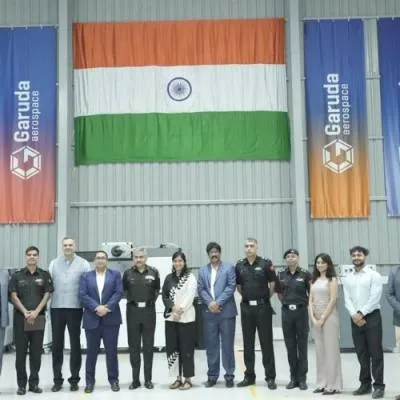
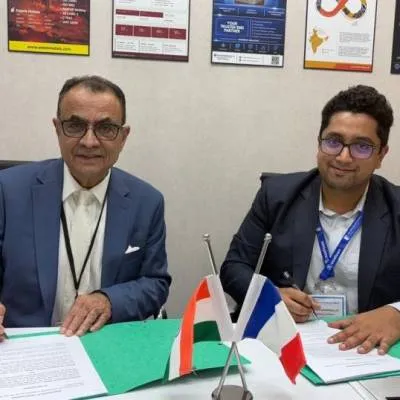
Directorate General of Civil Aviation chief Faiz Ahmed Kidwai on Wednesday inaugurated a drone battery manufacturing facility set up by Garuda Aerospace in Chennai. The company is backed by former Indian cricket captain MS Dhoni.

The inauguration took place during Bharat Drone Udaan, an industry event organised by the Bharat Drone Association at Garuda Aerospace’s operations centre. In a statement, the company said the new battery facility marks another step towards strengthening India’s indigenous drone manufacturing ecosystem, following its recent launch of a defence drone manufacturing unit.

According to Garuda Aerospace, the battery plant will enable end-to-end domestic production of critical components and reduce dependence on imports, a key priority as drone usage expands across civilian and defence applications.

During the visit, Kidwai also inaugurated a new academic block at the company’s DGCA-approved Remote Pilot Training Organisation. The expanded infrastructure is expected to increase training capacity and help meet rising demand for certified drone pilots across sectors such as agriculture, infrastructure, defence, disaster management and logistics.

On the occasion, the DGCA chief released the Garuda Bharat Drone Udaan Impact Book, which documents innovative drone applications, case studies and the company’s growth journey in India’s drone sector. Addressing the gathering, Kidwai said Garuda Aerospace is among the few Indian companies manufacturing a wide range of drones for diverse uses. He added that its focus on indigenisation, including in-house production and assembly of key components, sets an important benchmark for the industry, while trained pilots will be critical as drone applications scale up.

Garuda Aerospace Founder and Director Agnishwar Jayaprakash said the company has evolved over the past decade from an agri-tech startup into India’s largest drone manufacturer. He noted that it has produced more than 3,000 drones and trained over 2,500 pilots, and was the first firm to receive DGCA approvals for both drone manufacturing and pilot training. Jayaprakash credited supportive government policies and regulatory guidance for accelerating growth in the sector.

Directorate General of Civil Aviation chief Faiz Ahmed Kidwai on Wednesday inaugurated a drone battery manufacturing facility set up by Garuda Aerospace in Chennai. The company is backed by former Indian cricket captain MS Dhoni. The inauguration took place during Bharat Drone Udaan, an industry event organised by the Bharat Drone Association at Garuda Aerospace’s operations centre. In a statement, the company said the new battery facility marks another step towards strengthening India’s indigenous drone manufacturing ecosystem, following its recent launch of a defence drone manufacturing unit. According to Garuda Aerospace, the battery plant will enable end-to-end domestic production of critical components and reduce dependence on imports, a key priority as drone usage expands across civilian and defence applications. During the visit, Kidwai also inaugurated a new academic block at the company’s DGCA-approved Remote Pilot Training Organisation. The expanded infrastructure is expected to increase training capacity and help meet rising demand for certified drone pilots across sectors such as agriculture, infrastructure, defence, disaster management and logistics. On the occasion, the DGCA chief released the Garuda Bharat Drone Udaan Impact Book, which documents innovative drone applications, case studies and the company’s growth journey in India’s drone sector. Addressing the gathering, Kidwai said Garuda Aerospace is among the few Indian companies manufacturing a wide range of drones for diverse uses. He added that its focus on indigenisation, including in-house production and assembly of key components, sets an important benchmark for the industry, while trained pilots will be critical as drone applications scale up. Garuda Aerospace Founder and Director Agnishwar Jayaprakash said the company has evolved over the past decade from an agri-tech startup into India’s largest drone manufacturer. He noted that it has produced more than 3,000 drones and trained over 2,500 pilots, and was the first firm to receive DGCA approvals for both drone manufacturing and pilot training. Jayaprakash credited supportive government policies and regulatory guidance for accelerating growth in the sector.

Next Story
Infrastructure Transport

MMRDA: Engineering Mumbai’s Underground Future

Somewhere beneath Mumbai’s restless surface, a second city is being built into existence.In the late afternoon, as the day leaned towards evening, Dr Sanjay Mukherjee, Metropolitan Commissioner (MMRDA), led us into a realm that very few ever enter—the active heart of one of Mumbai’s most ambitious underground road projects. While the city surges forward in familiar chaos above the ground, another Mumbai is taking shape below: quietly, methodically, irrevocably. The metal lift doors clo..

Next Story
Building Material

Steel: Shielded or Strengthened?

Going forward, domestic steel mills are targeting capacity expansion of nearly 40 per cent through till FY31, adding 80-85 mt, translating into an investment pipeline of $ 45-50 billion. So, Jhunjhunwala points out that continuing the safeguard duty will be vital to prevent a surge in imports and protect domestic prices from external shocks. While in FY26, the industry operating profit per tonne is expected to hold at around $ 108, similar to last year, the industry’s earnings must meaningfully improve from hereon to sustain large-scale investments. Else, domestic mills could..

Next Story
Infrastructure Transport

Metro Moves: From Expansion to System Integration

India’s metro rail programme has entered a new phase—one where the focus is no longer only on adding kilometres, but on building integrated, reliable and financially sustainable urban transit systems. With more than 1,000 km of metro lines already operational and daily ridership exceeding 10 million, the challenge now lies in execution quality, underground risk management, multimodal integration, viable funding structures, and large-scale digital adoption. These themes framed deliber..

Advertisement

Subscribe to Our Newsletter

Get daily newsletters around different themes from Construction world.

STAY CONNECTED

Advertisement

Advertisement

Advertisement

Advertisement

Open In App