+
Coal India Backs Phased Rollout Of National Coal Exchange
COAL & MINING

Coal India Backs Phased Rollout Of National Coal Exchange

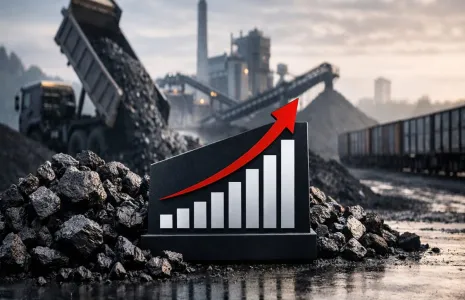
Coal India Limited (CIL) has backed a phased rollout of the National Coal Exchange (NCE) as a measure to safeguard the country's energy security. The company argued that a gradual introduction would allow market participants and regulators to adapt to new trading norms while preserving steady coal supplies to critical consumers. CIL emphasised that a staged approach would reduce the risk of supply disruptions and allow for technical and regulatory refinements before wider deployment.

The NCE was presented as a platform to enhance price discovery and transparency across domestic coal markets, enabling clearer signals for production and procurement. CIL noted that better visibility of transactions would help power generators and other industrial buyers plan procurement more effectively and limit sudden spikes in procurement costs. The exchange was described as complementary to existing allocation mechanisms rather than a replacement, with arrangements envisaged to coexist with contractual supplies.

CIL advocated pilot phases that would test trading protocols, settlement systems and participant onboarding in selected regions before national expansion. The company indicated that feedback loops and monitoring frameworks would be critical to refine operational details and to ensure that state utilities and smaller buyers could participate without disruption. Coordination with state entities, miners and market infrastructure providers was highlighted as essential to align logistical and regulatory processes.

Industry observers were said to expect that a cautious rollout could strengthen domestic coal markets, improve supply chain resilience and support affordable power supplies for consumers. CIL pointed to the need for robust oversight to prevent market manipulation and to protect vulnerable buyers, while also encouraging broader adoption of transparent trading practices. The phased model was therefore presented as a pragmatic pathway to modernise coal trading while safeguarding energy availability.

Coal India Limited (CIL) has backed a phased rollout of the National Coal Exchange (NCE) as a measure to safeguard the country's energy security. The company argued that a gradual introduction would allow market participants and regulators to adapt to new trading norms while preserving steady coal supplies to critical consumers. CIL emphasised that a staged approach would reduce the risk of supply disruptions and allow for technical and regulatory refinements before wider deployment. The NCE was presented as a platform to enhance price discovery and transparency across domestic coal markets, enabling clearer signals for production and procurement. CIL noted that better visibility of transactions would help power generators and other industrial buyers plan procurement more effectively and limit sudden spikes in procurement costs. The exchange was described as complementary to existing allocation mechanisms rather than a replacement, with arrangements envisaged to coexist with contractual supplies. CIL advocated pilot phases that would test trading protocols, settlement systems and participant onboarding in selected regions before national expansion. The company indicated that feedback loops and monitoring frameworks would be critical to refine operational details and to ensure that state utilities and smaller buyers could participate without disruption. Coordination with state entities, miners and market infrastructure providers was highlighted as essential to align logistical and regulatory processes. Industry observers were said to expect that a cautious rollout could strengthen domestic coal markets, improve supply chain resilience and support affordable power supplies for consumers. CIL pointed to the need for robust oversight to prevent market manipulation and to protect vulnerable buyers, while also encouraging broader adoption of transparent trading practices. The phased model was therefore presented as a pragmatic pathway to modernise coal trading while safeguarding energy availability.

Next Story
Infrastructure Urban

Implementation Status of Jal Jeevan Mission

Since August 2019 the Government has implemented Jal Jeevan Mission to provide assured potable water through household tap connections in rural India. At the start of the mission only 32.3 million (mn) rural households, representing 16.7 per cent, were reported to have tap water connections. States and union territories have reported that 125.8 mn additional rural households have since been provided with tap connections. As a result, of about 193.6 mn rural households roughly 158.2 mn, or 81.71 per cent, are reported to have tap water supply at home.\n\nThe State, district and village level st..

Next Story
Infrastructure Urban

Jal Jeevan Mission Reaches Eighty One Per Cent Rural Coverage

The Government reported substantial progress under the Jal Jeevan Mission, launched in August 2019 to provide tap water to every rural household. At launch only 32.3 million (mn) rural households had tap connections and states and Union territories reported provision of 125.8 mn additional households by March 2026. Consequently, out of about 193.6 mn rural households around 158.2 mn, or 81.71 per cent, are reported to have tap water at home. The Finance Minister announced extension of the mission until 2028 in the 2025-26 budget speech. The Swachh Bharat Mission Grameen, launched in October 20..

Next Story
Infrastructure Urban

Empowering Local Governance for Sustainable Rural Water Supply

The Ministry of Jal Shakti has aligned the Jal Jeevan Mission (JJM) with the 73rd Amendment to strengthen village level planning and community ownership of water supply. Gram Panchayats, village water and sanitation committees and Pani Samitis are to plan, implement, manage and maintain piped water systems, with gram sabha processes formalising handover and oversight. Implementation support agencies including non government organisations, community based organisations and self help groups have been empanelled to train local committees and promote women participation. Under JJM, the department ..

Advertisement

Subscribe to Our Newsletter

Get daily newsletters around different themes from Construction world.

STAY CONNECTED

Advertisement

Advertisement

Advertisement