



ECL Targets 58 Mt Output, Profit Despite Mine Closures
COAL & MINING

ECL Targets 58 Mt Output, Profit Despite Mine Closures

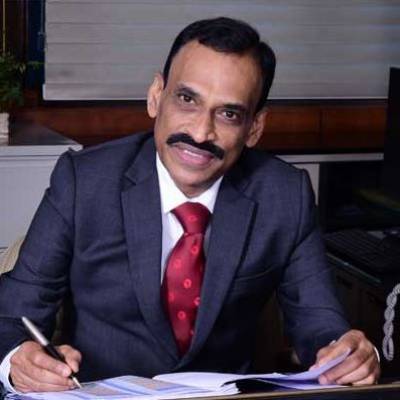
Eastern Coalfields Ltd is confident of meeting its 58 million tonne coal production target in the current financial year and returning to profit, even as it plans to shut six loss-making underground mines to address high legacy costs, Chairman and Managing Director Satish Jha said. The Coal India subsidiary, which operates in the Raniganj coalfield, had remained profitable year on year and posted a profit in the first quarter, but slipped into a loss in the September quarter after prolonged monsoon conditions disrupted output.

Jha said rainfall from mid-June to late August, marked by an unusually high number of rainy days, significantly affected production. Output growth slipped from plus 2 per cent in mid-June to minus 5.2 per cent by the end of August, before recovering to minus 0.2 per cent by September and October, only to be hit again by cyclonic weather. He said weather remained the only major constraint and expressed confidence of returning to positive growth from November, subject to favourable conditions.

ECL produced around 52 million tonnes last year and is targeting an additional 6 million tonnes this fiscal. To remain financially viable, the company needs to produce at least 4 million tonnes per month, with a target of about 30 million tonnes in the remaining months, or roughly 6 million tonnes per month, a level it has achieved in the past. Jha said achieving the 58 million tonne target would ensure profitability and improve performance over last year, although gains would not be proportionate to volume growth due to subdued market conditions.

He cautioned that higher production would not automatically translate into higher profits, noting that the coal market is now buyer-driven, with customers demanding better quality at lower prices. ECL’s thin margin between profit and loss is compounded by its high fixed-cost structure, largely due to legacy underground operations dating back to 1774. Around 67 per cent of ECL’s production cost goes towards salaries and wages, the highest within Coal India, compared with an average of about 48 per cent across the group and 20 to 25 per cent at newer subsidiaries.

To address structural losses, ECL has identified six underground mines for closure or manpower redeployment within the current financial year. Jha said decisions would be implemented after internal reviews where losses exceed salary and wage costs. ECL currently operates 80 mines, including 48 underground, 23 open-cast and nine mixed mines.

The company is also working to improve coal quality at key sidings such as Salanpur, Mugma and Chitra to enhance realisations. Salanpur is now fully compliant, Mugma has reached 80 to 90 per cent compliance, while Chitra continues to face challenges due to steep seams causing coal and overburden mixing. Improved mining methods adopted at Salanpur are being replicated at the other sites.

Jha also highlighted evacuation and sales constraints at Rajmahal, where ECL holds its largest coal stock and supplies are largely linked to NTPC’s Kahalgaon and Farakka power plants. He said discussions are under way with NTPC to better align pricing and efficiency, adding that modest price adjustments combined with efficiency gains could benefit both the miner and the power generator. Despite challenges, ECL remains focused on stabilising output, managing costs and improving quality to ensure a return to profit by the end of the financial year.

Eastern Coalfields Ltd is confident of meeting its 58 million tonne coal production target in the current financial year and returning to profit, even as it plans to shut six loss-making underground mines to address high legacy costs, Chairman and Managing Director Satish Jha said. The Coal India subsidiary, which operates in the Raniganj coalfield, had remained profitable year on year and posted a profit in the first quarter, but slipped into a loss in the September quarter after prolonged monsoon conditions disrupted output. Jha said rainfall from mid-June to late August, marked by an unusually high number of rainy days, significantly affected production. Output growth slipped from plus 2 per cent in mid-June to minus 5.2 per cent by the end of August, before recovering to minus 0.2 per cent by September and October, only to be hit again by cyclonic weather. He said weather remained the only major constraint and expressed confidence of returning to positive growth from November, subject to favourable conditions. ECL produced around 52 million tonnes last year and is targeting an additional 6 million tonnes this fiscal. To remain financially viable, the company needs to produce at least 4 million tonnes per month, with a target of about 30 million tonnes in the remaining months, or roughly 6 million tonnes per month, a level it has achieved in the past. Jha said achieving the 58 million tonne target would ensure profitability and improve performance over last year, although gains would not be proportionate to volume growth due to subdued market conditions. He cautioned that higher production would not automatically translate into higher profits, noting that the coal market is now buyer-driven, with customers demanding better quality at lower prices. ECL’s thin margin between profit and loss is compounded by its high fixed-cost structure, largely due to legacy underground operations dating back to 1774. Around 67 per cent of ECL’s production cost goes towards salaries and wages, the highest within Coal India, compared with an average of about 48 per cent across the group and 20 to 25 per cent at newer subsidiaries. To address structural losses, ECL has identified six underground mines for closure or manpower redeployment within the current financial year. Jha said decisions would be implemented after internal reviews where losses exceed salary and wage costs. ECL currently operates 80 mines, including 48 underground, 23 open-cast and nine mixed mines. The company is also working to improve coal quality at key sidings such as Salanpur, Mugma and Chitra to enhance realisations. Salanpur is now fully compliant, Mugma has reached 80 to 90 per cent compliance, while Chitra continues to face challenges due to steep seams causing coal and overburden mixing. Improved mining methods adopted at Salanpur are being replicated at the other sites. Jha also highlighted evacuation and sales constraints at Rajmahal, where ECL holds its largest coal stock and supplies are largely linked to NTPC’s Kahalgaon and Farakka power plants. He said discussions are under way with NTPC to better align pricing and efficiency, adding that modest price adjustments combined with efficiency gains could benefit both the miner and the power generator. Despite challenges, ECL remains focused on stabilising output, managing costs and improving quality to ensure a return to profit by the end of the financial year.

Next Story
Infrastructure Energy

Tata Power Arm Crosses 10 GW EPC Milestone

Tata Power Renewable Energy Ltd (TPREL) has achieved a major milestone by executing 10 gigawatts of engineering, procurement and construction (EPC) renewable energy projects to date, reinforcing its position in India’s clean energy infrastructure sector. According to the company, the executed portfolio comprises 4.2 gigawatts of in-house projects and 5.8 gigawatts of third-party projects. Of the total 10 gigawatts commissioned so far, 9.7 gigawatts are solar projects and 290 megawatts are wind projects. In the first nine months of FY26, TPREL commissioned 1.88 gigawatts of EPC renewable en..

Next Story
Infrastructure Energy

SCI Seeks Bids for Eight New Gas Carriers

The Shipping Corporation of India (SCI) has invited bids to acquire eight new very large gas carriers (VLGCs), reinforcing its expansion plans while supporting India’s domestic shipbuilding industry. According to the tender, six of the vessels must be constructed in India, while the remaining two can be built by international shipyards. The requirement aligns with the government’s policy push to strengthen local shipbuilding capacity and comply with Press Note 3 regulations governing foreign participation in sensitive sectors. SCI has issued an Expression of Interest (EoI) to identify el..

Next Story
Infrastructure Urban

Union Budget 2026–27 Focuses on Growth, Jobs and Infrastructure

Union Minister for Finance and Corporate Affairs Nirmala Sitharaman recently tabled the Union Budget 2026–27 in Parliament, outlining a growth-led roadmap anchored around three ‘kartavyas’—accelerating economic growth, building people’s capacities, and ensuring inclusive development across regions and sectors.The Budget estimates non-debt receipts at Rs 36.5 lakh crore and total expenditure at Rs 53.5 lakh crore, with capital expenditure at about Rs 11 lakh crore. Public capex is proposed to rise to Rs 12.2 lakh crore in FY27. The fiscal deficit is pegged at 4.3 per cent of GDP, whil..

Advertisement

Subscribe to Our Newsletter

Get daily newsletters around different themes from Construction world.

STAY CONNECTED

Advertisement

Advertisement

Advertisement

Advertisement

Open In App