Indian Gas Firms Restrict Domestic Supplies Amid West Asia Conflict
OIL & GAS

Indian Gas Firms Restrict Domestic Supplies Amid West Asia Conflict

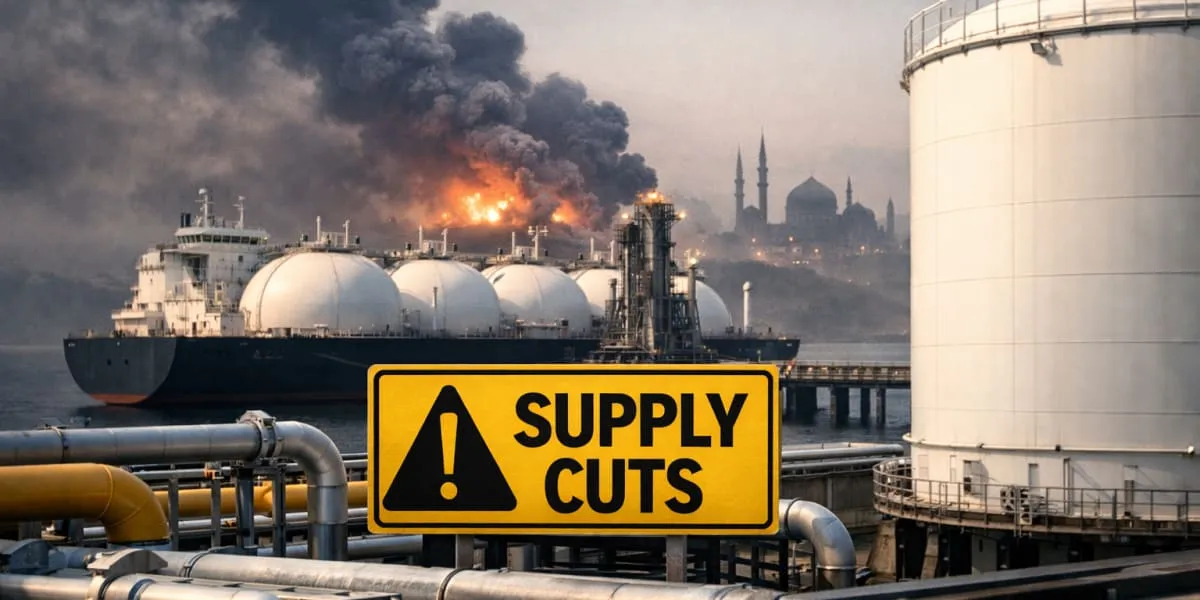
Several Indian gas companies have restricted domestic natural gas supplies under force majeure clauses as hostilities in West Asia escalated, affecting shipments and loading schedules. The disruptions have hit supplies from Qatar, a major source of liquefied natural gas for India. Industry sources said measures have included cuts to industrial customers and marginal reductions to fertiliser production.

Gujarat Gas Ltd declared a force majeure in a stock exchange filing and has restricted supplies to industrial clients; its parent GSPC obtains most gas from Qatar and Abu Dhabi National Oil Company for local sale. Petronet LNG Ltd issued a force majeure notice to its supplier QatarEnergy and to local buyers after three LNG tankers were unable to reach the Ras Laffan loading port. QatarEnergy in turn informed Petronet of a potential force majeure due to the hostilities.

Major buyers such as GAIL (India) Ltd and Indian Oil Corp have reduced gas supplies to industries, and fertiliser makers including Indian Farmers Fertiliser Cooperative Ltd and Kribhco Fertilizers Ltd have seen marginal production impacts. There have been no announced cuts to household supplies or to the automotive sector. Sources said firms are managing allocations to prioritise critical customers.

India imported 27 million tonnes of liquefied natural gas (LNG) in 2024/25, about half of its overall gas consumption, with the bulk coming from Qatar; this equates to 27 mn t. Transit through the Strait of Hormuz has slowed after attacks and retaliatory strikes, affecting roughly one fifth of global oil movements and notable volumes of liquefied natural gas. Shipping disruptions have left some tankers unable to reach loading ports and prompted contingency measures across the supply chain.

Market participants and importers are monitoring tanker movements and supply schedules while companies adjust domestic allocations to mitigate shortages. The situation remains fluid and depends on developments in the region and on the ability of suppliers and shippers to resume normal operations. Governments and industry stakeholders are assessing options to stabilise supplies and support critical sectors.

Several Indian gas companies have restricted domestic natural gas supplies under force majeure clauses as hostilities in West Asia escalated, affecting shipments and loading schedules. The disruptions have hit supplies from Qatar, a major source of liquefied natural gas for India. Industry sources said measures have included cuts to industrial customers and marginal reductions to fertiliser production. Gujarat Gas Ltd declared a force majeure in a stock exchange filing and has restricted supplies to industrial clients; its parent GSPC obtains most gas from Qatar and Abu Dhabi National Oil Company for local sale. Petronet LNG Ltd issued a force majeure notice to its supplier QatarEnergy and to local buyers after three LNG tankers were unable to reach the Ras Laffan loading port. QatarEnergy in turn informed Petronet of a potential force majeure due to the hostilities. Major buyers such as GAIL (India) Ltd and Indian Oil Corp have reduced gas supplies to industries, and fertiliser makers including Indian Farmers Fertiliser Cooperative Ltd and Kribhco Fertilizers Ltd have seen marginal production impacts. There have been no announced cuts to household supplies or to the automotive sector. Sources said firms are managing allocations to prioritise critical customers. India imported 27 million tonnes of liquefied natural gas (LNG) in 2024/25, about half of its overall gas consumption, with the bulk coming from Qatar; this equates to 27 mn t. Transit through the Strait of Hormuz has slowed after attacks and retaliatory strikes, affecting roughly one fifth of global oil movements and notable volumes of liquefied natural gas. Shipping disruptions have left some tankers unable to reach loading ports and prompted contingency measures across the supply chain. Market participants and importers are monitoring tanker movements and supply schedules while companies adjust domestic allocations to mitigate shortages. The situation remains fluid and depends on developments in the region and on the ability of suppliers and shippers to resume normal operations. Governments and industry stakeholders are assessing options to stabilise supplies and support critical sectors.

Next Story
Infrastructure Urban

Centre Disburses Over Rs 24,610 mn in XV Finance Commission Grants

The Union Government has released XV Finance Commission tied grants during the financial year 2025–26 to rural local bodies in Chhattisgarh, Gujarat, Madhya Pradesh, Punjab and Sikkim and has released withheld portions of tied and untied grants to Himachal Pradesh, Odisha and Tripura. The total disbursal exceeded Rs 24,610 mn, with figures expressed in million (mn) thereafter. The releases cover allocations pertaining to different financial years and aim to strengthen rural local governance. State-wise disbursements included Rs 3,324.6 mn for Punjab, Rs 9,432.7 mn for Madhya Pradesh, Rs 3,47..

Next Story
Infrastructure Urban

Centre Releases Over Rs 15 bn as XV FC Grants to Rural Bodies

The Union Government has released over Rs 15 bn in grants recommended by the Fifteenth Finance Commission (XV FC) to strengthen Panchayati Raj Institutions (PRIs) and Rural Local Bodies (RLBs) in six states. The funds comprise tied and untied grants disbursed in FY 2025–26. Telangana received Rs 2.48 bn as the first instalment of untied grants for FY 2025–26, benefitting 12600 Gram Panchayats (GPs). Uttarakhand received Rs 913.1 mn as the second instalment and an additional Rs 18.4 mn of a withheld first instalment was released to a further 216 GPs. Mizoram is included among beneficiary st..

Next Story
Infrastructure Energy

Government Assures Fuel Supplies And Seafarer Safety Amid West Asia Developments

The Government of India has stepped up coordinated measures to maintain stability in critical sectors as developments in West Asia continue to unfold. It has prioritised uninterrupted energy supplies, safeguarded maritime operations and extended consular assistance to nationals. Central authorities are working with State and Union territory administrations to ensure timely information dissemination and operational continuity. Refineries are reported to be operating at high capacity with adequate inventories of petrol and diesel, and domestic LPG production has been increased to support consump..

Advertisement

Subscribe to Our Newsletter

Get daily newsletters around different themes from Construction world.

STAY CONNECTED

Advertisement

Advertisement

Advertisement