



GMDC Signs MoU with NTPC to Explore Coal Supply
COAL & MINING

GMDC Signs MoU with NTPC to Explore Coal Supply

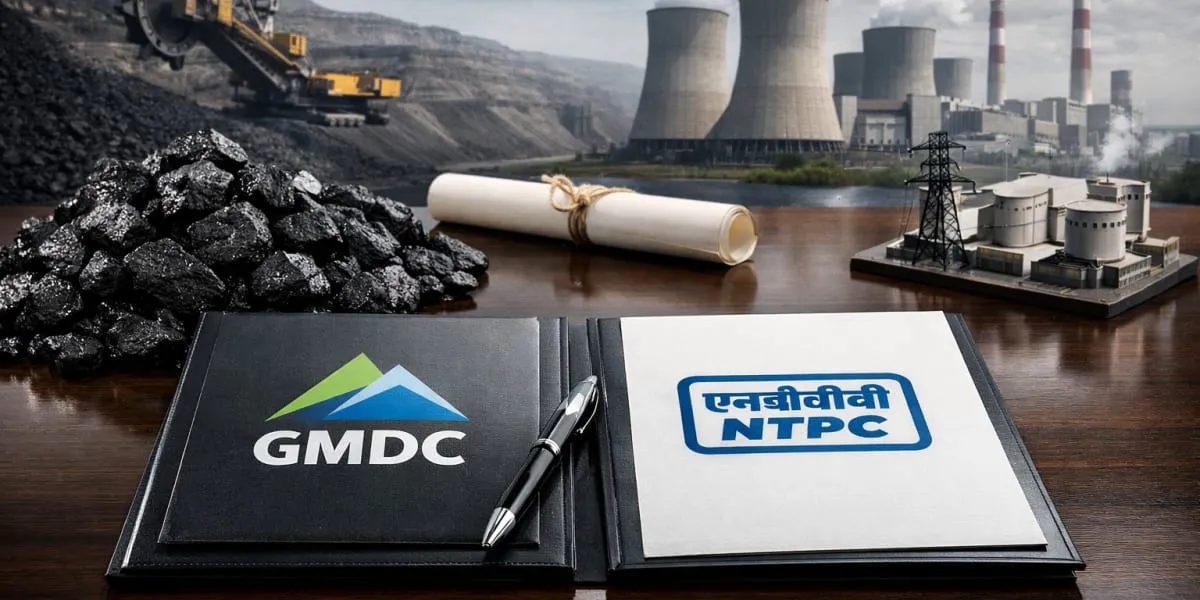
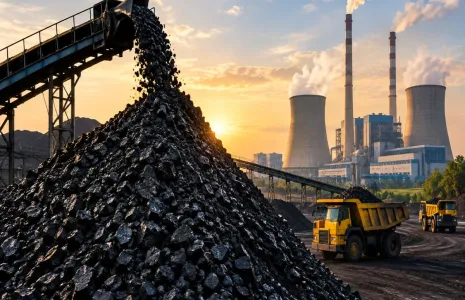
Gujarat Mineral Development Corporation Limited (GMDC) has signed a memorandum of understanding with NTPC to explore options for coal supply to power generation projects. The agreement will see the two state-run entities undertake joint technical and commercial assessments to evaluate coal availability, logistics and supply frameworks. The memorandum aims to identify sustainable supply chains that can support NTPC's generation portfolio while leveraging GMDC's mineral resources. The move reflects broader efforts to secure fuel sources for reliable power output.

The collaboration will involve assessments of mining capacity, transportation corridors and quality specifications required by thermal plants. GMDC will provide data on identified coal blocks and production potential, and NTPC will outline operational requirements, plant specifications and procurement timelines. Both parties will examine feasibility of long-term supply contracts, rail and port connectivity and options for blending to meet calorific value requirements. The exercise is intended to reduce fuel supply risks and promote planning certainty for upcoming projects.

Officials said the memorandum establishes a framework for periodic reviews, joint studies and the formation of technical committees to oversee implementation. The partnership is expected to include environmental and regulatory compliance evaluations to align mining and supply practices with applicable norms. Stakeholders will also assess cost structures, logistics optimisation and measures to enhance coal handling efficiencies at receiving stations. The joint work is designed to deliver actionable recommendations that can inform future procurement and investment decisions.

The agreement does not yet constitute binding commercial commitments and will be followed by detailed due diligence and negotiation of definitive contracts where appropriate. Both GMDC and NTPC indicated that any subsequent arrangements would consider economic viability, energy security and strategic priorities of the power sector. The memorandum is presented as a step towards strengthening fuel linkages between a mineral developer and a major power producer to support stable electricity supplies. Implementation timelines will be determined as studies are completed.

Gujarat Mineral Development Corporation Limited (GMDC) has signed a memorandum of understanding with NTPC to explore options for coal supply to power generation projects. The agreement will see the two state-run entities undertake joint technical and commercial assessments to evaluate coal availability, logistics and supply frameworks. The memorandum aims to identify sustainable supply chains that can support NTPC's generation portfolio while leveraging GMDC's mineral resources. The move reflects broader efforts to secure fuel sources for reliable power output. The collaboration will involve assessments of mining capacity, transportation corridors and quality specifications required by thermal plants. GMDC will provide data on identified coal blocks and production potential, and NTPC will outline operational requirements, plant specifications and procurement timelines. Both parties will examine feasibility of long-term supply contracts, rail and port connectivity and options for blending to meet calorific value requirements. The exercise is intended to reduce fuel supply risks and promote planning certainty for upcoming projects. Officials said the memorandum establishes a framework for periodic reviews, joint studies and the formation of technical committees to oversee implementation. The partnership is expected to include environmental and regulatory compliance evaluations to align mining and supply practices with applicable norms. Stakeholders will also assess cost structures, logistics optimisation and measures to enhance coal handling efficiencies at receiving stations. The joint work is designed to deliver actionable recommendations that can inform future procurement and investment decisions. The agreement does not yet constitute binding commercial commitments and will be followed by detailed due diligence and negotiation of definitive contracts where appropriate. Both GMDC and NTPC indicated that any subsequent arrangements would consider economic viability, energy security and strategic priorities of the power sector. The memorandum is presented as a step towards strengthening fuel linkages between a mineral developer and a major power producer to support stable electricity supplies. Implementation timelines will be determined as studies are completed.

Next Story
Infrastructure Urban

HVAC: Cool Advice

India’s Cooling Action Plan forecasts cooling demand to grow nearly eight times in the next 20 years. In light of the fact that cooling is no longer just a comfort product but lies at the intersection of national development, public health, climate action and energy security, this means the HVAC industry shoulders a very serious responsibility. Mihir Sanghavi, Managing Partner, Auro Engineering Company, Immediate Past President RATA, Secretary, ISHRAE, and Regional Representative, ASHRAE Region XV, describes that responsibility as “identifying a system that can serve for 15 to 20 years o..

Next Story
Infrastructure Urban

Wanted: 2 Million Workers

Construction, India’s second largest employer by industry, employs about 50 million workers but could additionally absorb another 40 million workers, according to estimates shared by the Construction Skill Development Council of India (CSDCI) in 2023. Within this, citing trade estimates, Rahul Bahl, Managing Director, Krishna Buildestates, says the shortage of trained, skilled workers is currently about 2 million, and is expected to rise to 5 million by 2030.Not only is the construction industry struggling to find workers but construction labour productivity in India significantly trails glo..

Next Story
Infrastructure Transport

The Critical Path

In Ircon International Ltd v. Afcons Infrastructure Ltd, OMP (Comm) 279/2019, the Delhi High Court examined how delay and extension of time (‘EOT’) are to be assessed in construction contracts, particularly in the context of the ‘critical path’ while dealing with challenge to an arbitral award under Section 34 of the Arbitration and Conciliation Act 1996 (‘the Act’). The High Court’s observations regarding the critical path are of significant import for construction and infrastructure projects and related arbitration. The parties entered into a contract for construction of T..

Advertisement

Subscribe to Our Newsletter

Get daily newsletters around different themes from Construction world.

STAY CONNECTED

Advertisement

Advertisement

Advertisement