+
Goa Miners Oppose Export Duty On Low-Grade Iron Ore
COAL & MINING

Goa Miners Oppose Export Duty On Low-Grade Iron Ore

The Goa Mineral Ore Exporters’ Association (GMOEA) has urged the central government not to impose export duties on low-grade iron ore, warning that such a move could severely disrupt mining operations in the state.

In a letter to Piyush Goyal, Secretary to the Ministry of Mines, the association expressed concern over reports suggesting the introduction of export duties on iron ore with less than 58 per cent iron content. GMOEA argued that Goa’s iron ore is predominantly low grade and export-oriented due to limited domestic demand, making any additional fiscal burden particularly damaging.

GMOEA Joint Secretary Glenn Kalavampara said Goan iron ore, characterised by lower grades and higher impurities, has historically depended on exports because of its limited suitability for domestic steelmaking. He noted that frequent fiscal interventions, such as export duties on low-grade ore, create uncertainty, constrain market access and reduce price realisation, ultimately affecting government revenues and the broader mining ecosystem in the Konkan region.

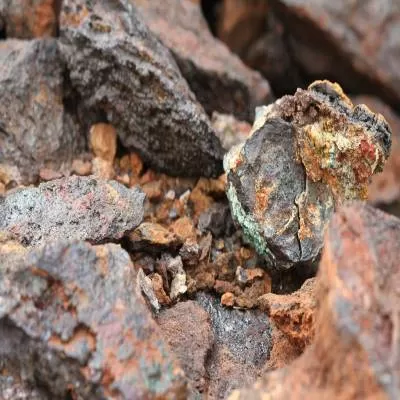
According to the association, the average grade of Goan iron ore is around 54 per cent iron content, with virtually all production below 58 per cent. Even pig iron and pellet plants in Goa rely on higher-grade ore sourced from outside the state or imports. Production in the state is largely fines-based and seasonal, influenced by the monsoon.

Kalavampara also highlighted that the central government recently approved a special assistance package of Rs 4 billion for Goa to support the commencement of production from auctioned mineral leases. He said such support is welcome and should help address industry bottlenecks.

The association noted that the Ministry of Mines has been working with state governments to resolve issues related to the operationalisation of auctioned mines, while domestic iron ore production has continued to grow steadily. It added that faster and more streamlined statutory clearances would significantly improve project timelines and outcomes.

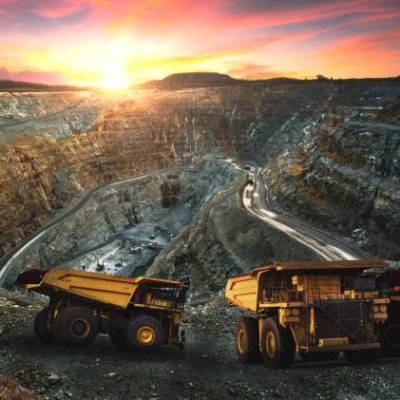
Mining activity in Goa has resumed gradually following recent auctions. Of the 12 auctioned blocks, five have commenced production, with several more expected to begin operations within the current financial year. The state government also plans to auction additional blocks before the end of the fiscal year.

GMOEA warned that imposing additional levies at this critical stage could undermine project viability, deter competitive bidding, reduce state revenues and jeopardise ongoing mining operations.

The Goa Mineral Ore Exporters’ Association (GMOEA) has urged the central government not to impose export duties on low-grade iron ore, warning that such a move could severely disrupt mining operations in the state. In a letter to Piyush Goyal, Secretary to the Ministry of Mines, the association expressed concern over reports suggesting the introduction of export duties on iron ore with less than 58 per cent iron content. GMOEA argued that Goa’s iron ore is predominantly low grade and export-oriented due to limited domestic demand, making any additional fiscal burden particularly damaging. GMOEA Joint Secretary Glenn Kalavampara said Goan iron ore, characterised by lower grades and higher impurities, has historically depended on exports because of its limited suitability for domestic steelmaking. He noted that frequent fiscal interventions, such as export duties on low-grade ore, create uncertainty, constrain market access and reduce price realisation, ultimately affecting government revenues and the broader mining ecosystem in the Konkan region. According to the association, the average grade of Goan iron ore is around 54 per cent iron content, with virtually all production below 58 per cent. Even pig iron and pellet plants in Goa rely on higher-grade ore sourced from outside the state or imports. Production in the state is largely fines-based and seasonal, influenced by the monsoon. Kalavampara also highlighted that the central government recently approved a special assistance package of Rs 4 billion for Goa to support the commencement of production from auctioned mineral leases. He said such support is welcome and should help address industry bottlenecks. The association noted that the Ministry of Mines has been working with state governments to resolve issues related to the operationalisation of auctioned mines, while domestic iron ore production has continued to grow steadily. It added that faster and more streamlined statutory clearances would significantly improve project timelines and outcomes. Mining activity in Goa has resumed gradually following recent auctions. Of the 12 auctioned blocks, five have commenced production, with several more expected to begin operations within the current financial year. The state government also plans to auction additional blocks before the end of the fiscal year. GMOEA warned that imposing additional levies at this critical stage could undermine project viability, deter competitive bidding, reduce state revenues and jeopardise ongoing mining operations.

Next Story
Infrastructure Urban

Eicher Delivers First 13.5 m Electric Intercity Sleeper Bus

Eicher Trucks & Buses, a business unit of VE Commercial Vehicles Ltd., has recently delivered its first 13.5 m electric intercity sleeper bus, marking a key milestone in India’s long-distance electric mobility segment. The first bus is being operated by LeafyBus, with plans to deploy 35 buses by March 2026 across high-demand intercity corridors in North India.The initial deployment will cover routes such as Delhi–Dehradun and Delhi–Lucknow, supporting LeafyBus’ expansion across environmentally sensitive and high-density travel corridors.Commenting on the partnership, Suresh Chettia..

Next Story
Infrastructure Urban

HCSS Showcases Unified Construction Platform at CONEXPO 2026

HCSS will recently present the next evolution of its connected construction management platform at CONEXPO-CON/AGG 2026, bringing together construction workflows, data and teams on a single platform across the entire project lifecycle. The event will be held from 3–7 March 2026 in Las Vegas, Nevada. HCSS will host two booths at the show, demonstrating how its integrated software ecosystem enables seamless collaboration between the office, field and shop, from bid stage through to project closeout. Steve McGough, President and CEO, HCSS, said, “For 40 years, we’ve done everything within..

Next Story
Building Material

Berger Paints Q3 Profit Declines Despite Volume Growth

Berger Paints India has reported a mixed performance for the quarter ended 31 December 2025, with healthy volume growth and margin improvement offset by softer demand conditions and cost pressures. On a consolidated basis, revenue from operations for the quarter stood at Rs 29,840 million, compared to Rs 29,751 million in the corresponding quarter last year, reflecting a marginal increase of 0.3 per cent. EBITDA (excluding other income) was Rs 4,710 million, slightly lower than Rs 4,717 million a year earlier. Net profit declined by 8.3 per cent to Rs 2,713 million from Rs 2,960 million. Sta..

Advertisement

Subscribe to Our Newsletter

Get daily newsletters around different themes from Construction world.

STAY CONNECTED

Advertisement

Advertisement

Advertisement

Open In App