+
India Notifies Standards For Green Ammonia And Green Methanol
ECONOMY & POLICY

India Notifies Standards For Green Ammonia And Green Methanol

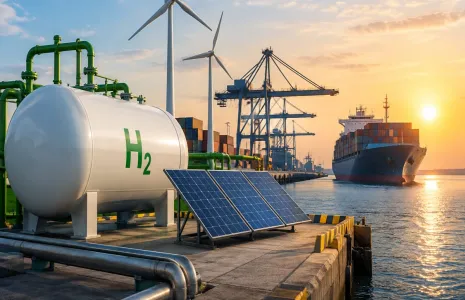
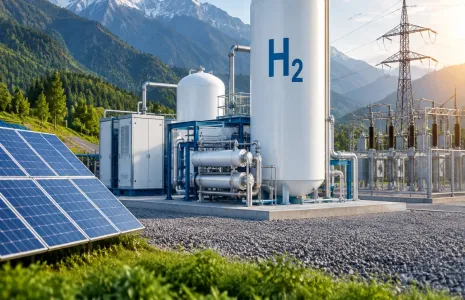
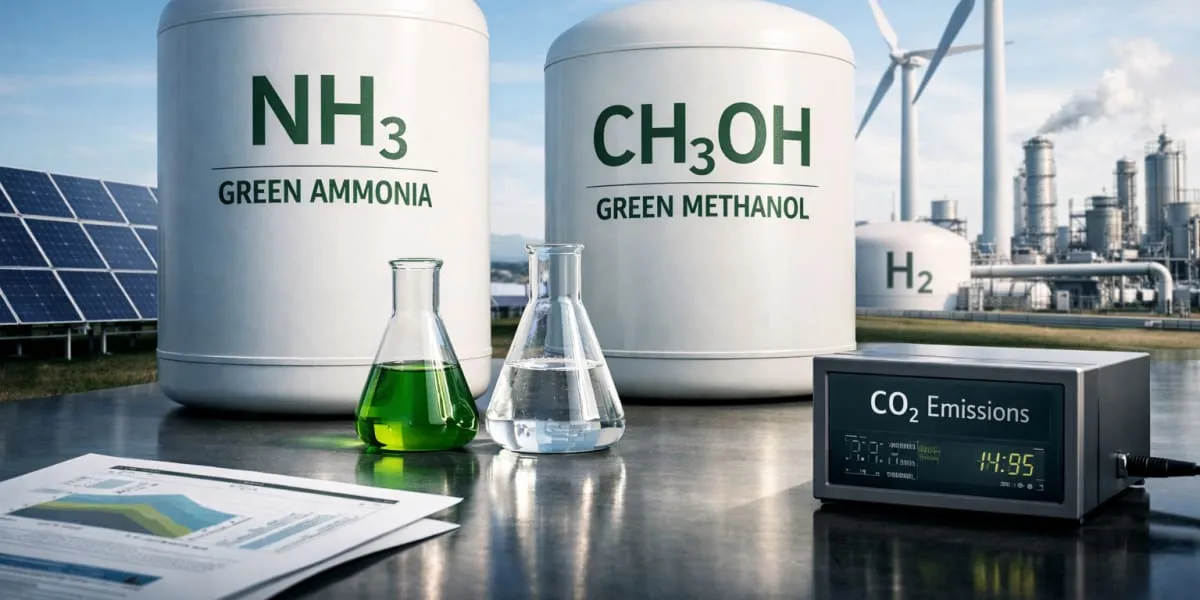
The Government of India notified the Green Ammonia and Green Methanol Standards for India on 27 February 2026, under the National Green Hydrogen Mission. The standards were issued by the Ministry of New and Renewable Energy (MNRE) and set out emission thresholds and eligibility conditions for classification as green hydrogen derivatives. The measures aim to provide clarity for production, certification and trade.

The Green Ammonia standard requires a total non-biogenic greenhouse gas emission arising from Green Hydrogen production, ammonia synthesis, purification, compression and on-site storage of not more than zero point three eight kilogram (kg) CO2 equivalent per kilogram (kg) of ammonia, calculated as an average over the preceding 12-month period. The Green Methanol standard requires a total non-biogenic greenhouse gas emission arising from Green Hydrogen production, methanol synthesis, purification and on-site storage of not more than zero point four four kilogram (kg) CO2 equivalent per kilogram (kg) of methanol, calculated as an average over the preceding 12-month period.

The notification states that carbon dioxide for Green Methanol production may be sourced from biogenic sources, direct air capture or existing industrial sources, and that the Ministry may revise eligible sources prospectively with appropriate grandfathering provisions. Renewable electricity used in production is deemed to include generation that is stored in energy storage systems or banked with the grid in accordance with applicable regulations. Detailed methodologies for measurement, reporting, monitoring, on-site verification and certification will be issued separately by the Ministry.

The standards are expected to facilitate decarbonisation of fertilizers, shipping, power and heavy industry while strengthening India as a reliable producer and exporter of green fuels. The notification allows existing tenders and solicitations to continue under prior terms but permits procuring entities to align arrangements with the new provisions where mutually feasible. The move is intended to provide greater certainty for industry, investors and other stakeholders engaged in development of green hydrogen derivatives.

The Government of India notified the Green Ammonia and Green Methanol Standards for India on 27 February 2026, under the National Green Hydrogen Mission. The standards were issued by the Ministry of New and Renewable Energy (MNRE) and set out emission thresholds and eligibility conditions for classification as green hydrogen derivatives. The measures aim to provide clarity for production, certification and trade. The Green Ammonia standard requires a total non-biogenic greenhouse gas emission arising from Green Hydrogen production, ammonia synthesis, purification, compression and on-site storage of not more than zero point three eight kilogram (kg) CO2 equivalent per kilogram (kg) of ammonia, calculated as an average over the preceding 12-month period. The Green Methanol standard requires a total non-biogenic greenhouse gas emission arising from Green Hydrogen production, methanol synthesis, purification and on-site storage of not more than zero point four four kilogram (kg) CO2 equivalent per kilogram (kg) of methanol, calculated as an average over the preceding 12-month period. The notification states that carbon dioxide for Green Methanol production may be sourced from biogenic sources, direct air capture or existing industrial sources, and that the Ministry may revise eligible sources prospectively with appropriate grandfathering provisions. Renewable electricity used in production is deemed to include generation that is stored in energy storage systems or banked with the grid in accordance with applicable regulations. Detailed methodologies for measurement, reporting, monitoring, on-site verification and certification will be issued separately by the Ministry. The standards are expected to facilitate decarbonisation of fertilizers, shipping, power and heavy industry while strengthening India as a reliable producer and exporter of green fuels. The notification allows existing tenders and solicitations to continue under prior terms but permits procuring entities to align arrangements with the new provisions where mutually feasible. The move is intended to provide greater certainty for industry, investors and other stakeholders engaged in development of green hydrogen derivatives.

Next Story
Infrastructure Urban

India Expands Semiconductor Training To 500 Institutions

Under the Chips to Startups programme of the India Semiconductor Mission, the Union minister responsible for Railways, Information and Broadcasting, and Electronics and IT reported notable progress in talent development. He indicated that over the past four years substantial steps have been taken towards a 10-year target of training 85,000 engineers in semiconductor design. World-class EDA tools have been deployed in 315 academic institutions across the country to provide students with practical exposure to chip design. These EDA tools are supported by leading global firms and are accessible t..

Next Story
Infrastructure Urban

Delhi Institutions Support India Semiconductor Mission

The Government of India has prioritised talent development through training, upskilling and workforce development under the Chips to Startups initiative of the India Semiconductor Mission, with officials noting progress in four years towards a 10-year target of training 85,000 engineers in semiconductor design. Electronic design automation tools provided by Synopsys, Cadence, Siemens, Renesas, Ansys and AMD have been deployed in 315 academic institutions, enabling students to gain practical chip design experience. Chips have been fabricated and tested at the Semiconductor Laboratory, Mohali, a..

Next Story
Infrastructure Urban

NHA Announces Winners Of NHCX Hackathon At IIT Hyderabad

The National Health Authority (NHA) has concluded the NHCX Hackathon under the Ayushman Bharat Digital Mission (ABDM) to stimulate innovation around the National Health Claims Exchange (NHCX). The winning teams presented their solutions at the NHCX Innovation Meet held at IIT Hyderabad during a two-day event in March 2026 that also served as the hackathon grand finale. The hackathon itself ran from 22 to 28 February 2026 and aimed to accelerate paperless, transparent claims processing across India. The event was organised with a range of ecosystem partners, including the Insurance Regulatory a..

Advertisement

Subscribe to Our Newsletter

Get daily newsletters around different themes from Construction world.

STAY CONNECTED

Advertisement

Advertisement

Advertisement