+
Govt Revives NMDC Mining Bid in Ballari's Swamimalai Forest
COAL & MINING

Govt Revives NMDC Mining Bid in Ballari's Swamimalai Forest

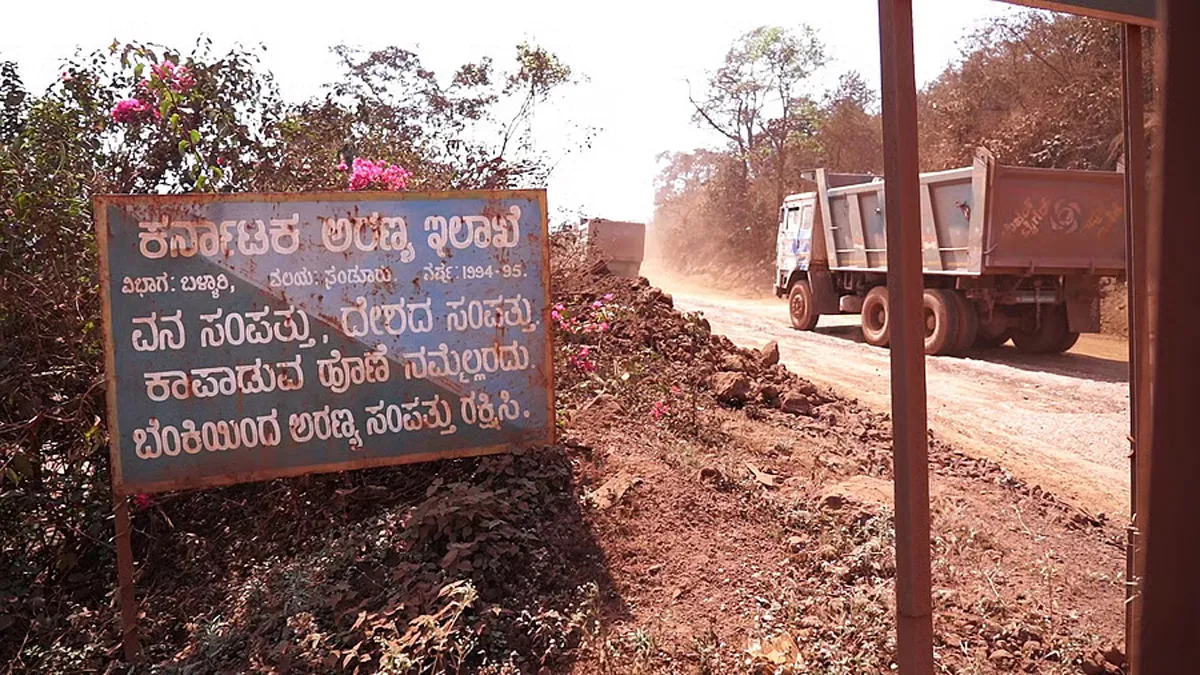
Nearly five years after rejecting a mining proposal in the ecologically sensitive Swamimalai forests near the historic Kumaraswamy-Parvati temple in Ballari’s Sandur region, the Karnataka government has revived the case, instructing officials to begin procedures for fresh forest clearance.

The National Mineral Development Corporation (NMDC) had originally sought 392.92 acres of forest land, home to over 26,000 trees and species such as leopards, sloth bears, four-horned antelopes, jackals, Indian wolves, foxes, and wild boars. The site lies within 1 km of the ancient temple complex.

In 2019, based on reports from senior forest officials, then Principal Chief Conservator of Forests (PCCF) Punati Sridhar had flagged the proposal, advising against even seeking stage-1 (in-principle) clearance from the central government. However, NMDC revised its application in 2024, reducing the land request to 250.86 acres, while reserving rights over the remaining area.

The company has assured that tree felling will occur in phases, only after obtaining necessary permissions and aligned with mining requirements. In line with government directions, the Deputy Conservator of Forests (DCF), Ballari, has asked NMDC to update its proposal and include details for compensatory afforestation.

The move has drawn criticism from environmentalists. In a similar instance, the government also overruled objections to divert 992 acres of forest for mining by Kudremukh Iron Ore Mining Company Ltd, a case that is now under suo motu review by the National Green Tribunal.

Sreeshaila Aladahalli, a Sandur-based activist, called the NMDC development “yet another betrayal.” He highlighted that while global policies focus on intergenerational justice, Karnataka appears intent on revisiting projects previously abandoned due to their potential ecological impact. The Karnataka Mining Environment Restoration Corporation (KMERC) had recommended reducing annual mineral production from 50 million tonnes to 20 million tonnes, yet mining clearances continue to advance.

When approached for comment, Ballari DCF Basavaraj K N confirmed that no final decision had been made. “We are following the government’s directive to examine the revised proposal. The matter is still under process,” he said.


Nearly five years after rejecting a mining proposal in the ecologically sensitive Swamimalai forests near the historic Kumaraswamy-Parvati temple in Ballari’s Sandur region, the Karnataka government has revived the case, instructing officials to begin procedures for fresh forest clearance.The National Mineral Development Corporation (NMDC) had originally sought 392.92 acres of forest land, home to over 26,000 trees and species such as leopards, sloth bears, four-horned antelopes, jackals, Indian wolves, foxes, and wild boars. The site lies within 1 km of the ancient temple complex.In 2019, based on reports from senior forest officials, then Principal Chief Conservator of Forests (PCCF) Punati Sridhar had flagged the proposal, advising against even seeking stage-1 (in-principle) clearance from the central government. However, NMDC revised its application in 2024, reducing the land request to 250.86 acres, while reserving rights over the remaining area.The company has assured that tree felling will occur in phases, only after obtaining necessary permissions and aligned with mining requirements. In line with government directions, the Deputy Conservator of Forests (DCF), Ballari, has asked NMDC to update its proposal and include details for compensatory afforestation.The move has drawn criticism from environmentalists. In a similar instance, the government also overruled objections to divert 992 acres of forest for mining by Kudremukh Iron Ore Mining Company Ltd, a case that is now under suo motu review by the National Green Tribunal.Sreeshaila Aladahalli, a Sandur-based activist, called the NMDC development “yet another betrayal.” He highlighted that while global policies focus on intergenerational justice, Karnataka appears intent on revisiting projects previously abandoned due to their potential ecological impact. The Karnataka Mining Environment Restoration Corporation (KMERC) had recommended reducing annual mineral production from 50 million tonnes to 20 million tonnes, yet mining clearances continue to advance.When approached for comment, Ballari DCF Basavaraj K N confirmed that no final decision had been made. “We are following the government’s directive to examine the revised proposal. The matter is still under process,” he said. 

Related Stories

Gold Stories

Next Story
Infrastructure Urban

KONE Opens India's First Digital Experience Centre in Pune

KONE, a global elevator and escalator manufacturer, has inaugurated its first Digital Experience Centre (DEC) in India, located in Pune. The facility aims to showcase how artificial intelligence (AI), connectivity and data-driven technologies can enhance customer experiences and improve building operations.The centre was inaugurated by Jussi Herlin, Executive Vice Chair, KONE Corporation; Philippe Delorme, President and CEO, KONE; and Nandan Nilekani, Co-founder and Chairman of the Board, Infosys.Designed as an interactive customer environment, the facility demonstrates digital solutions cover..

Next Story
Infrastructure Urban

CII GreenCo Launches Circularity Guidelines for Indian Industry

The Confederation of Indian Industry (CII) GreenCo Council has launched the CII GreenCo Circularity Guidelines – Pilot Version at the 17th CII GreenCo Waste & Resource Management Summit 2026 in Chennai. The initiative aims to strengthen resource efficiency, waste reduction and circular economy practices across Indian manufacturing and process industries.The guidelines introduce a structured framework with circularity indices covering raw materials, consumables, packaging and other resource inputs. These indicators will help industries assess existing practices, identify opportunities to ..

Next Story
Infrastructure Energy

Global Electronics Association Launches IPC-1783-CO2E Standard

The Global Electronics Association has introduced IPC-1783-CO2E, a new international standard aimed at improving consistency, transparency and comparability in product carbon footprint reporting across the electronics manufacturing industry.The standard, titled International Standard for Data Collection and Reporting of CO2 Equivalent (CO2e) Emissions for the Electronics Manufacturing Supply Chain, provides industry-specific guidance for collecting, estimating and reporting carbon emissions data.With increasing regulatory requirements and customer expectations, electronics manufacturers face c..

Advertisement

Subscribe to Our Newsletter

Get daily newsletters around different themes from Construction world.

STAY CONNECTED

Advertisement

SPECIAL OFFER
QR Code