


India Launches 13th Commercial Coal Mine Auction Round
COAL & MINING

India Launches 13th Commercial Coal Mine Auction Round

In a landmark move to strengthen India’s energy security and boost domestic coal production, the Ministry of Coal has launched the 13th Round of Commercial Coal Mine Auctions in New Delhi. The event was inaugurated by Union Minister of Coal and Mines G. Kishan Reddy, with Minister of State Satish Chandra Dubey as Guest of Honour.
During his address, Minister Reddy celebrated India’s achievement of surpassing 1 billion tonnes of coal production in FY25, crediting reforms initiated since 2015. These include transparent auction regimes, private sector participation, and technological modernisation, which have transformed the coal sector into a key driver of Atmanirbhar Bharat.
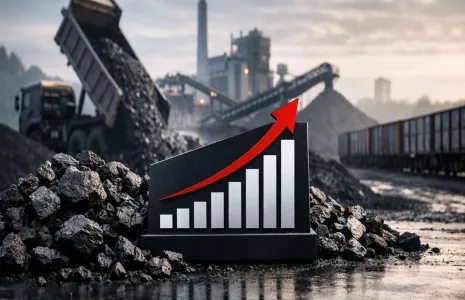
So far, 134 mines have been auctioned across 12 rounds, drawing investments of Rs 416 billion and generating over 350,000 jobs. The 13th round introduces 14 coal blocks aimed at reducing import dependence and conserving foreign exchange.
The Minister also highlighted the importance of diversifying into coal gasification. With over 40 per cent of India’s coal reserves (370 billion tonnes) lying too deep for conventional mining, Underground Coal Gasification (UCG) offers a path to unlock syngas production in situ, reducing land disturbance and enabling cleaner use of coal.
Reddy urged successful bidders to expedite production to avail incentives, reaffirming the Ministry’s commitment to fast-tracking clearances, removing bottlenecks, and ensuring ease of doing business. He underlined the government’s vision of “Reform, Perform, Transform” to achieve efficiency, transparency, and sustainability.
Minister of State Dubey echoed the call for sustainable practices, emphasising mine closure, afforestation, and community welfare initiatives such as the Ek Ped Maa Ke Naam plantation drive. He noted that transparent auctions, industry-friendly policies, and private sector participation will enhance coal output, attract investment, and generate jobs.
Coal Secretary Vikram Dev Dutt provided a sectoral overview, reaffirming support for clean coal technologies. He announced a Rs 85 billion incentive scheme to promote coal gasification, with seven projects already selected. This, he said, will accelerate adoption, attract investment, and position India as a leader in clean coal technology.
The Additional Secretary, Rupinder Brar, highlighted the transformative role of UCG, enabling the tapping of deep-seated reserves while minimising environmental impact.
In this round, four mines are offered under the Coal Mines (Special Provisions) Act, 2015 (CMSP) and ten under the Mines and Minerals (Development and Regulation) Act, 1957 (MMDR). Of these, ten are fully explored and ready for development, while four are partially explored, providing long-term opportunities. Additionally, three mines from the previous tranche are being re-offered.
The launch marks another step towards unlocking investments, ensuring responsible mining, and strengthening India’s coal sector. By combining transparency, sustainability, and private participation, the Ministry aims to secure India’s energy future while balancing growth with environmental stewardship. 

In a landmark move to strengthen India’s energy security and boost domestic coal production, the Ministry of Coal has launched the 13th Round of Commercial Coal Mine Auctions in New Delhi. The event was inaugurated by Union Minister of Coal and Mines G. Kishan Reddy, with Minister of State Satish Chandra Dubey as Guest of Honour.During his address, Minister Reddy celebrated India’s achievement of surpassing 1 billion tonnes of coal production in FY25, crediting reforms initiated since 2015. These include transparent auction regimes, private sector participation, and technological modernisation, which have transformed the coal sector into a key driver of Atmanirbhar Bharat.So far, 134 mines have been auctioned across 12 rounds, drawing investments of Rs 416 billion and generating over 350,000 jobs. The 13th round introduces 14 coal blocks aimed at reducing import dependence and conserving foreign exchange.The Minister also highlighted the importance of diversifying into coal gasification. With over 40 per cent of India’s coal reserves (370 billion tonnes) lying too deep for conventional mining, Underground Coal Gasification (UCG) offers a path to unlock syngas production in situ, reducing land disturbance and enabling cleaner use of coal.Reddy urged successful bidders to expedite production to avail incentives, reaffirming the Ministry’s commitment to fast-tracking clearances, removing bottlenecks, and ensuring ease of doing business. He underlined the government’s vision of “Reform, Perform, Transform” to achieve efficiency, transparency, and sustainability.Minister of State Dubey echoed the call for sustainable practices, emphasising mine closure, afforestation, and community welfare initiatives such as the Ek Ped Maa Ke Naam plantation drive. He noted that transparent auctions, industry-friendly policies, and private sector participation will enhance coal output, attract investment, and generate jobs.Coal Secretary Vikram Dev Dutt provided a sectoral overview, reaffirming support for clean coal technologies. He announced a Rs 85 billion incentive scheme to promote coal gasification, with seven projects already selected. This, he said, will accelerate adoption, attract investment, and position India as a leader in clean coal technology.The Additional Secretary, Rupinder Brar, highlighted the transformative role of UCG, enabling the tapping of deep-seated reserves while minimising environmental impact.In this round, four mines are offered under the Coal Mines (Special Provisions) Act, 2015 (CMSP) and ten under the Mines and Minerals (Development and Regulation) Act, 1957 (MMDR). Of these, ten are fully explored and ready for development, while four are partially explored, providing long-term opportunities. Additionally, three mines from the previous tranche are being re-offered.The launch marks another step towards unlocking investments, ensuring responsible mining, and strengthening India’s coal sector. By combining transparency, sustainability, and private participation, the Ministry aims to secure India’s energy future while balancing growth with environmental stewardship. 

Related Stories

Gold Stories

Next Story
Infrastructure Urban

KONE Opens India's First Digital Experience Centre in Pune

KONE, a global elevator and escalator manufacturer, has inaugurated its first Digital Experience Centre (DEC) in India, located in Pune. The facility aims to showcase how artificial intelligence (AI), connectivity and data-driven technologies can enhance customer experiences and improve building operations.The centre was inaugurated by Jussi Herlin, Executive Vice Chair, KONE Corporation; Philippe Delorme, President and CEO, KONE; and Nandan Nilekani, Co-founder and Chairman of the Board, Infosys.Designed as an interactive customer environment, the facility demonstrates digital solutions cover..

Next Story
Infrastructure Urban

CII GreenCo Launches Circularity Guidelines for Indian Industry

The Confederation of Indian Industry (CII) GreenCo Council has launched the CII GreenCo Circularity Guidelines – Pilot Version at the 17th CII GreenCo Waste & Resource Management Summit 2026 in Chennai. The initiative aims to strengthen resource efficiency, waste reduction and circular economy practices across Indian manufacturing and process industries.The guidelines introduce a structured framework with circularity indices covering raw materials, consumables, packaging and other resource inputs. These indicators will help industries assess existing practices, identify opportunities to ..

Next Story
Infrastructure Energy

Global Electronics Association Launches IPC-1783-CO2E Standard

The Global Electronics Association has introduced IPC-1783-CO2E, a new international standard aimed at improving consistency, transparency and comparability in product carbon footprint reporting across the electronics manufacturing industry.The standard, titled International Standard for Data Collection and Reporting of CO2 Equivalent (CO2e) Emissions for the Electronics Manufacturing Supply Chain, provides industry-specific guidance for collecting, estimating and reporting carbon emissions data.With increasing regulatory requirements and customer expectations, electronics manufacturers face c..

Advertisement

Subscribe to Our Newsletter

Get daily newsletters around different themes from Construction world.

STAY CONNECTED

Advertisement

SPECIAL OFFER
QR Code