India To Launch Coal Exchanges Under New Regulatory Framework
COAL & MINING

India To Launch Coal Exchanges Under New Regulatory Framework

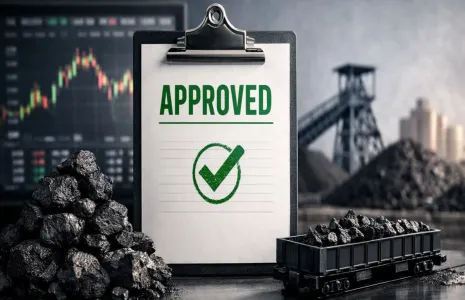
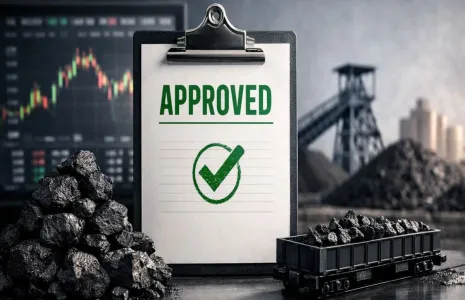
The government has paved the way for the establishment of Coal Exchanges in India under the Mines and Minerals (Development and Regulation) Amendment Act, 2025, a move intended to modernise the country’s coal supply chain and create a transparent, market-driven trading ecosystem. The law introduced the concept of a Mineral Exchange and empowered the Central Government to facilitate transparent and efficient trading of minerals, including coal and processed forms. In line with the legislation, the Coal Exchange Rules, 2026, were notified to provide the regulatory framework for setting up and operating coal trading platforms.

The Coal Controller Organisation (CCO) was designated in December 2025 as the authority responsible for registering and regulating Coal Exchanges, and eligible entities will be authorised by the CCO to establish and operate exchanges. Registered operators will be able to frame market rules and bye-laws, manage listings and trading mechanisms, and facilitate the flow of coal between producers and buyers. Registrations will be granted for a period of 25 years.

The framework marks a shift from a traditional one-to-many sales model to a competitive many-to-many trading platform designed to broaden market access for commercial and captive miners. The move is expected to enable transparent and market-based price discovery, improve operational efficiency, and provide producers with access to a wider pool of buyers. Public sector coal companies are also anticipated to increase market participation through the platform.

The initiative is presented as part of a broader effort to enhance ease of doing business, promote transparency and build a modern, self-reliant energy ecosystem. Officials argued that a more competitive and efficient coal market will strengthen energy security, support industrial growth and contribute to the government’s vision of Viksit Bharat through sustainable economic development. Inputs to the announcement included reporting contributions from IANS.

The government has paved the way for the establishment of Coal Exchanges in India under the Mines and Minerals (Development and Regulation) Amendment Act, 2025, a move intended to modernise the country’s coal supply chain and create a transparent, market-driven trading ecosystem. The law introduced the concept of a Mineral Exchange and empowered the Central Government to facilitate transparent and efficient trading of minerals, including coal and processed forms. In line with the legislation, the Coal Exchange Rules, 2026, were notified to provide the regulatory framework for setting up and operating coal trading platforms. The Coal Controller Organisation (CCO) was designated in December 2025 as the authority responsible for registering and regulating Coal Exchanges, and eligible entities will be authorised by the CCO to establish and operate exchanges. Registered operators will be able to frame market rules and bye-laws, manage listings and trading mechanisms, and facilitate the flow of coal between producers and buyers. Registrations will be granted for a period of 25 years. The framework marks a shift from a traditional one-to-many sales model to a competitive many-to-many trading platform designed to broaden market access for commercial and captive miners. The move is expected to enable transparent and market-based price discovery, improve operational efficiency, and provide producers with access to a wider pool of buyers. Public sector coal companies are also anticipated to increase market participation through the platform. The initiative is presented as part of a broader effort to enhance ease of doing business, promote transparency and build a modern, self-reliant energy ecosystem. Officials argued that a more competitive and efficient coal market will strengthen energy security, support industrial growth and contribute to the government’s vision of Viksit Bharat through sustainable economic development. Inputs to the announcement included reporting contributions from IANS.

Related Stories

Gold Stories

Next Story
Infrastructure Energy

Asian Energy Services Q1 FY27 PAT Rises 129 Per Cent

Asian Energy Services Limited reported a 129 per cent year-on-year rise in net profit to Rs 128 million for Q1 FY27, compared with the corresponding quarter last year.Revenue increased 135 per cent year-on-year to Rs 2.71 billion, supported by continued momentum across its services business, disciplined execution and contributions from domestic and international operations. EBITDA grew 81 per cent year-on-year during the quarter.As of June 30, 2026, the company’s standalone order book stood at Rs 17.54 billion, with around 60 per cent coming from oil and gas services and 40 per cent from min..

Next Story
Infrastructure Urban

BioBTX to Build First Commercial-Scale Circular Chemicals Plant

Dutch circular chemistry technology developer BioBTX is building what it says will be the world’s first commercial-scale plant to convert mixed plastic waste into high-quality aromatic chemicals using its proprietary Integrated Catalytic Cracking Process (ICCP) technology.The facility will be built at Chemical Park Delfzijl on the northern coast of the Netherlands and is expected to create 35 jobs. Covestro, which has been a shareholder and strategic partner of BioBTX since 2024, holds a mid-single-digit million-euro investment in the company.BioBTX’s ICCP technology uses catalytic pyrolys..

Next Story
Real Estate

Awfis Q1 FY27 PAT Jumps 140% as Revenue Rises 27%

Awfis Space Solutions reported a 140 per cent year-on-year rise in consolidated profit after tax (PAT) to Rs 240 million for Q1 FY27, compared with Rs 100 million in the corresponding quarter last year.Revenue from operations increased 27 per cent to Rs 4.25 billion from Rs 3.35 billion, while EBITDA rose 28 per cent to Rs 1.62 billion. EBITDA margin improved to 38.2 per cent from 37.8 per cent. Profit before tax increased 135 per cent to Rs 240 million.The company's co-working business recorded 27 per cent year-on-year growth, supported by demand from enterprises, Global Capability Centres (G..

Advertisement

Subscribe to Our Newsletter

Get daily newsletters around different themes from Construction world.

STAY CONNECTED

Advertisement