

Mining industry urges Centre to hike import duties
COAL & MINING

Mining industry urges Centre to hike import duties

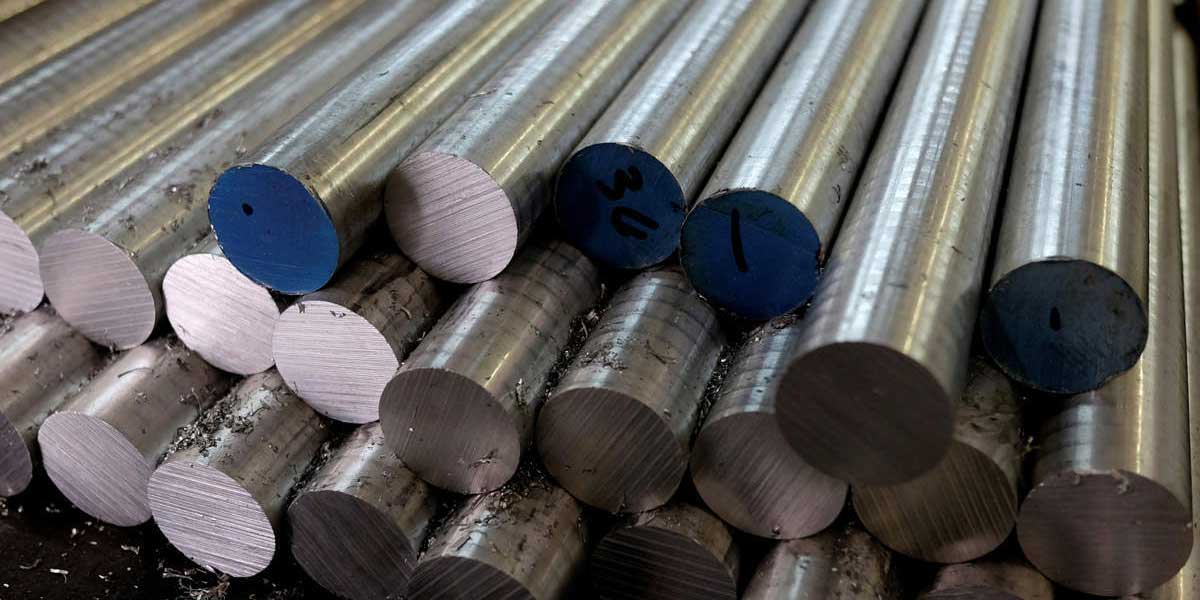
India's mining industry has demanded higher import taxes on metals such as zinc, copper and aluminium to help halt a tide of cheaper imports, especially from China. The Federation of Indian Mineral Industries (FIMI) has addressed a note to the Finance Ministry saying the government should raise import taxes to 10%-15% on several aluminium products, including scrap to 10% from 2.5%.

India is the world's third-biggest primary aluminium producer. Its aluminium producers are expected to raise their combined production capacity to 4.6 million tonnes in the next two years, up from 4.1 million tonnes now.

During the fiscal year to March 2023, India's aluminium demand is expected to reach 4.2 million tonnes. It imported 2.3 million tonnes of aluminium in the previous fiscal year.

“The major threat of imports is from China, which constitutes over 85% share of downstream aluminium imports,” FIMI said in the note to the ministry as it prepares the 2023/24 Union Budget, due to be announced in February. The federation said most metal scrap imports were coming from Britain, Saudi Arabia, the United States, and the United Arab Emirates.

The FIMI also urged government to raise import taxes on intermediate and finished goods of copper and zinc ingots to 7.5% from 5%.

FIMI also reiterated its demand to scrap an export tax on low-grade iron ore lumps and fines - with iron content below 58%. The tax was raised to 50% from zero in May.

See also:
214 mineral blocks have been sold since 2015 says government
Illegal mining in Dadam; NGT slaps fine of Rs 660 mn


India's mining industry has demanded higher import taxes on metals such as zinc, copper and aluminium to help halt a tide of cheaper imports, especially from China. The Federation of Indian Mineral Industries (FIMI) has addressed a note to the Finance Ministry saying the government should raise import taxes to 10%-15% on several aluminium products, including scrap to 10% from 2.5%. India is the world's third-biggest primary aluminium producer. Its aluminium producers are expected to raise their combined production capacity to 4.6 million tonnes in the next two years, up from 4.1 million tonnes now. During the fiscal year to March 2023, India's aluminium demand is expected to reach 4.2 million tonnes. It imported 2.3 million tonnes of aluminium in the previous fiscal year. “The major threat of imports is from China, which constitutes over 85% share of downstream aluminium imports,” FIMI said in the note to the ministry as it prepares the 2023/24 Union Budget, due to be announced in February. The federation said most metal scrap imports were coming from Britain, Saudi Arabia, the United States, and the United Arab Emirates. The FIMI also urged government to raise import taxes on intermediate and finished goods of copper and zinc ingots to 7.5% from 5%. FIMI also reiterated its demand to scrap an export tax on low-grade iron ore lumps and fines - with iron content below 58%. The tax was raised to 50% from zero in May. See also: 214 mineral blocks have been sold since 2015 says governmentIllegal mining in Dadam; NGT slaps fine of Rs 660 mn

Next Story
Infrastructure Urban

ONDC Promotes Open and Inclusive Digital Commerce Ecosystem

The Open Network for Digital Commerce (ONDC) is enabling a fair, transparent and non-discriminatory digital marketplace by creating an open ecosystem that allows sellers to reach customers across multiple platforms. Unlike traditional e-commerce platforms that operate in closed silos, ONDC removes platform-specific restrictions and ensures equal discoverability for all sellers, irrespective of size, scale or digital sophistication. Open protocols and common network specifications enhance transparency and prevent biased or opaque listing practices, while seller-side applications make full catal..

Next Story
Infrastructure Urban

Government Drives Ease of Doing Business via District BRAP

The Government of India is advancing Ease of Doing Business (EoDB) reforms by extending the Business Reforms Action Plan (BRAP) to the district level through the launch of the District Business Reform Action Plan (D-BRAP). Implemented by the Department for Promotion of Industry and Internal Trade (DPIIT), the initiative recognises that businesses interact most frequently with district authorities for approvals, inspections and services.D-BRAP 2025 provides a structured framework to strengthen last-mile service delivery across District Collectorates, Development Authorities and Urban Local Bodi..

Next Story
Infrastructure Urban

CTIL Hosts Workshop on Emerging Investment Facilitation Trends

The Centre for Trade and Investment Law (CTIL), Indian Institute of Foreign Trade, recently organised a workshop on ‘The Investment Facilitation Landscape: Emerging Trends and Approaches’ in collaboration with CII, ITC, UNCTAD, the World Bank and the World Economic Forum at Bharat Mandapam, New Delhi. The workshop brought together policymakers, government officials, global experts and industry stakeholders to examine evolving approaches to investment facilitation and ease of doing business.The programme featured three technical sessions covering India’s approach to investment facilitatio..

Advertisement

Subscribe to Our Newsletter

Get daily newsletters around different themes from Construction world.

STAY CONNECTED

Advertisement

Advertisement

Advertisement

Advertisement

Open In App