
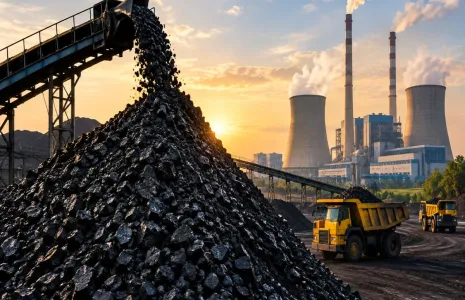

Poor-Quality Coal Reduces Maharashtra Power Output
COAL & MINING

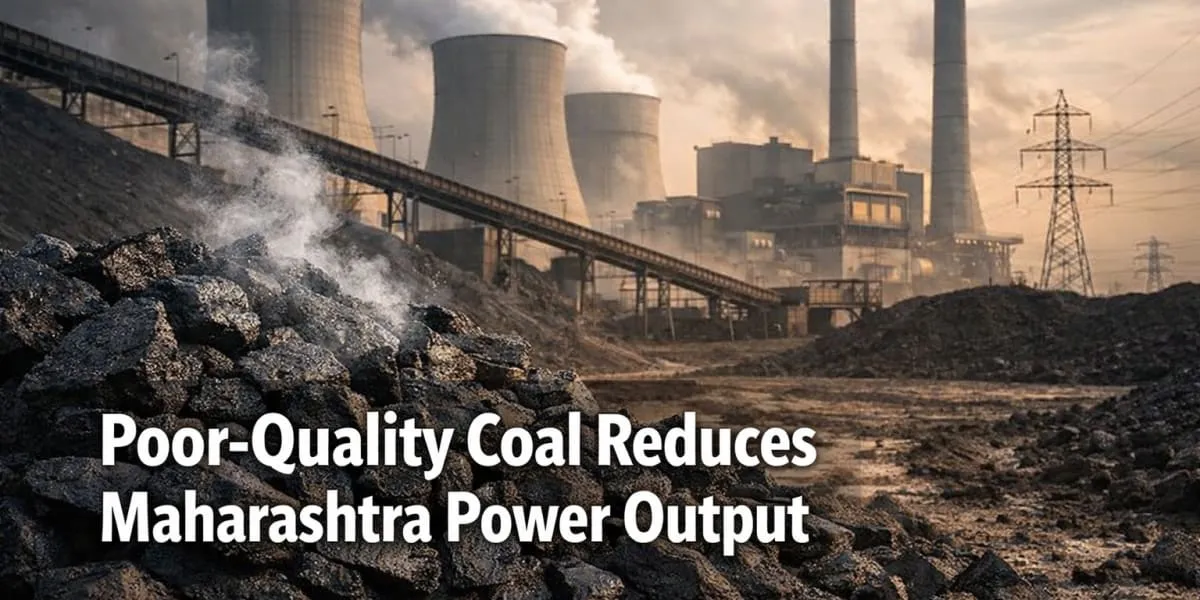
Poor-Quality Coal Reduces Maharashtra Power Output

Maharashtra Chief Minister Devendra Fadnavis acknowledged that the supply of substandard coal had reduced power generation in the state and said the government was working with the Centre to strengthen coal quality checks and procurement safeguards. The issue had been raised in the state assembly by Vijay Wadettiwar, who linked recent power shortages, rising electricity demand and outages at generating units to poor-quality coal supplied to state-run power plants. Mr Wadettiwar had also sought action against suppliers that did not meet required standards.

Responding in the House, Fadnavis said discussions had been held with the Union Coal Ministry on proper sampling and quality verification procedures and that future tenders would include safeguards to prevent inferior-grade coal and curb malpractice in procurement. He indicated that procurement safeguards would be embedded in contracts and compliance checks would be strengthened. The state utility Maharashtra State Power Generation Company, or Mahagenco, had reported outages at several thermal units linked to the fuel quality problem.

The chief minister also indicated that preliminary work and inspections had begun for an 800 MW supercritical thermal power project at Chandrapur to bolster capacity. He reported that Maharashtra's power demand had increased by around 4,000 MW while generation capacity had expanded by about 2,000 MW, leaving a shortfall that undermined supply reliability. Demand was expected to reach approximately 45,000 MW next year, he added, underscoring the need for both new generation and more reliable fuel supplies. Officials said that a combination of capacity expansion and stricter fuel quality control would be necessary to balance the system.

The state government planned to coordinate with central agencies and suppliers to tighten sampling, verification and procurement processes and to include contractual penalties for non-compliance. Monitoring of coal stocks at thermal plants would be enhanced and standards enforced to reduce unplanned outages. Improving domestic coal handling and logistics would be pursued alongside the Chandrapur project to ensure sustained output. Industry stakeholders and consumers would follow implementation of the new safeguards and tender terms.

"Join industry leaders at RAHSTA Expo, India's premier platform for roads, highways and traffic infrastructure. Register now to explore innovations, network with experts and shape the future of mobility."

Maharashtra Chief Minister Devendra Fadnavis acknowledged that the supply of substandard coal had reduced power generation in the state and said the government was working with the Centre to strengthen coal quality checks and procurement safeguards. The issue had been raised in the state assembly by Vijay Wadettiwar, who linked recent power shortages, rising electricity demand and outages at generating units to poor-quality coal supplied to state-run power plants. Mr Wadettiwar had also sought action against suppliers that did not meet required standards. Responding in the House, Fadnavis said discussions had been held with the Union Coal Ministry on proper sampling and quality verification procedures and that future tenders would include safeguards to prevent inferior-grade coal and curb malpractice in procurement. He indicated that procurement safeguards would be embedded in contracts and compliance checks would be strengthened. The state utility Maharashtra State Power Generation Company, or Mahagenco, had reported outages at several thermal units linked to the fuel quality problem. The chief minister also indicated that preliminary work and inspections had begun for an 800 MW supercritical thermal power project at Chandrapur to bolster capacity. He reported that Maharashtra's power demand had increased by around 4,000 MW while generation capacity had expanded by about 2,000 MW, leaving a shortfall that undermined supply reliability. Demand was expected to reach approximately 45,000 MW next year, he added, underscoring the need for both new generation and more reliable fuel supplies. Officials said that a combination of capacity expansion and stricter fuel quality control would be necessary to balance the system. The state government planned to coordinate with central agencies and suppliers to tighten sampling, verification and procurement processes and to include contractual penalties for non-compliance. Monitoring of coal stocks at thermal plants would be enhanced and standards enforced to reduce unplanned outages. Improving domestic coal handling and logistics would be pursued alongside the Chandrapur project to ensure sustained output. Industry stakeholders and consumers would follow implementation of the new safeguards and tender terms.

Next Story
Infrastructure Transport

Third Railway Line Between Tatanagar And Adityapur Likely By September

The third railway line between Tatanagar and Adityapur is expected to be commissioned by September as work on the corridor advances, according to railway sources. The project to add a fourth line on the busy route is progressing and has been allocated Rs 50.89 billion (bn) in funding. The allocation underscores the focus on increasing capacity and easing congestion on the corridor. Relevant timetables are being adjusted to integrate the new capacity into regular operations. Construction activity has involved track laying, formation work and signalling upgrades along strategic stretches, with m..

Next Story
Infrastructure Transport

Indian Railways Approves Rs 2.7 bn Kavach Rollout in Odisha

Indian Railways has approved a Rs 2.7 billion (Rs 2.7 bn) plan to install the Kavach train collision avoidance system on 631 route kilometres in the East Coast Railway zone. The Ministry of Railways said the work will form part of a wider Kavach deployment programme that relies on an LTE based communication backbone rather than a standalone installation. The approval marks the latest stage in the steady expansion of the indigenous safety technology across the national network. The decision aims to enhance safety and reliability on corridors serving Odisha and adjoining areas. The project will ..

Next Story
Infrastructure Transport

Indian Railways Accelerates Modernisation Drive

Indian Railways utilised nearly 30 per cent of its capital expenditure budget for FY2026-27 within the first two months of the financial year, spending more than Rs 840 billion (bn) in April and May against a planned outlay of Rs 2.93 trillion (tn) for the year. The Union Budget allocated Rs 2.93 tn in total capex, comprising Rs 2.81 tn through gross budgetary support and Rs 120 bn from extra-budgetary resources. The early absorption indicates robust project execution and an aggressive infrastructure push. A significant share of the spending is being channelled towards track infrastructure, in..

Advertisement

Subscribe to Our Newsletter

Get daily newsletters around different themes from Construction world.

STAY CONNECTED

Advertisement

Advertisement

Advertisement