


BPCL And Taiyo Oil Buy US Crude Via Tender
OIL & GAS

BPCL And Taiyo Oil Buy US Crude Via Tender

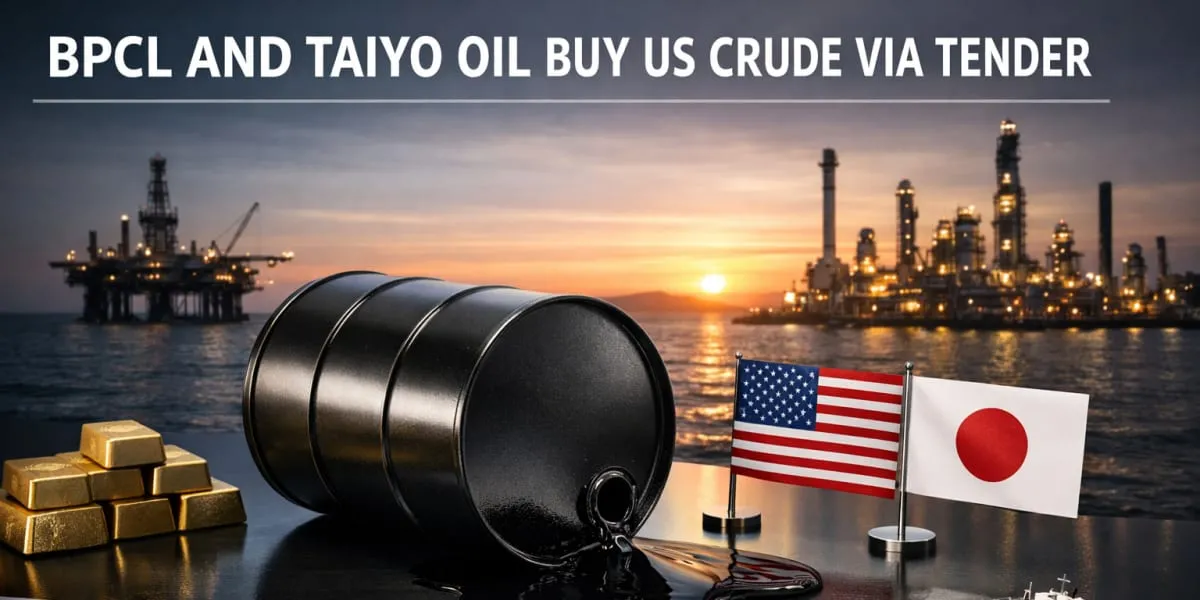
Bharat Petroleum Corporation (BPCL) has purchased one million barrels of US crude via a tender, and Japan's Taiyo Oil has also bought US crude through the same procurement process, sources said. The purchases were arranged through competitive tenders aimed at securing prompt supply for refinery operations. The volume equates to one mn barrels and reflects continuing demand for seaborne crude. The tenders were timed to match shipping schedules and were judged on price and delivery flexibility and to align deliveries with seasonal product demand surges.

The tender outcomes follow routine procurement practices in the international oil trade and are consistent with refiners sourcing cargoes from the United States. BPCL is an integrated state refiner and marketer while Taiyo Oil is a Japan-based crude buyer and processor. Both companies are managing supply chains amid shifting global flows without any public announcement at the time of reporting. Such tender results can influence short term refinery run rates without signalling permanent changes to procurement policies.

Acquiring US crude via tenders enables refiners to schedule cargoes to match refinery maintenance cycles and product demand. The cargoes support refinery throughput and fuel availability for domestic and export markets. Industry traders said that tender-based buying remains an established route for securing competitively priced barrels. Traders noted that vessel availability and freight costs commonly affect the final scheduling and arrival windows for such cargoes.

Market participants view the activity as part of routine procurement rather than an extraordinary shift, and trade flows continue to adapt to regional demand patterns. Neither BPCL nor Taiyo Oil had issued public statements by the time sources were contacted. The reported purchases underscore ongoing ties between US crude suppliers and Asian refiners seeking reliable supply. Analysts view such buying as part of ongoing procurement practices as margin and logistical conditions evolve.

"Join industry leaders at RAHSTA Expo, India's premier platform for roads, highways and traffic infrastructure. Register now to explore innovations, network with experts and shape the future of mobility."

Bharat Petroleum Corporation (BPCL) has purchased one million barrels of US crude via a tender, and Japan's Taiyo Oil has also bought US crude through the same procurement process, sources said. The purchases were arranged through competitive tenders aimed at securing prompt supply for refinery operations. The volume equates to one mn barrels and reflects continuing demand for seaborne crude. The tenders were timed to match shipping schedules and were judged on price and delivery flexibility and to align deliveries with seasonal product demand surges. The tender outcomes follow routine procurement practices in the international oil trade and are consistent with refiners sourcing cargoes from the United States. BPCL is an integrated state refiner and marketer while Taiyo Oil is a Japan-based crude buyer and processor. Both companies are managing supply chains amid shifting global flows without any public announcement at the time of reporting. Such tender results can influence short term refinery run rates without signalling permanent changes to procurement policies. Acquiring US crude via tenders enables refiners to schedule cargoes to match refinery maintenance cycles and product demand. The cargoes support refinery throughput and fuel availability for domestic and export markets. Industry traders said that tender-based buying remains an established route for securing competitively priced barrels. Traders noted that vessel availability and freight costs commonly affect the final scheduling and arrival windows for such cargoes. Market participants view the activity as part of routine procurement rather than an extraordinary shift, and trade flows continue to adapt to regional demand patterns. Neither BPCL nor Taiyo Oil had issued public statements by the time sources were contacted. The reported purchases underscore ongoing ties between US crude suppliers and Asian refiners seeking reliable supply. Analysts view such buying as part of ongoing procurement practices as margin and logistical conditions evolve.

Next Story
Infrastructure Transport

Bhogapuram Airport Set For Take Off After Licence Issued

Union Civil Aviation Minister Kinjarapu Ram Mohan Naidu announced that Alluri Sitharama Raju Bhogapuram International Airport has achieved 100 per cent completion following issuance of its aerodrome licence by the Ministry of Civil Aviation after an inspection with public representatives, district officials and GMR Group representatives. The licence was granted after extensive verification over the past month to ensure that safety and operational standards were met. The Chief Minister's Office has already contacted the Prime Minister's Office to finalise an inauguration date and commercial fli..

Next Story
Infrastructure Urban

Auto Sector To Grow 22-24 Per Cent In Q1 FY27

Credit Rating Information Services of India (Crisil) estimated that India's automobile sector is expected to report revenue growth of 22-24 per cent year-on-year in the first quarter of FY27 and to be among the largest contributors to corporate revenue growth in the quarter. The agency estimated overall corporate revenue to have grown 11-11.5 per cent year-on-year in the quarter ended 30 June 2026, the fastest pace in two years despite supply chain disruptions and higher input costs from the West Asia conflict. This compared with growth of 9.6 per cent in the preceding quarter. Crisil said the..

Next Story
Infrastructure Urban

Nomura Sees Q1 Pressure On Cement Margins; Backs Major Players

Nomura said cement margins will be under pressure in the June quarter as fuel and packaging costs rose, although volume growth is expected to remain healthy. The brokerage forecast six to seven per cent year-on-year organic volume growth for the Indian cement industry in the period, with Shree Cement identified as likely to post the highest growth at 15 per cent year-on-year. It noted that the West and North regions outperformed on pricing, aiding companies with greater exposure in those markets. Average trade prices improved three per cent sequentially to around Rs 326 per bag after price inc..

Advertisement

Subscribe to Our Newsletter

Get daily newsletters around different themes from Construction world.

STAY CONNECTED

Advertisement

Advertisement

Advertisement