+
Ethanol Oversupply Threatens India's Rs 500 bn Green Fuel Plan
OIL & GAS

Ethanol Oversupply Threatens India's Rs 500 bn Green Fuel Plan

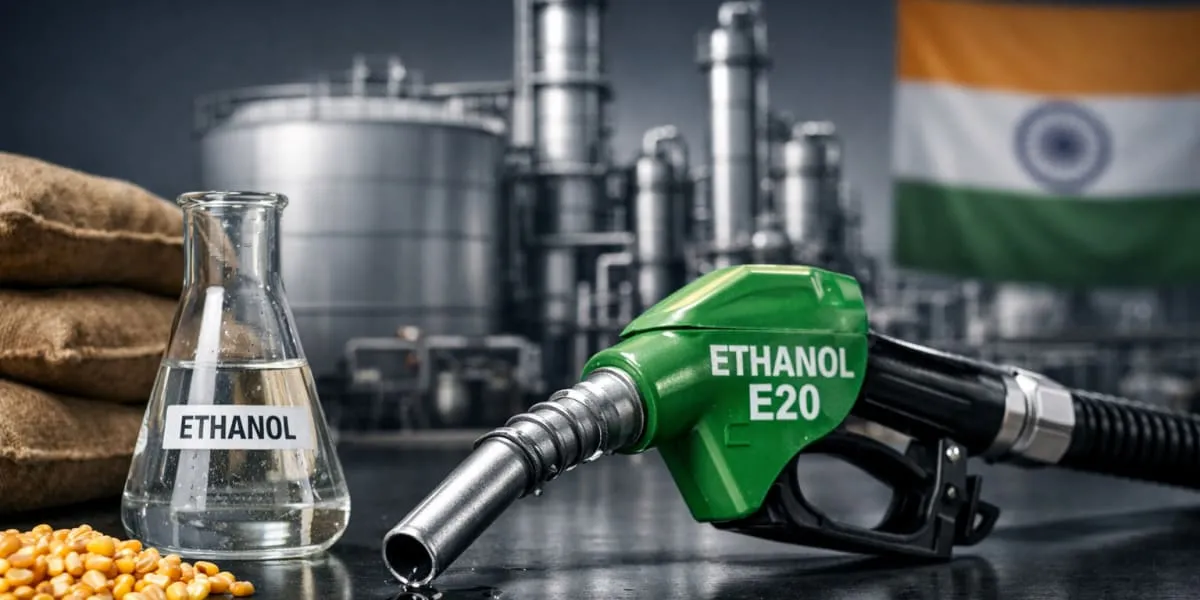
India's push to scale up ethanol production as part of a clean fuel transition and rural income support is facing an unexpected challenge as production capacity has outstripped demand. The installed capacity of ethanol distillation plants nationwide now stands at nearly 20 billion litres (20 bn litres), with a further four bn litres likely to come online, while the mandatory ethanol-petrol blending programme remains capped at 20 per cent and requires about 11 bn litres under current rules. The imbalance has produced a supply glut that could undercut the economics of the roughly Rs 500 billion (Rs 500 bn) green fuel sector.

Distillers and sugar mills that invested on expectations of rising offtake report plants are utilising only one quarter to one third of capacity and inventories are building up as approvals for distillery projects are put on hold. Industry representatives have warned that prolonged underutilisation will erode margins, strain cash flows and slow the flow of farm-linked revenues that underpinned expansion of ethanol output. Regulators and financiers are watching utilisation rates closely as the sector's financial resilience comes under pressure.

Beyond corporate balance sheets, the disconnect between capacity and demand threatens broader policy goals tied to energy security and rural livelihoods, which the blending programme was designed to support. Policymakers have been urged to revisit blending targets and to accelerate mechanisms for absorbing surplus output through additional domestic uses or export channels. Exploring technical pathways such as higher blends or integration with diesel use has been proposed but is constrained by regulatory complexity and infrastructure needs.

Automakers have adopted a cautious stance and delayed commitments to flex-fuel technologies pending clearer long-term policy signals, while prototypes that can run on higher ethanol blends have not moved into mass commercialisation. The industry faces a choice between policy recalibration to create stable demand signals and a slowdown in investment that could reverse recent gains for farm incomes and clean-fuel ambitions. Authorities' response will determine whether ethanol fulfils its economic and environmental promise or becomes an overbuilt sector beset by operational uncertainty.

India's push to scale up ethanol production as part of a clean fuel transition and rural income support is facing an unexpected challenge as production capacity has outstripped demand. The installed capacity of ethanol distillation plants nationwide now stands at nearly 20 billion litres (20 bn litres), with a further four bn litres likely to come online, while the mandatory ethanol-petrol blending programme remains capped at 20 per cent and requires about 11 bn litres under current rules. The imbalance has produced a supply glut that could undercut the economics of the roughly Rs 500 billion (Rs 500 bn) green fuel sector. Distillers and sugar mills that invested on expectations of rising offtake report plants are utilising only one quarter to one third of capacity and inventories are building up as approvals for distillery projects are put on hold. Industry representatives have warned that prolonged underutilisation will erode margins, strain cash flows and slow the flow of farm-linked revenues that underpinned expansion of ethanol output. Regulators and financiers are watching utilisation rates closely as the sector's financial resilience comes under pressure. Beyond corporate balance sheets, the disconnect between capacity and demand threatens broader policy goals tied to energy security and rural livelihoods, which the blending programme was designed to support. Policymakers have been urged to revisit blending targets and to accelerate mechanisms for absorbing surplus output through additional domestic uses or export channels. Exploring technical pathways such as higher blends or integration with diesel use has been proposed but is constrained by regulatory complexity and infrastructure needs. Automakers have adopted a cautious stance and delayed commitments to flex-fuel technologies pending clearer long-term policy signals, while prototypes that can run on higher ethanol blends have not moved into mass commercialisation. The industry faces a choice between policy recalibration to create stable demand signals and a slowdown in investment that could reverse recent gains for farm incomes and clean-fuel ambitions. Authorities' response will determine whether ethanol fulfils its economic and environmental promise or becomes an overbuilt sector beset by operational uncertainty.

Next Story
Infrastructure Urban

We’ve cut 50,000 tonnes of carbon emmissions since 2019

MatchLog is challenging a decades-old logistics norm and empty container miles by directly matching import flows with export demand. Indeed, the platform is unlocking measurable cost savings, cutting emissions and driving structural change in landside operations. Dhruv Taneja, Founder and Global CEO, outlines the quantified impact, adoption  journey and the evolving future of container reuse in an exclusive interview with Construction World. MatchLog has partnered with carriers such as Maersk, ONE and HMM in India. Could you share quantified outcomes from one specific corri..

Next Story
Infrastructure Transport

Airports: Capacity is Key

A lotus-inspired terminal design in Navi Mumbai International Airport. A terminal in a garden in Bengaluru’s Kempegowda International Airport. A peacock-inspired canopy in Chhatrapati Shivaji Maharaj International Airport. A nature-inspired terminal in Guwahati’s Lokpriya Gopinath Bordoloi International Airport.Truly, “India’s airports are no longer constrained by architectural ambition,” avers Ravikanth Mididhodi, Chief Technical Officer, J&F, a German-based engineering firm with over 25 years of global legacy in delivering advanced engineering and BIM services for air..

Next Story
Real Estate

In 2025, Amaravati attracted ₹ 28,075 crore in investments

In an exclusive interview with Construction World, Kanna Babu, IAS, Commissioner, Andhra Pradesh Capital Region Development Authority (APCRDA), reveals how Amaravati is entering a decisive new phase of capital city development. With 36 MoUs worth ₹ 45,589 crore, a ₹ 58,000 crore tender pipeline, and rising institutional investments, he explains the strategic execution, infrastructure rollout, and governance framework driving Amaravati’s emergence as a structured, investment-ready, and future-focused capital.APCRDA has recently secured major financial tie-ups, including loans from NA..

Advertisement

Subscribe to Our Newsletter

Get daily newsletters around different themes from Construction world.

STAY CONNECTED

Advertisement

Advertisement

Advertisement

Open In App