



+
HPCL Plans To Raise Vizag Oil Refinery Capacity By 20%
OIL & GAS

HPCL Plans To Raise Vizag Oil Refinery Capacity By 20%

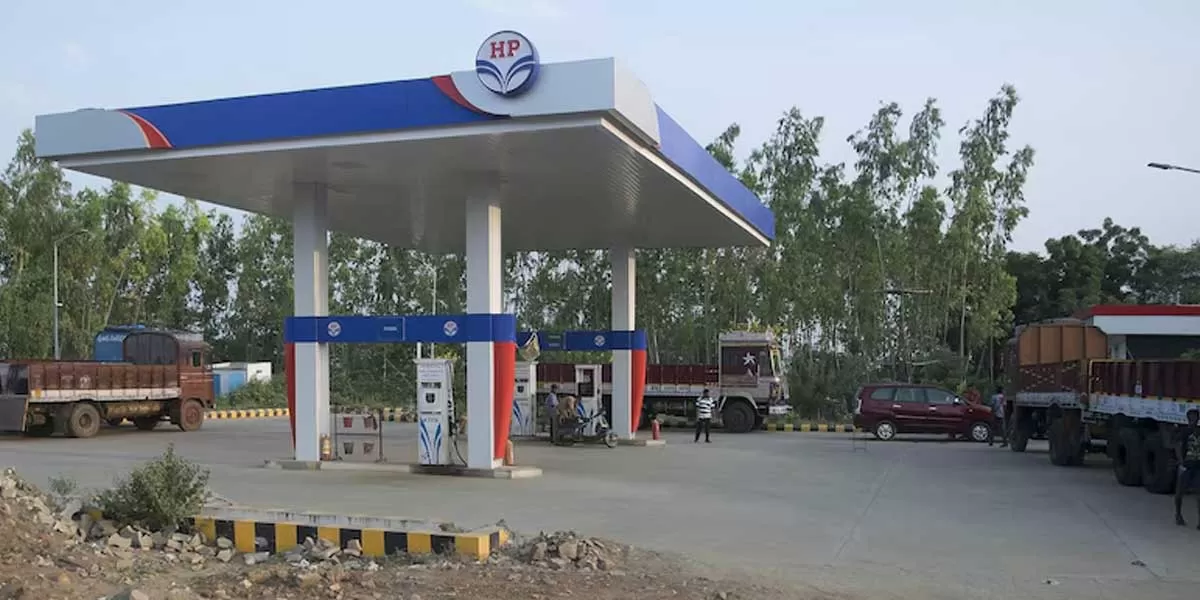
State-run Hindustan Petroleum (HPCL) plans to increase the capacity of its Vizag oil refinery in southern India by as much as 20 per cent to meet growing local fuel demand .India is raising its crude processing capacity as the world's third-largest oil importer and consumer wants to be a major global refining hub while its fuel demand is expected to continue growing for the next decade. 

HPCL recently expanded the capacity of the Vizag refinery to 300,000 barrels per day and is looking for a further increase. 

HPCL will soon start operations at the Vizag refinery's new secondary units, including a 3.5 million-tonne-per-year (tpy) residue upgradation unit to boost its distillate yield by 10 per cent and improve its gross refining margin (GRM) by $3 per barrel. It will also bring online a 2.6 million tpy diesel hydro desulphuriser. 

India's fuel demand is expected to rise alongside the expansion of its economy, though motorists are being drawn to electric vehicles and industries are switching to renewables from diesel-generated electricity to cut their carbon footprints. 

To future-proof its plants, HPCL is also building a petrochemical plant at its 180,000 bpd Barmer refinery in the desert state of Rajasthan. 

The refinery is India's first plant to have a highest petrochemical intensity - the percentage of crude oil that is converted into chemicals - of 26 per cent.     

State-run Hindustan Petroleum (HPCL) plans to increase the capacity of its Vizag oil refinery in southern India by as much as 20 per cent to meet growing local fuel demand .India is raising its crude processing capacity as the world's third-largest oil importer and consumer wants to be a major global refining hub while its fuel demand is expected to continue growing for the next decade. HPCL recently expanded the capacity of the Vizag refinery to 300,000 barrels per day and is looking for a further increase. HPCL will soon start operations at the Vizag refinery's new secondary units, including a 3.5 million-tonne-per-year (tpy) residue upgradation unit to boost its distillate yield by 10 per cent and improve its gross refining margin (GRM) by $3 per barrel. It will also bring online a 2.6 million tpy diesel hydro desulphuriser. India's fuel demand is expected to rise alongside the expansion of its economy, though motorists are being drawn to electric vehicles and industries are switching to renewables from diesel-generated electricity to cut their carbon footprints. To future-proof its plants, HPCL is also building a petrochemical plant at its 180,000 bpd Barmer refinery in the desert state of Rajasthan. The refinery is India's first plant to have a highest petrochemical intensity - the percentage of crude oil that is converted into chemicals - of 26 per cent.     

Related Stories

Gold Stories
Next Story
Infrastructure Urban

Infrastructure Opportunity Outlook by IMPACCT.Info

India’s infrastructure pipeline is witnessing dynamic activity across stages — from immediate bidding to future planning. IMPACCT segments these into three categories: Immediate, 3–6 Month, and Future Opportunities, enabling businesses to identify, prepare, and participate in high-value tenders and projects across sectors.To read full article Click Here ..

Next Story
Real Estate

Glass, Reframed!

Glass façades, quintessential aesthetic building envelopes globally, have been widely adopted in India as well. But when the focus is high-performance building systems that deliver energy efficiency, comfort and architectural identity, glass isn’t the only preference. Combination solutions, involving glass and some other material, improve façade outcomes. Some combinations come at comparable prices, some at a higher price. Here is a selection of performance-oriented solutions...To read the full story Click Here ..

Next Story
Infrastructure Urban

Beyond Building Faster

India’s cities are expanding at an unprecedented pace, bringing new infrastructure and development opportunities while also intensifying challenges around mobility, public spaces, liveability and supporting infrastructure. The question, therefore, is not simply whether India can build faster, but whether it can build cities that work better.At a CW webinar, Are We Designing Better Cities – or Just Building Faster?, moderator Ar. Samir Shaikh, Founding Principal, AR&UD Studio, brought together perspectives from design, development, master planning and technology...To read the full artic..

Advertisement

Subscribe to Our Newsletter

Get daily newsletters around different themes from Construction world.

STAY CONNECTED

Advertisement

SPECIAL OFFER
QR Code












