Exicom Q1 FY26 Revenue at Rs 2.05 Billion
POWER & RENEWABLE ENERGY

Exicom Q1 FY26 Revenue at Rs 2.05 Billion

Exicom Tele-Systems has reported consolidated revenue of Rs 2.05 billion for Q1 FY26, with an order book exceeding Rs 15 billion. Despite a soft quarter, the company expects stronger performance from Q2, backed by EVSE momentum, Bharat Net project execution, and international growth in its critical power business.

Exicom Tele-Systems, a leading Indian manufacturer of EV charging and critical power solutions, posted Q1 FY26 consolidated revenue of Rs 2.05 billion, an EBITDA margin of –18.8 per cent, and adjusted loss after tax of Rs 710.1 million. On a standalone basis, adjusted profit after tax was Rs 10.1 million.

While revenue growth was subdued, the company entered Q2 with a robust order book of over Rs 15 billion. Anant Nahata, Managing Director and CEO, acknowledged that the quarter did not meet expectations but noted positive market momentum, rising EV adoption, and the commencement of Bharat Net deliveries as key drivers for upcoming growth.

EVSE Business:
India’s four-wheeler EV market maintained momentum with monthly sales above 13,000 units for four consecutive months. Exicom’s advanced DC fast charger, Harmony Direct 2.0, is seeing strong adoption, with five of the top eight EV customers fully transitioned to the product. The Spin Air home charger also gained traction via e-commerce and B2B channels, with over 15,000 units delivered globally. In Southeast Asia, the company secured a framework agreement with a major clean energy player valued at nearly USD 6 million over two years.

Tritium Update:
While Tritium’s financial turnaround is ongoing, the business recorded over 700 charger deployments across the US, Europe, and ANZ since January 2025. The Tri-Flex DC fast charger has attracted new customers, with the first UK deployment expected later this year. Efforts remain focused on reducing cash losses and optimising costs.

Critical Power Business:
Revenue for this segment was impacted by project delays, but Bharat Net execution has now commenced and is expected to contribute from Q2. The business also secured significant contracts in the Middle East and Africa, aiming for its highest-ever international revenue this year.

Outlook:
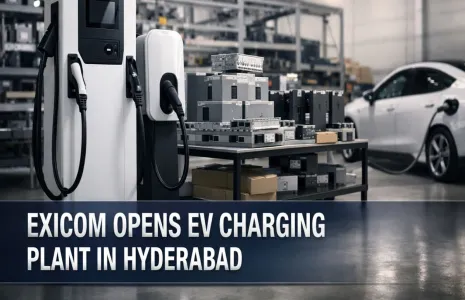
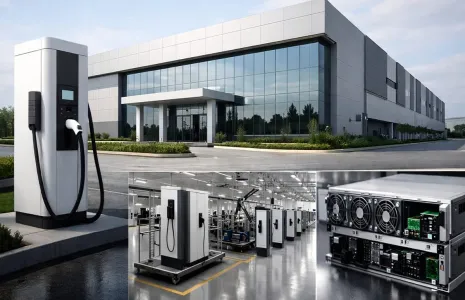
The Hyderabad manufacturing plant is on track for an October 2025 start. Nahata expressed confidence in delivering FY26 guidance, citing strong industry tailwinds, a differentiated product portfolio, and continued shareholder support following a successful rights issue.

Exicom Tele-Systems has reported consolidated revenue of Rs 2.05 billion for Q1 FY26, with an order book exceeding Rs 15 billion. Despite a soft quarter, the company expects stronger performance from Q2, backed by EVSE momentum, Bharat Net project execution, and international growth in its critical power business.Exicom Tele-Systems, a leading Indian manufacturer of EV charging and critical power solutions, posted Q1 FY26 consolidated revenue of Rs 2.05 billion, an EBITDA margin of –18.8 per cent, and adjusted loss after tax of Rs 710.1 million. On a standalone basis, adjusted profit after tax was Rs 10.1 million.While revenue growth was subdued, the company entered Q2 with a robust order book of over Rs 15 billion. Anant Nahata, Managing Director and CEO, acknowledged that the quarter did not meet expectations but noted positive market momentum, rising EV adoption, and the commencement of Bharat Net deliveries as key drivers for upcoming growth.EVSE Business:India’s four-wheeler EV market maintained momentum with monthly sales above 13,000 units for four consecutive months. Exicom’s advanced DC fast charger, Harmony Direct 2.0, is seeing strong adoption, with five of the top eight EV customers fully transitioned to the product. The Spin Air home charger also gained traction via e-commerce and B2B channels, with over 15,000 units delivered globally. In Southeast Asia, the company secured a framework agreement with a major clean energy player valued at nearly USD 6 million over two years.Tritium Update:While Tritium’s financial turnaround is ongoing, the business recorded over 700 charger deployments across the US, Europe, and ANZ since January 2025. The Tri-Flex DC fast charger has attracted new customers, with the first UK deployment expected later this year. Efforts remain focused on reducing cash losses and optimising costs.Critical Power Business:Revenue for this segment was impacted by project delays, but Bharat Net execution has now commenced and is expected to contribute from Q2. The business also secured significant contracts in the Middle East and Africa, aiming for its highest-ever international revenue this year.Outlook:The Hyderabad manufacturing plant is on track for an October 2025 start. Nahata expressed confidence in delivering FY26 guidance, citing strong industry tailwinds, a differentiated product portfolio, and continued shareholder support following a successful rights issue.

Next Story
Resources

ULCCS Showcases Cooperative Model at UN Symposium

Uralungal Labour Contract Co-operative Society (ULCCS) showcased its community-led development model at the United Nations Headquarters in New York, where it participated as a panellist at the International Symposium on Cooperative Financial Institutions held on 28–29 May 2026.Jointly organised by the United Nations Department of Economic and Social Affairs (UN DESA), the International Cooperative Banking Association (ICBA), and the International Cooperative Alliance (ICA), the symposium was held under the theme ‘Fuelling Inclusive and Equitable Growth’ and brought together policymakers,..

Next Story
Infrastructure Transport

Delhi Airport to Finalise 20-Year Master Plan

Delhi International Airport Ltd (DIAL) is finalising a 20-year master plan to guide long term infrastructure and operational development at Indira Gandhi International Airport, an official said. The operator expects the plan to reflect changes in the airline industry, shifts in the competitive landscape and evolving infrastructure requirements across terminals, airside and support services. The official said the document is likely to be ready in the next two to two-and-a-half months as the operator moves through planning stages. The plan will be prepared after consultations with airport users ..

Next Story
Real Estate

Aadhar Housing Finance Targets Rs 500 bn AUM By FY29

Aadhar Housing Finance has set a target to raise its asset under management to Rs 500 billion (bn) by the end of FY29, aiming to achieve this over the next three financial years through an 18-20 per cent loan growth trajectory. The firm focuses on the low-income segment with a ticket size of less than Rs 1.5 million (mn) and has relied on that segment to drive expansion. The company closed FY26 with an AUM of Rs 305.71 bn, reflecting the expansion in recent years, and it reported a net profit rise of 22 per cent to Rs 11.08 bn. Management indicated that gross non-performing assets stood at 1.0..

Advertisement

Subscribe to Our Newsletter

Get daily newsletters around different themes from Construction world.

STAY CONNECTED

Advertisement

Advertisement

Advertisement